The Gate Putting Drill: Simple Practice for More Accurate Putts
Putting mistakes come from a bad read, they come from a putter face that isn’t square at impact. Even small face-angle errors can send the ball offline or ruin distance control, especially on short and mid-range putts.
The Gate Putting Drill is one of the simplest ways to train a more consistent, square putter face, but only if it’s used correctly.
There are two variations of this drill, and while they look similar, each targets a different weakness in the putting stroke. This guide breaks down exactly how to use both versions, when to use each one, and how to get more out of your practice time on the putting green.
The Gate Putting Drill (Key Takeaways)
Review these key takeaways to gain a clear understanding of what you’ll learn and how the Gate Putting drill can help you.
- Improve your accuracy by focusing on getting the putter face square through impact.
- Optimize your stroke so it can adapt to any putt.
- Practice in your home or on the greens.
- Take advantage of two variations of this drill.
- Address common mistakes with the quick fixes below.
Contents
The Secret to a Better Golf Swing Starts with Your Wrists!
Your clubface angle at impact controls over 80% of your shot’s direction—and it all comes down to your wrists. Click here for the best drills to master your wrist mechanics and take control of your swing.
What is the Purpose of the Gate Putting Drill?
The Gate Putting Drill trains a square putter face and a more consistent stroke. By rolling the putter head through a narrow gate, you get immediate feedback on face angle and path at impact.
The drill is adjustable for any skill level and works well as both a practice tool and a pre-round warm-up. With regular use, it improves accuracy, distance control, and confidence on the greens.
Variation #1 (Easier – Stroke Path & Face Control)
- Place two tees in the ground slightly wider than the length of your putter head.
- Position a ball centered between the tees and take your normal putting setup.
- Roll putts to a target no farther than 10 feet away without letting the putter contact either tee.
- Hit 10–15 putts, then move the tees closer together to increase difficulty.
This variation helps you control the putter face through impact and develop a more repeatable stroke without adding unnecessary pressure.
- Video Timestamp: 6:44 – 9:12
Variation #2 (Harder – Start Line & Precision)
- Place two tees or cups about one foot in front of the ball.
- Start with a gap roughly two ball-widths wide.
- Roll 10–15 putts through the gate toward a predetermined target.
- As consistency improves, narrow the gate and/or move it farther away from the ball.
This variation sharpens start line control and exposes even small face-angle errors at impact.
Who Will Benefit From the Gate Putting Drill?
- Golfers Struggling With Face Alignment: Golfers who struggle to keep the putter face square through impact, especially beginners and high handicappers, benefit from the immediate feedback the gate provides. Any contact with the tees makes face-angle errors obvious and speeds up learning.
- Players With Inconsistent Putting Strokes: Golfers who miss short putts or frequently roll the ball offline will benefit from the narrow gate, forcing a more controlled, repeatable stroke. This helps tighten mechanics and reduce variability in the start line.
- Golfers Working on Focus and Confidence: The gate drill builds confidence by proving your stroke can hold up under pressure. Repeated success through the gate reinforces good habits and increases trust on the greens.
- Experienced Golfers Refining Their Stroke: More advanced players can use the gate drill to fine-tune face control and path, making it a strong complement to broader putting practice routines.
HackMotion Integration
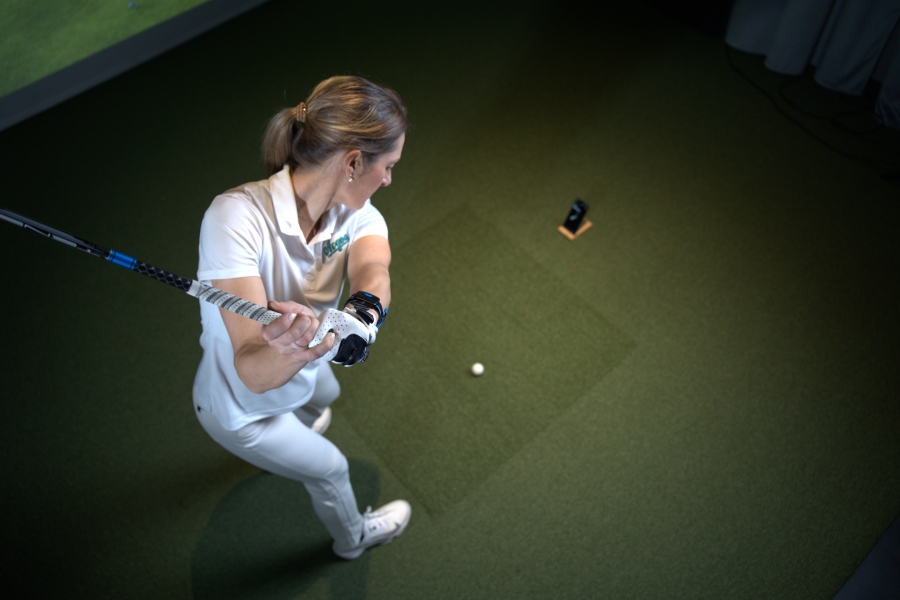
The Gate Putting Drill shows you when the putter face isn’t square, but it doesn’t tell you why.
In putting, even small wrist movements can change face angle, loft, and roll. Those changes are usually too subtle to see or feel.
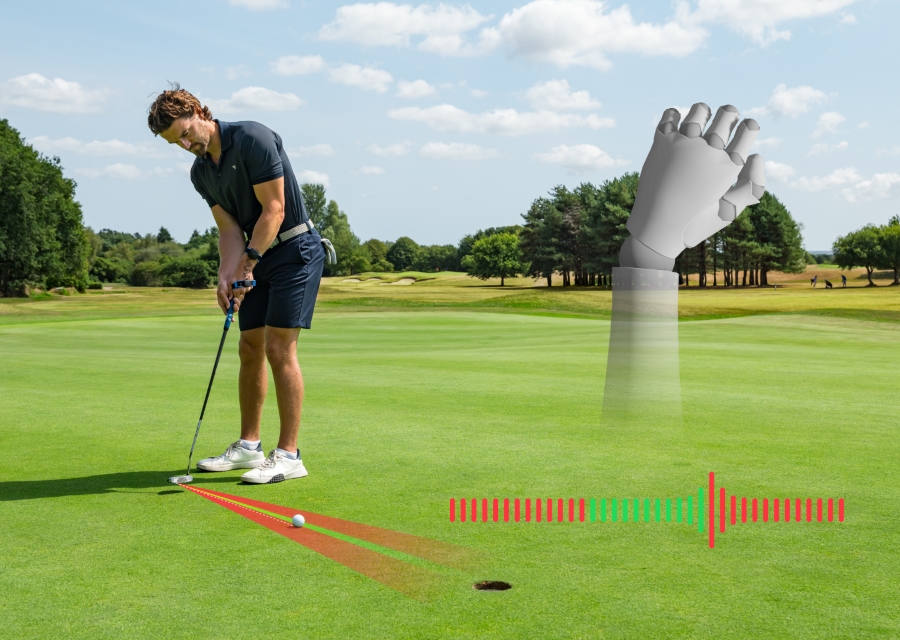
HackMotion Putting Ulnar / Radial Drill
Get a feel of the wrist movement that controls the plane of the putter.
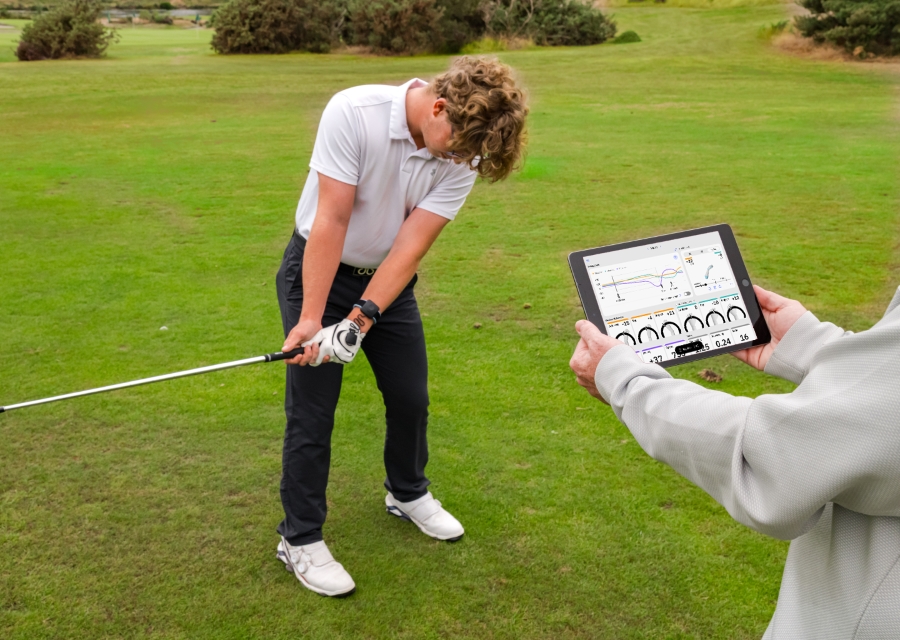
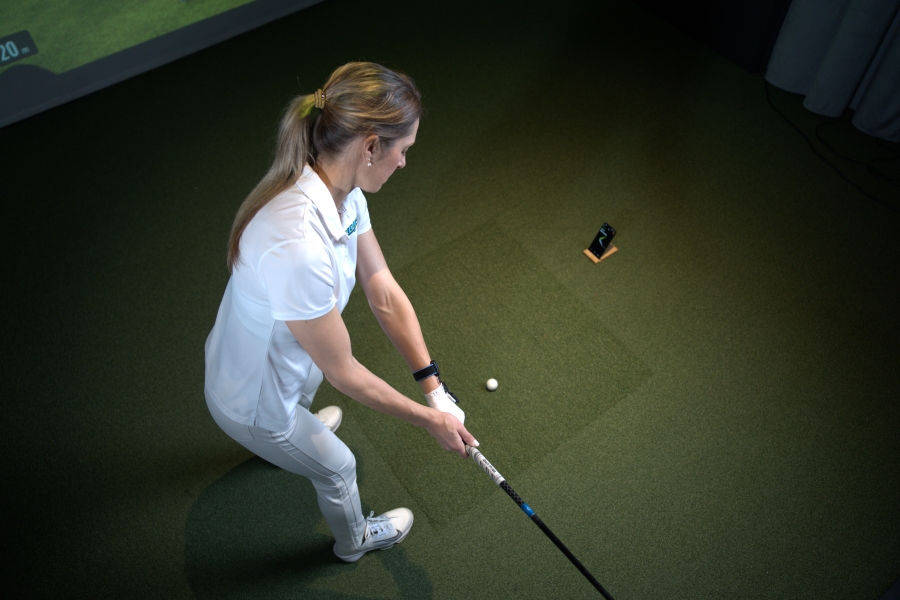
Using HackMotion while you work on the Gate Drill lets you connect missed gates or tee strikes to what your wrists are actually doing.
That makes the drill more than a pass-or-fail test.
HackMotion helps you:
- Identify wrist movement that opens or closes the putterface.
- Stabilize lead-wrist motion for more consistent strike and rollout.
- Maintain consistent tempo as the gate gets narrower or pressure increases.
When you understand how your wrists affect the putterface, the Gate Drill becomes a faster, more effective way to improve accuracy and consistency.
HackMotion Putting Flexion / Extension Drill
Get a feel for the wrist movement that controls your putter’s loft.
Want to explore more drills like this?
Browse all HackMotion in-app golf drills designed to train swing path, face control, and consistency.
Common Mistakes and How to Fix Them
If you’ve been working with the gate drill a bit and not seeing progress, try these quick fixes to see how it can help.
| Issue | What It Tells You | Adjustment to Make |
|---|---|---|
| Gate feels too easy | The gate isn’t challenging face control or strike quality. | Narrow the gate until you miss about 3–4 out of 10 putts. |
| Gate feels impossible | Face control isn’t ready for that tolerance yet. | Widen the gate slightly and rebuild consistency before narrowing again. |
| Putts clip the tees on one side | The putterface is closing or opening through impact. | Check setup alignment and slow the stroke slightly. |
| Good strokes don’t repeat | Tempo or wrist motion changes from putt to putt. | Add a consistent pre-shot routine or use a metronome. |
| Short putts improve, longer ones don’t | Stroke control isn’t scaling with distance. | Move the gate farther away and repeat the drill at multiple lengths. |
Drills That Pair Well With the Gate Putting Drill
The Gate Putting drill covers much of what is needed to become an improved and successful putter, but to truly reach new levels, you must address all aspects of putting.
Use these drills with the Gate Drills to cover all your bases and improve your putting in full.
Chopstick & Coin Drill
Getting the putterface square is a result of many moving parts. The most important, perhaps, is the angle of your wrists before, during, and after you strike the ball.
This drill helps you identify what your wrists are doing and ensures they perform as intended. When used with Hackmotion, the positive results are evident almost immediately.
Chopstick & Coin Drill – Step by Step:
- Using an elastic or the adjustable straps on your Hackmotion, secure a chopstick to your lead wrist so it runs along your thumb bone from your thumb knuckle to just past your wrist.
- Place a coin between the chopstick and your thumb bone so it stays in place but is not tight.
- Take practice strokes to ensure you can take your normal putting motion without hinging or rotating your wrists while also keeping the coin in place.
- Next, take 3-5 putts to a target that is roughly 10 feet away. Monitor the direction and weight of each putt.
- Move to a target 5-8 feet farther and repeat the process.
- You can also perform this drill with either or both versions of the Gate drill.
The Ladder Drill
The gate putting drill is excellent for improving accuracy, stroke, and consistent contact, but for distance control, there is no better drill than the Ladder drill.
This can be done in many ways and may involve one or more partners. Its secondary benefit is that it helps you manage the inevitable pressure and nerves of being on the course.
- Video Timestamp: 0:18 – 5:44
The Ladder Drill – Step by Step:
- Lay down a club or alignment stick about 10 feet away that runs perpendicular to your line of putt.
- Lay a second alignment stick down, parallel to the first, about five feet behind.
- Align your putts so the ball rolls just to the left of the alignment sticks.
- Roll your first putt so it passes the first stick but stays short of the second.
- Roll your second putt so it passes the first putt but still stays short of the second alignment stick.
- Roll your third putt so it passes your second putt but still comes up short of the second alignment stick.
- Continue this pattern until one of your putts either stays short of your previous putt or passes the second alignment stick.
- Keep track and always try to beat your record.
Heads Up Putting Drill
This drill has become so effective that many pros and advanced golfers have incorporated it into their pre-shot routines before every putt.
It’s a great method for matching your stroke to the putt at hand and helps your body move as one. Use this with the Gate Putting Drill to take your putting to a new level.
- Video Timestamp: 5:51 – 10:48
Heads Up Putting Drill – Step by Step:
- Take your normal address position, lined up to a 10-foot target.
- Just before hitting the ball, rotate your head so you can focus on your target.
- Take your stroke while looking at the target.
- Start with a few practice swings to get comfortable.
Final Thoughts
Working on your putting may not be glamorous, but it’s a critical aspect of shooting lower scores. With the gate putting drill, you don’t need to spend hours to achieve positive results.
Using the information above, you can improve your accuracy and consistency with just a few practice sessions.
Accelerate your learning even more with Hackmotion. When used in conjunction with the gate putting drill, you can address multiple issues at once. The sensors and app work together to monitor your movement and make relevant, personalized suggestions.