The Headcover Drill: Improve Swing Path, Face Control, and Shot Shape Consistency
The Headcover Drill is one of the easiest (and most popular) ways to train a better swing path using simple, real-world feedback.
By placing one or two headcovers on the ground as a “gate,” you give your club a clear route to travel through, without guessing where “inside-out” or “across the ball” is supposed to feel like.
If you’re a golfer who likes barrier-type golf drills, you’ll love this one. The one downside to the headcover drill is that it doesn’t help you work on clubface angle. If you integrate HackMotion into your process, you’ll be able to work on both.
Contents
Who Needs the Headcover Drill?
The Headcover Drill is designed to improve swing path and help you control shot shape by training the club to travel through impact on a more functional route.
It’s especially helpful if you:
- Slice the ball (out-to-in path with an open face).
- Hit pull-slices or weak fades that fall right.
- Struggle with contact consistency (thin/fat showing up when you try to change your path).
- Feel like your swing path changes depending on the day.
Why It Works
Most golfers try to “fix path” with a swing thought. The problem is you can’t always feel the path correctly, especially at speed.
This drill works because it gives you:
- A clear visual gate for where the club needs to travel.
- Immediate feedback (you either miss the headcovers or you don’t).
- A simple way to train a new motion without overthinking mechanics.
One important thing to remember is that changing your path without addressing the clubface can make shots worse. A better path with a face that’s still wide open (or too closed) just creates a different miss.
How to Do the Headcover Drill
Here’s how to do the Headcover Drill step by step. Start slow and focus on making swings that miss the headcovers cleanly before you worry about speed or full shots.
There are two options here for you to choose from, one requires two headcovers.
Option 1: Two Headcover “Gate” Drill (Most Popular)
- Video Timestamp: 4:06
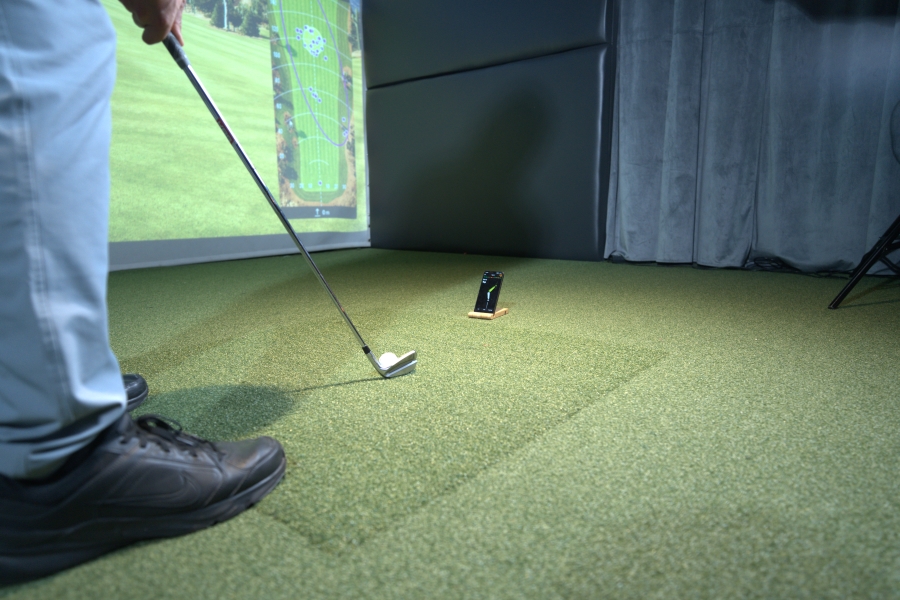
Step 1: Place the headcovers to create a gate
- Put one headcover just behind the ball on one side.
- Put the second headcover just in front of the ball on the opposite side.
- This creates a clear “window” your club needs to travel through.
Step 2: Make slow swings without touching either headcover
- Your goal is simple: swing through the gate and miss both headcovers.
- Start with half swings or 9-to-3 swings if needed.
Step 3: Use ball flight to confirm progress
- If you’re training an inside-to-out path, you should start seeing straighter shots and a more functional curve.
- If the ball still peels hard to the right, your face may still be too open—even if you missed the headcovers.
Option 2: Single Headcover Visual (Beginner-Friendly)
This version is great if you’re not ready for a full gate yet, or if you want a simpler station.
Step 1: Place one headcover as your “don’t hit this” target
- Position the headcover to represent your typical bad path (for many slicers, this is the outside/in approach).
Step 2: Make slow swings that avoid the obstacle
- Focus on moving the club on a route that misses the headcover.
- The goal is awareness: your body will naturally start finding new feels to avoid it.
Step 3: Gradually move into the two-headcover gate
- Once you can consistently miss one obstacle, the gate gives you more precision.
HackMotion Integration
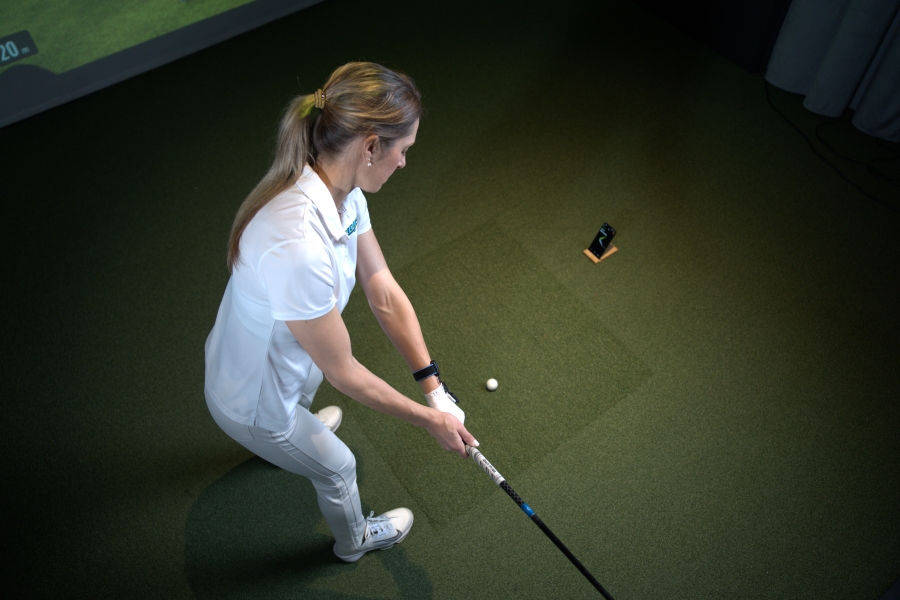
The Headcover Drill is even more effective when you train it with HackMotion, because swing path problems are often tied to clubface control.
- If your face is too open, your brain will often “solve it” by swinging more out-to-in to get the ball somewhere near the target.
- If your face is too closed, you may get stuck swinging too far in and out to avoid missing left.
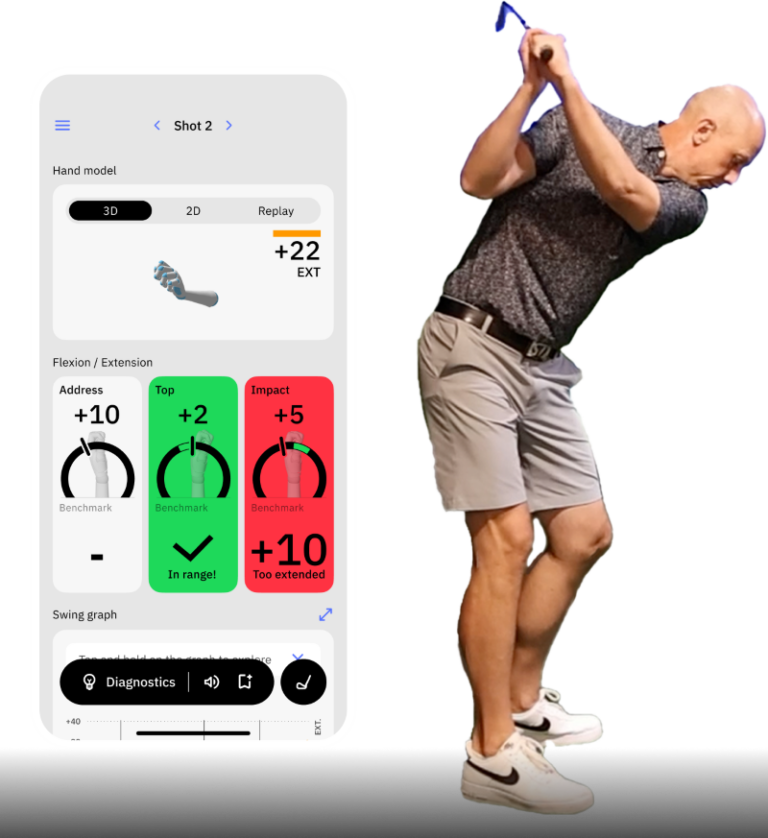
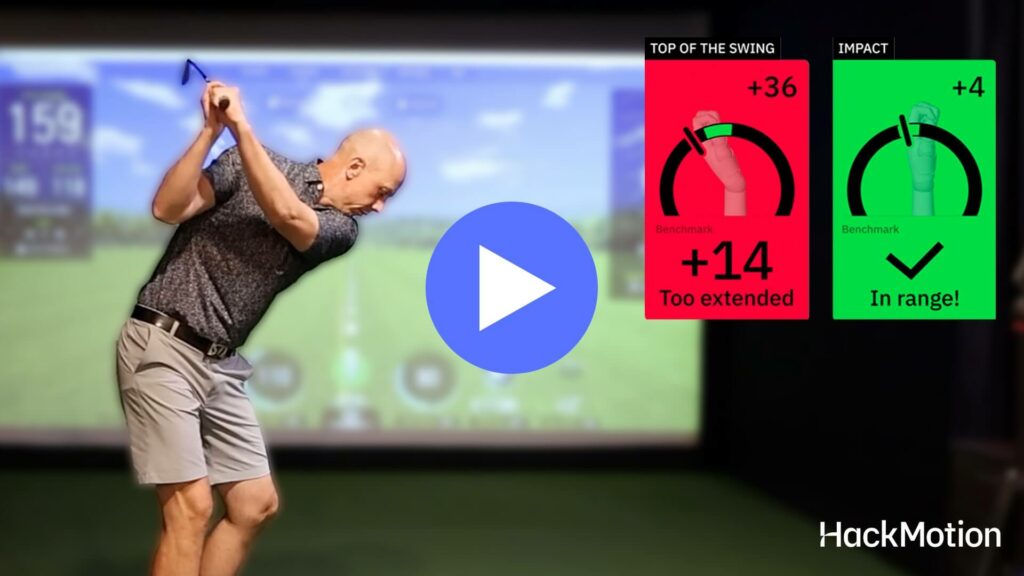
Use HackMotion to check your wrist angles and confirm whether the clubface is trending too open or too closed as you work through the gate.
When your face and path start matching, your ball flight becomes more predictable faster.
To keep progressing, start with slow swings that consistently miss the headcovers, then move into half shots, and finally full shots once contact and curve are stable.
Want to explore other drills built into the HackMotion app?
Browse all in-app HackMotion golf drills designed to train swing path, face control, and consistency.
Feel Cues (What the Headcover Drill Should Feel Like)
Feel matters with path training because the goal is to build something you can take to the course.
Try a few of these and see which one clicks:
- “Swing through the gate.” Keeps you focused on the path, not the ball.
- “Let the body turn, and the club shallows.” Helps reduce the shoulder-spinning, over-the-top move.
- “Shoulders stay closed longer.” A common feel for golfers trying to stop cutting across it.
- “Arms drop, then rotate.” Encourages a better transition instead of throwing the club out.
Common Mistakes and Quick Fixes
As for drill difficulty, the Headcover Drill is one of the simpler options out there.
If you run into any of these mistakes, there is typically a quick fix.
| Common Mistake | Quick Fix |
|---|---|
| You miss the headcovers, but the ball still slices hard right | Your clubface is likely still too open. Use HackMotion feedback and/or “close the face first” feels before worrying about bigger path changes. |
| You keep hitting the headcovers immediately | Start with slower swings and widen the gate slightly until you can miss both consistently. |
| You start changing path and suddenly hit thin/fat shots | Path changes can shift your low point, try teeing the ball slightly at first and make sure your weight is moving forward. |
| You overdo it and start hitting big hooks | You may be over-closing the face, use HackMotion to confirm wrist angles and back off the “closed face” feel. |
If your path improves but shots still curve too much,
work through these drills to improve wrist mechanics so your clubface matches the path you’re training.
Final Thoughts
The Headcover Drill is a simple way to train swing path without overthinking mechanics. It works for any level of player, and it takes just a second to set up.
Pair it with HackMotion so your wrist angles and clubface control match the path you’re training, and you’ll start seeing straighter, more repeatable shots.