The Ladder Drill for Putting & Chipping: Build Distance Control That Holds Up on the Course
You don’t need more practice time. You need practice that actually carries over to the course.
The ladder drill earns its spot because it improves distance control in putting and chipping—the shots you hit on nearly every hole.
It forces you to feel different lengths, adjust in real time, and stay focused instead of hitting the same putt or chip on repeat.
This is a drill you can use when time is limited and still walk away sharper. You build touch, awareness, and consistency.
The guide below breaks down how to use the ladder drill effectively, what it improves, and how to apply it on the practice green so the work you put in leads to better results on the course.
The Ladder Drill (Key Takeaways)
Focus on these key takeaways to fully understand this drill and all of its benefits. It helps with both putting and chipping.
- Improve your distance control with a measurable system.
- Work on your trajectory control in chipping with the drill variation.
- Always keep track of your results.
- Great drill for beginners, competitive golfers, and seniors.
- Minimal setup required.
- Use in conjunction with the alternate drills below and HackMotion.
Contents
The Secret to a Better Golf Swing Starts with Your Wrists!
Your clubface angle at impact controls over 80% of your shot’s direction—and it all comes down to your wrists. Click here for the best drills to master your wrist mechanics and take control of your swing.
What is the Purpose of the Ladder Drill?
The ladder drill is designed to improve distance control in putting and chipping by training you to adjust to different lengths instead of repeating the same stroke.
It helps you develop better feel, touch, and consistency – skills that directly affect scoring on the greens.
Better distance control leads to fewer three-putts and more predictable results around the hole, which is where many amateur golfers give shots back. By tracking your progress and trying to beat your personal best, the drill also introduces a light form of pressure that mirrors what you feel on the course.
How to Do the Ladder Drill for Putting and Chipping (Step-by-Step)
The setup and structure for the ladder drill with putting and chipping are almost identical.
The main difference is an added variation for chipping that helps improve both distance and trajectory control.
Putting & Chipping Ladder Drill
Setup
- Place one alignment stick perpendicular to your target line: About 10 feet away for putting and about 15 feet from the edge of the green for chipping.
- Place a second alignment stick parallel to the first, about 5 feet behind it, creating a clear target zone.
- Set up so the ball will roll to the left of the alignment sticks.
How to do the Drill
- Hit the first ball so it finishes inside the target zone, past the first stick but short of the second.
- Leave the ball where it stops and mark it if needed.
- Hit the next ball so it finishes past the previous ball while still staying inside the target zone.
- Continue advancing one ball at a time.
When the Drill Ends
- A ball finishes short of the previous ball, or
- A ball rolls past the second alignment stick.
Scoring
- Count how many balls you successfully advance.
- A total of 6–7 is solid distance control.
- Reaching 10 or more shows strong feel and consistency.
Additional Chipping Option
Setup
- Choose a target 20 feet away, such as a hole or a tee placed on the green.
How to do the Drill
- Chip the first ball so it just reaches the green, leaving roughly a 19-foot putt.
- Chip the next ball so it finishes slightly past the previous ball without passing the target.
- Continue advancing one ball at a time.
When the Drill Ends
- A ball finishes short of the previous ball, or
- A ball carries or rolls past the target.
Goal
- Track how many successful shots you complete and aim to improve each session.
What Types of Golfers Will Benefit Most
- Beginners: The ladder drill gives new golfers a clear, visual way to practice distance control and understand how swing length and tempo affect results. It creates early feedback and builds confidence as progress becomes easy to measure.
- High-Handicap Golfers: Many high handicappers lose strokes around the green due to poor distance control. The ladder drill isolates speed and feel, helping these players reduce three-putts and improve consistency on chips and putts.
- Competitive Amateurs: For golfers playing in matches or competitions, small mistakes add up quickly. The ladder drill sharpens distance control under light pressure, improving the chances of getting up-and-down and avoiding costly three-putts.
- Seniors: As strength and flexibility change, distance control often becomes less predictable. The ladder drill helps seniors recalibrate feel and maintain consistency by emphasizing touch and control rather than power.
How Hackmotion Can Help
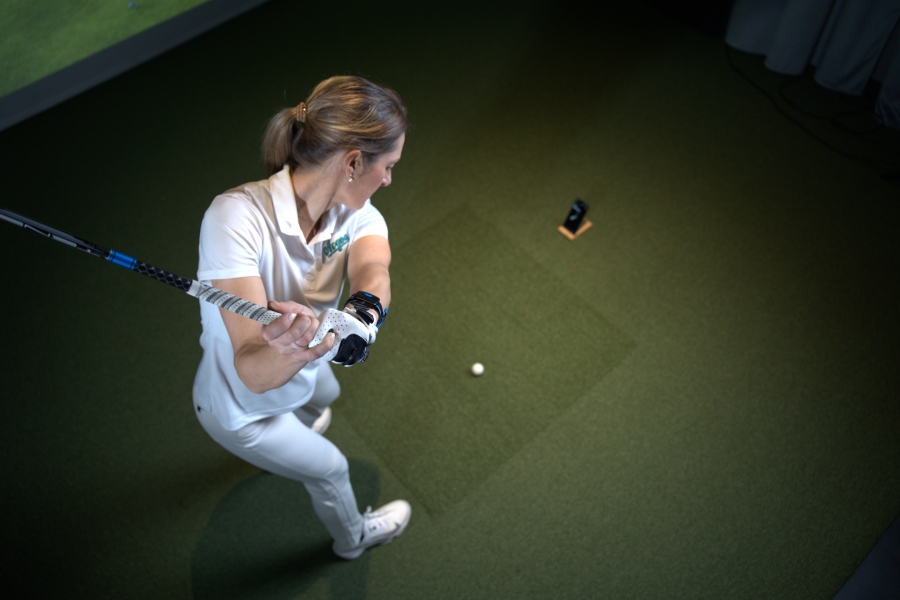
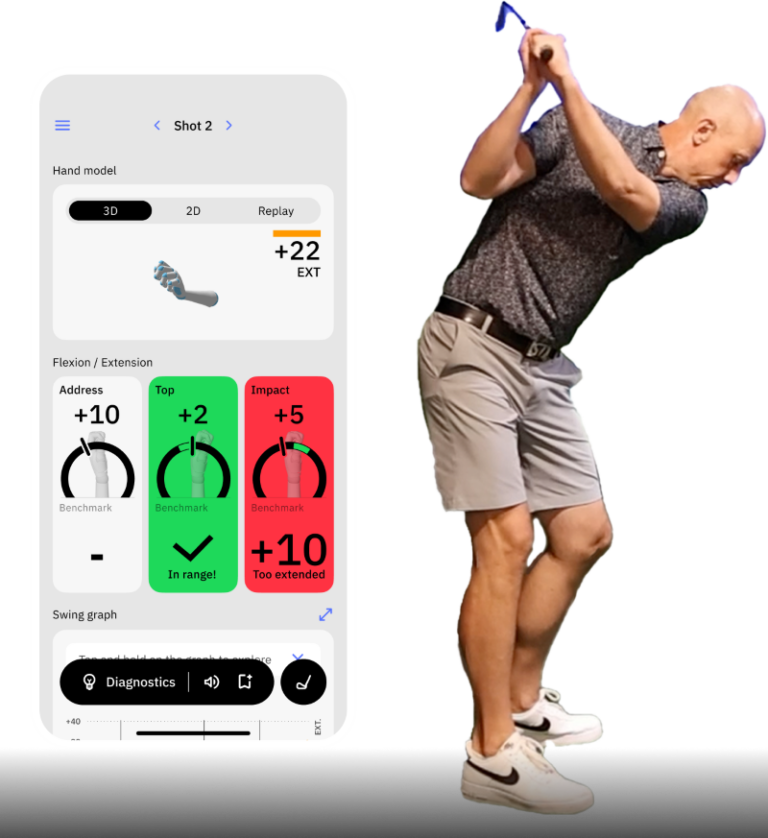
The ladder drill improves distance control, but wrist action often determines whether that control shows up in your chipping and putting.
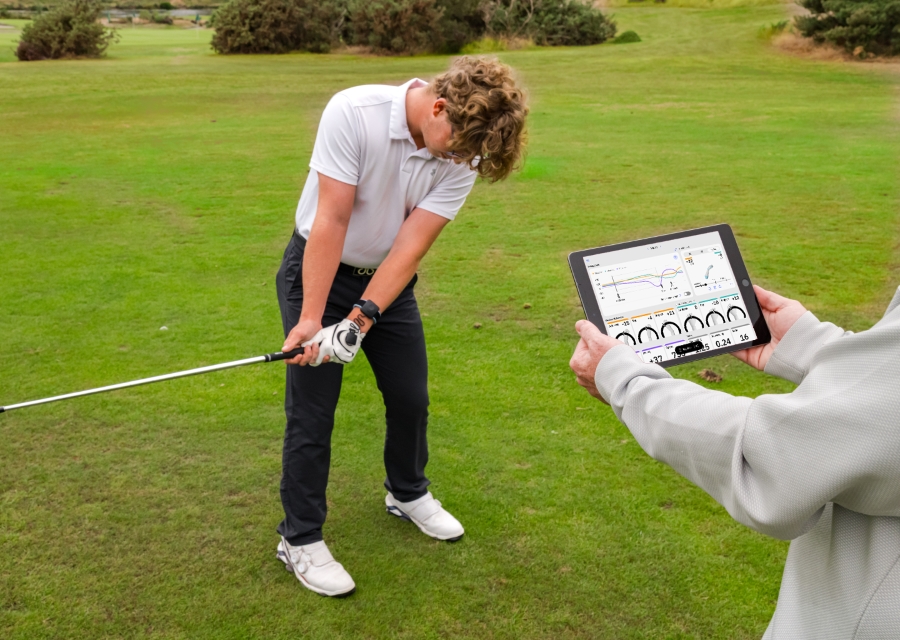
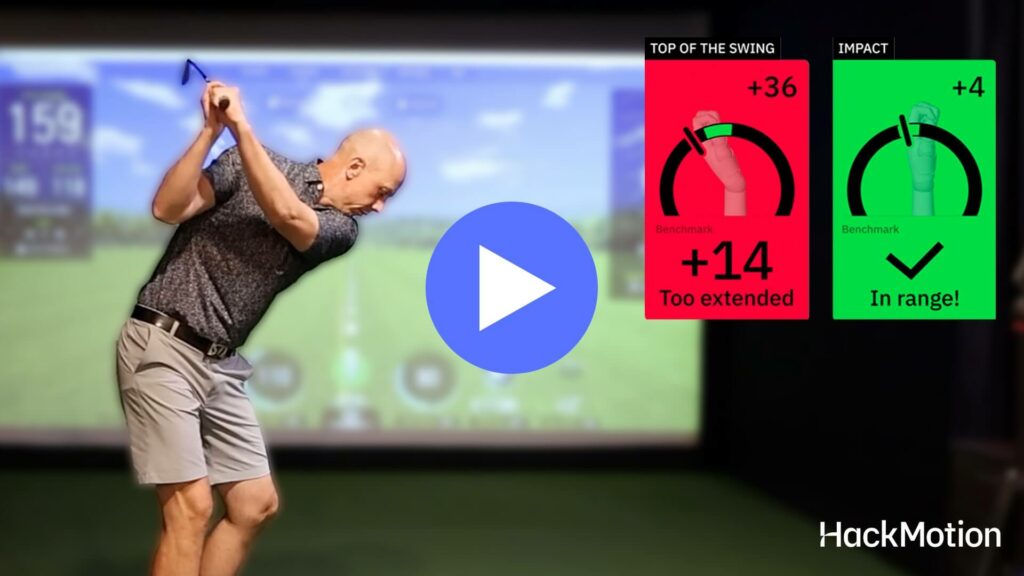
Small changes in wrist position affect loft, strike, and rollout. When those changes vary from shot to shot, distance becomes unpredictable. Using HackMotion alongside the ladder drill helps you see and manage those wrist patterns rather than guess.
Here’s where HackMotion makes the ladder drill more effective:
- It shows when your lead wrist adds or loses angle during chipping, which can cause flipping, excessive loft, or inconsistent contact.
- It helps you maintain a more stable lead wrist through impact, leading to cleaner strikes and predictable rollout.
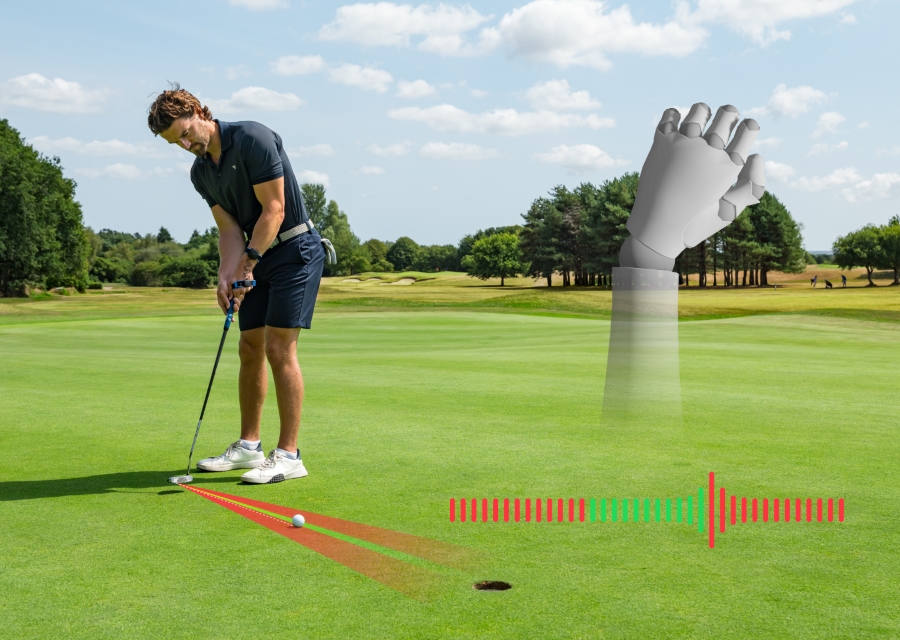
- It detects subtle wrist movement in putting that can open or close the face and affect both the start line and speed.
- It pairs wrist data with a built-in metronome to reinforce consistent tempo, which is critical for reliable distance control under pressure.
Want to explore other drills built into the HackMotion app?
Browse all in-app HackMotion golf drills designed to train swing path, face control, and consistency.
- Video Timestamp: 3:00 – 9:51
Common Mistakes and How to Fix Them
The ladder drill is pretty self-explanatory. You can get it set up and start working within minutes. However, if you run into issues with it, try some of these quick fixes.
| Mistake | What’s Happening | Quick Fix |
|---|---|---|
| Rushing Through Shots | Balls are hit back-to-back without resetting, leading to poor focus and inconsistent distance. | Use a consistent pre-shot routine before every putt or chip. |
| Focusing Only on Distance | Golfers chase the next “rung” and ignore the start line or direction. | Align your setup and visualize the ball’s path. For chipping, rotate between both ladder drill variations. |
| Ignoring Shot Feedback | Where the ball finishes is overlooked, so adjustments aren’t made. | Pause after each shot, note the result, and make one small adjustment before the next ball. |
| Inconsistent Setup | Ball position or posture changes from shot to shot, causing variable results. | Set up the same way every time to build repeatable motion and confidence. |
Drills that Complement the Ladder Drill
Pair these drills with the ladder drill and your usual short game practice routines.
While the ladder drill provides excellent results for distance control and tempo, the following drills will round out your skills by addressing more accuracy and control.
Putting – Tennis Ball Drill
For golfers who struggle with active wrists and hands, all you need is a tennis ball to fix it. This helps quiet the hands and wrists and redirects the source of power to the shoulders.
Putting Tennis Ball Drill – Step by Step:
- Take your normal putting stance and place a tennis ball between your wrists.
- You may need to adjust your grip for this drill, which is ok. You can return to your normal grip afterward and still gain all the benefits.
- As you take your putting stroke, be sure to keep the tennis ball secure; it should not move and definitely not drop.
Chipping – Par 18 Drill
Being able to chip and putt well in practice is one thing, but many golfers struggle to translate their skills to the course.
This drill helps you put all the proper mechanics in place while testing your nerves and getting you used to playing under pressure.
Too many amateurs neglect this style of practice, which results in mediocre results when it comes to playing consistently.
Chipping Par 18 Drill – Step by Step:
- Choose a cup to chip to, and start from off the green within 15 feet of the fringe.
- Hit your chip as close as you can to the cup and then try to sink the putt.
- Keep track of your strokes and whether or not you got up-and-down.
- Repeat this for eight other holes, changing the cup and starting point each time.
- You can play alone or with friends to add even more challenge.
Final Thoughts
The ladder drill trains more than distance control. It also trains how you handle pressure when on the course. By tracking progress and challenging yourself to improve, you build confidence in your putting and chipping while making your practice time more effective.
When paired with HackMotion, the learning process becomes faster and clearer. The HackMotion gives you objective feedback on your wrist movement and tempo, helping you make targeted adjustments instead of guessing.