The Pump Drill: Improve Downswing Transition, Wrist Angles, and Impact
The downswing is the fastest part of the golf swing and the easiest place for things to go wrong. If you struggle with casting, weak contact, slices, or inconsistent distance, the issue often starts in your transition.
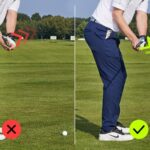
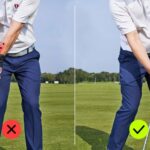
The Pump Drill slows the transition from the top of the swing and trains you to pull the arms down while retaining proper wrist angles. By improving wrist angle control during the transition, it helps you deliver more shaft lean, cleaner contact, and more reliable ball striking.
This drill is simple to set up, easy to repeat, and effective for golfers who want cleaner contact without rebuilding their swing.
The Pump Drill (Key Takeaways)
Learn the basics of this drill, what it’s used for, and who it will benefit most with these key points:
- Improve your transition from the top of the swing by retaining proper wrist angles.
- Reduce casting and off-line shots by controlling wrist angles in the downswing.
- Practice slowly at first to train correct wrist angles before increasing speed.
- Perfect for players who want to improve their consistency with their full swing.
- Can be combined with Hackmotion and other complementary drills to make the most of your practice time.
Contents
How to Do the Pump Drill
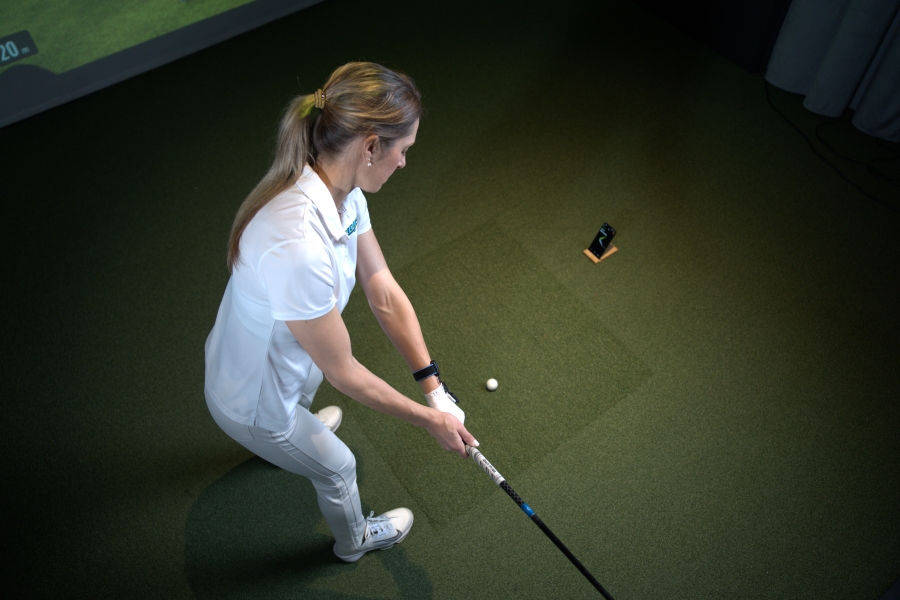
The Pump Drill can be done indoors or on the range. The focus is on the transition from the top of the swing to shaft-parallel, where retaining proper wrist angles matters most.
Start slowly to learn the correct feel, then gradually increase speed as your control improves.
- Take your normal setup: Use your standard address position with an iron, wedge, or any club you want to train with.
- Swing to the top of your backswing (P4): Make a normal backswing and pause briefly at the top so you’re aware of your position.
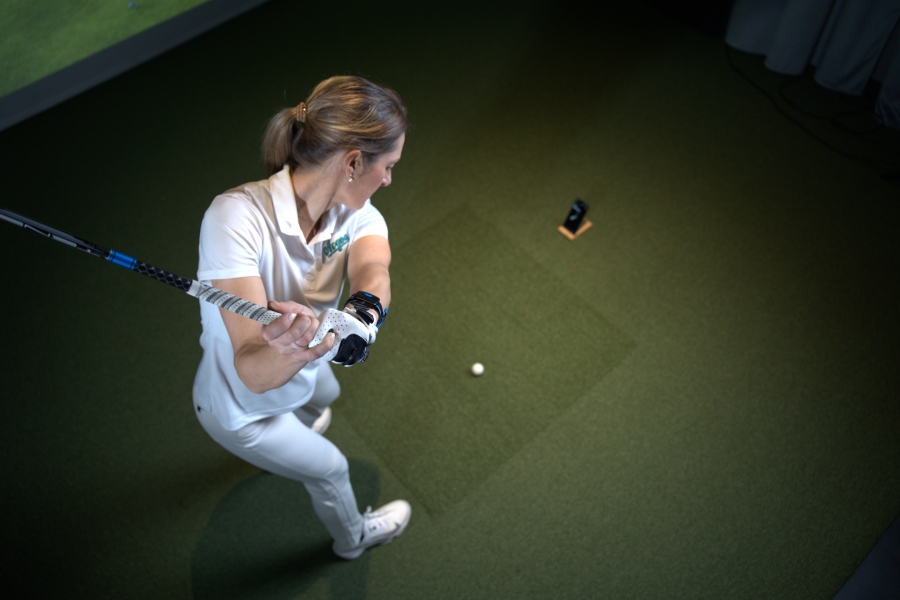
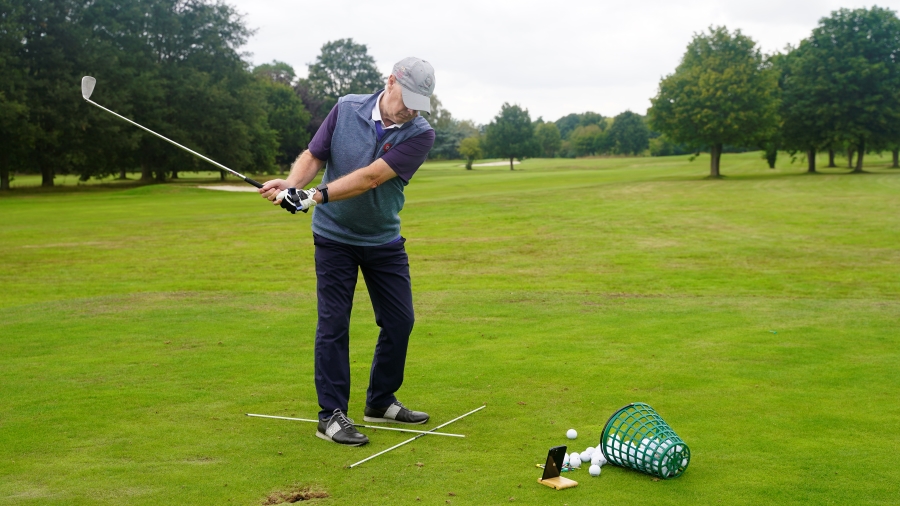
- Pull the arms down to shaft-parallel (P6): From the top, begin the downswing by pulling your arms down until the shaft is parallel to the ground. Focus on retaining your wrist angles and avoiding any early release.
- Pause at P6: Stop the club at shaft-parallel and check the feel. The goal is to maintain wrist angles without adding excessive extension or flexion.
- Repeat the pump motion: Return to the top and repeat the pull-down to P6 two or three times. Each pump should feel controlled and deliberate, not rushed.
- Hit the ball: After the final pump, continue through and strike the ball while maintaining the same wrist angles you trained during the pump motion.
- Start slow, then build speed: Begin with slow, exaggerated movements to learn the feel. As you improve, gradually increase speed while keeping the same wrist control.
Who Benefits From the Pump Drill
The Pump Drill benefits golfers who struggle with casting, loss of shaft lean, or poor contact when trying to swing faster.
Its purpose is to improve the transition from the top of the swing by allowing the arms to move faster without losing wrist angles.
The result is cleaner ball-striking, improved power, and better directional control. Any golfer struggling with poor contact, slices, or limited distance will benefit dramatically from incorporating this drill into their practice.
Struggling to retain wrist angles during the pump drill or stop casting in the downswing?
Work through these drills to improve wrist mechanics and make better shaft lean and impact easier to repeat.
How the Pump Drill Helps Your Swing
Once you understand the motion of the Pump Drill, it becomes easy to blend it into your regular practice sessions.
Used consistently, it helps clean up several common swing issues at the same time.
- Stops early release and casting by training you to retain wrist angles as the arms pull down from the top of the swing.
- Improves contact consistency by maintaining shaft lean and proper wrist angles into impact.
- Helps straighten ball flight by keeping the club in a better position during transition, making it easier to return the face to the ball.
- Adds usable distance by improving compression rather than asking you to swing harder.
- Creates a more repeatable transition so your timing holds up better on the course.
Why This Drill Works (And Why Pros Use It)
The Pump drill works because it exaggerates a key movement found in great swings: controlling the transition from the top of the swing. Slowing the transition down makes proper sequencing easier to feel and repeat.
Many amateurs start the downswing by throwing the club with their hands, which causes casting and loss of wrist angles. This drill reduces speed and helps reinforce the correct order of movement, allowing the arms to pull down while the body supports the motion.
That approach isn’t just for amateurs. Justin Rose uses exaggerated transition movements in his pre-shot routine to rehearse sequencing before full swings. The goal isn’t perfection, it’s training the right feel so it shows up at full speed.
Hackmotion Integration
The Pump Drill improves transition control, but it works best when your wrist positions are under control.
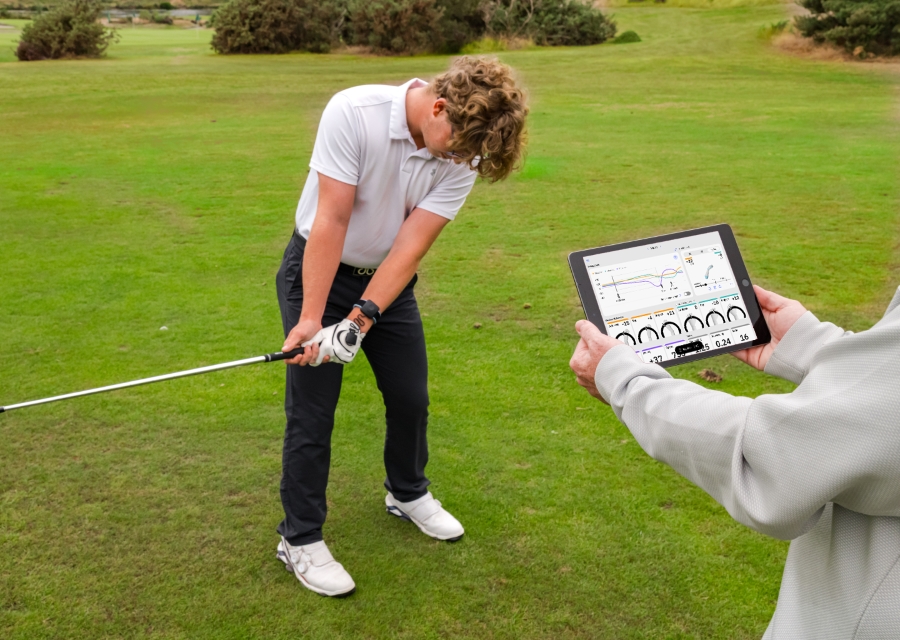
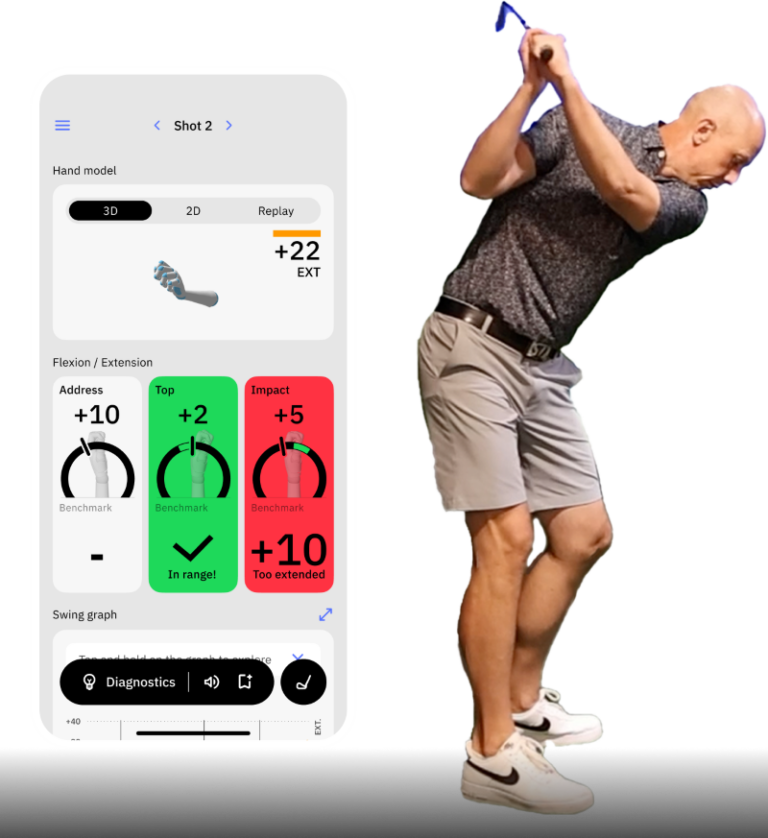
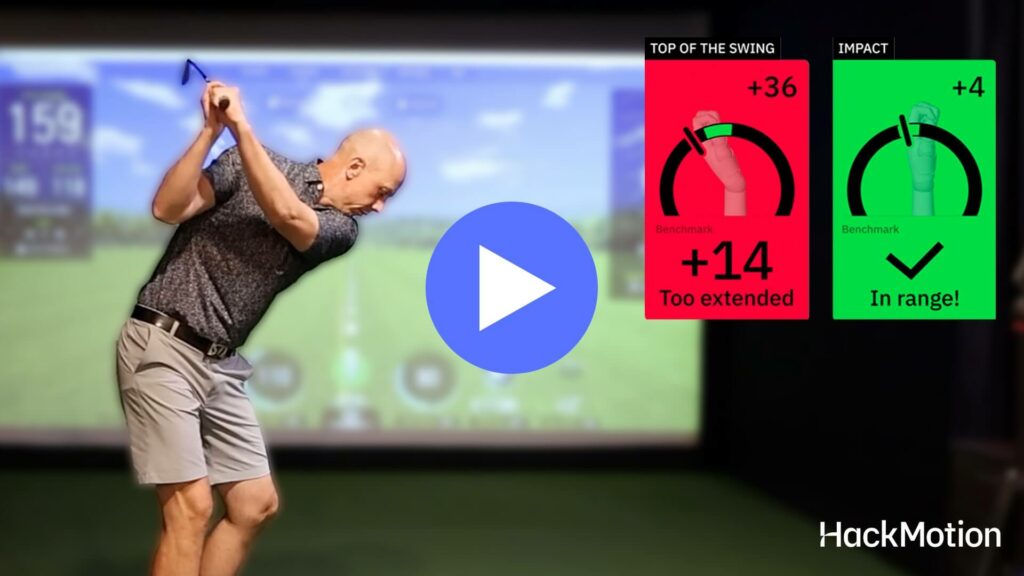
HackMotion gives you immediate feedback during the drill so you can confirm you’re not adding lead-wrist extension or casting as the downswing starts.
Inside HackMotion, the Motorcycle Drill to P6 is the ideal complement to the Pump Drill. The Motorcycle Drill to P6 trains the exact transition phase from P4 to P6, providing immediate feedback if you pull down with too much extension (open face) or too much flexion (closed face).
Because training the downswing can disrupt tempo, HackMotion’s built-in metronome helps you reset your rhythm before hitting balls, making the drill easier to blend into real practice.
Want to explore more drills like this inside the HackMotion app?
Discover our full collection of built-in HackMotion golf drills designed to improve connection, tempo, and consistency.
Common Mistakes and Quick Fixes
Here are a few of the most common mistakes you’ll find when working on the Pump Drill. Remember to start this slowly and eventually learn to pick up some speed.
| Common Mistake | What’s Happening | Quick Fix |
|---|---|---|
| Losing wrist angles on the pull-down | Early release leads to casting and weak contact | Slow the drill down and rehearse the pump to P6 while retaining wrist angles |
| Adding too much extension or flexion | Clubface opens or closes during transition | Aim for a neutral wrist feel during the pull-down to P6 |
| Rushing the drill | Speed overwhelms control and positions break down | Start slow, confirm the feel, then gradually add speed |
| Trying to hit the ball too early | Focus shifts from learning to results | Perform pumps first, then hit the ball |
Alternative Drills to Complement the Pump Drill
Keeping a well-rounded practice routine is a cornerstone of game improvement. Just like working out, you never want to focus too much on one muscle; you want balance.
Use these drills on the same day as the Pump Drill to ensure all aspects of your swing operate in sync.
Backswing Wrist Drill
Since the backswing is not utilized in the Pump Drill, performing a backswing drill right away is the perfect way to keep your swing balanced.
However, you can still use what you learned and apply it to your downswing, even though this is a backswing drill.
- Video Timestamp: 0:29-4:30
Backswing Wrist Drill – Step by Step
- Lay down an alignment stick between your feet and the ball so it points at your target.
- Take your normal address at the ball.
- Start your backswing by setting your wrists only; no other part of your body should move. Simply hinge your wrists and lift the club so it’s parallel with the alignment stick on the ground.
- With your hands and wrists set, initiate your backswing from that point as you normally would.
- Continue with your downswing while maintaining the same wrist hinge from step 3.
- Start with slow-motion practice swings and gradually work your way up to hitting balls. But always take your time focusing on step 3.
Hit Hard, Stop Quick Drill
Optimize your power and tempo with this drill. Unique to Hackmotion, the hit hard/stop quick drill is designed to deliver maximum power through impact without sacrificing accuracy or ball-striking quality.
It helps you get a handle on your tempo after you’ve been tinkering with it during the Pump drill.
- Video Timestamp: 3:45-6:45
Hit Hard, Stop Quick Drill – Step by Step
- Take your usual stance at address.
- Start with no ball to learn the new tempo and sequencing.
- Take a half or three-quarter back swing, but on the downswing, swing faster than you normally would, using your body and everything you worked on in the Pump drill.
- Once you pass the point of impact, stop your swing as quickly as possible. Your club should not pass parallel to the ground.
- Bringing your swing to a quick stop will reveal your negative tendencies and help you improve your tempo by optimizing your positions throughout the swing.
- Work your way up to hitting balls with this drill.
Final Thoughts
Optimizing your downswing plays a major role in lowering your scores. When you understand how your arms and wrists move through the transition and into impact, inconsistent contact becomes much easier to fix.
The Pump Drill trains better transition mechanics and wrist control, but pairing it with HackMotion makes the feedback immediate and clear. The sensor tracks your wrist movement through the pull-down, so you know right away whether you’re retaining the correct angles or losing them.
Combining simple, proven drills with objective feedback gives you a more reliable path to better ball striking and more consistent results.