12-Week Golf Practice Plan for Mid-Handicap Golfers
Most golfers aren’t short on information; they just don’t know how to use all the information they have.
By the time you reach a mid handicap, you’ve likely collected dozens of drills, tips, and swing thoughts. But you may have no idea what to work on or how to go about it.
This 12-week practice plan is built for golfers who want a simple, organized path forward, not a swing rebuild.
Each week targets a specific issue that mid-handicap golfers struggle with and gives you two clear, realistic practice sessions to follow.
The goal is steady improvement:
- More predictable ball striking.
- Better control inside 100 yards.
- Fewer big misses on the course.
You’ll practice two times per week for 45 minutes. If you have extra time, there are optional additions, but nothing here requires long-range sessions or daily practice.
12-Week Mid-Handicap Practice Plan (Quick Overview)
Below is a quick overview of the full 12-week practice plan. Use it to jump directly to the week you want to work on.
| Week & Focus | Main Problem Being Addressed | Primary Emphasis |
|---|---|---|
| Week 1 – Control Contact | Thin and fat shots, poor strike quality | Low-point awareness |
| Week 2 – Quiet the Hands | Timing-based saves, excessive hand action | Takeaway structure |
| Week 3 – Own the Top of the Swing | Inconsistent transition and contact | Top-of-swing wrist control |
| Week 4 – Create Functional Shaft Lean | Pushes, blocks, forced compression | Sequencing and natural lean |
| Week 5 – Control the Clubface | Two-way misses, unpredictable start lines | Face awareness and control |
| Week 6 – Add Speed Without Breakdown | Loss of balance and structure at higher speed | Sequencing and deceleration |
| Week 7 – Simplify the Short Game | Inconsistent chips and pitches | Low point, face control, carry windows |
| Week 8 – Control Launch and Distance | Solid contact but uneven yardages | Dynamic loft awareness |
| Week 9 – Learn the Proper Release | Casting, flipping, weak compression | Timed release with structure |
| Week 10 – Match Driver and Iron Swings | Driver feels disconnected from irons | Shared wrist mechanics with different body motion |
| Week 11 – Build Putting Speed and Start Line | Three-putts, missed short putts | Speed control and start-line separation |
| Week 12 – Transfer Practice to the Course | Practice success not showing up in rounds | Decision-making and trust |
Week 1: Learn to Control Your Contact, So Thin and Fat Shots Stop Showing Up
Inconsistent contact is one of the biggest separators between mid-handicap golfers and lower scores.
When you can’t control where the club contacts the ground, distance control disappears, and confidence drops. This week focuses on low point awareness.
Practice Session 1 (45 minutes): Low Point Awareness
Warm-up (5 minutes): Use a wedge and make short half swings at about 50 percent effort. Ignore the target. Pay attention to where the club contacts the turf relative to the ball.
Primary Drill – Low Point Control (20 minutes): Set up a simple low-point drill by drawing a line on the ground or placing a visual reference just in front of the ball.
- Make controlled half swings.
- Your goal is to strike the ground in front of the ball, not at it.
- Reset between swings instead of hitting balls rapidly.
- Notice what your wrists are doing when contact improves rather than trying to force a change. If contact worsens, slow the pace between swings, not the swing itself.
Short Game Work (15 minutes):
- Hit basic chip shots with one club.
- Focus on brushing the turf in the same spot every time.
- Ignore rollout and result.
- Clean strike matters more than distance.
Checkpoint & Feel (5 minutes):
- Solid contact feels quieter and heavier.
- Thin shots feel fast and hollow.
- It’s normal for contact to feel worse briefly as awareness improves.
Practice Session 2 (45 minutes): Ball-First Contact
Warm-up (5 minutes): Repeat the same half swings from Session 1.
Primary Drill – Headcover Drill (20 minutes): Place a headcover a few inches behind the ball.
- Make half swings focusing on striking the ball first.
- Do not try to “help” the ball up.
- If you hit the headcover, pause and reset.
- This drill reinforces low-point control without adding swing thoughts.
Short Game Work (15 minutes):
- Choose one landing spot and hit chip shots trying to land the ball on that spot repeatedly.
Checkpoint & Feel (5 minutes):
- Cleaner strikes with fewer extreme misses.
- Less need to save shots with the hands.
If you have extra time: Repeat the drill with a different iron to confirm the pattern holds.
Week 2: Quiet Your Hands Without Losing Speed or Feel
Many mid-handicap golfers rely on their hands to make last-second adjustments. While this can produce good shots occasionally, it makes consistency nearly impossible.
It also makes your golf swing too reliant on timing. This week focuses on organizing the hands early so they don’t need to rescue the swing later.
There’s no need to eliminate hand action, but reducing unnecessary manipulation is the goal.
Practice Session 1 (45 minutes): Takeaway Structure
Warm-up (5 minutes): Make slow rehearsal swings without a ball, focusing on how the club moves away from the ball.
Primary Drill – Takeaway Drill (20 minutes): Use the HackMotion takeaway drill to establish wrist structure early in the swing.
- Focus on the first part of the swing only.
- Stop the club once it reaches hip height.
- Reset and repeat instead of hitting full shots.
- Monitor how your wrists feel during the takeaway.
HackMotion Inside Takeaway Drill
If your takeaway tends to get too far inside early, this drill is for you.
Short Game Work (15 minutes): Hit short chip shots using the same takeaway feel. Quiet hands with minimal wrist movement, let the body turn carry the club.
Checkpoint & Feel (5 minutes):
- The swing feels more connected.
- Less need to flip or save shots.
- Early changes may feel restrictive but should improve contact.
Practice Session 2 (45 minutes): Repeating the Takeaway Under Motion
Warm-up (5 minutes): Revisit slow takeaway rehearsals.
Primary Focus (20 minutes): Hit balls without stopping at hip height.
- Same takeaway feel.
- No added speed.
- Let the swing flow, if contact gets worse, return briefly to the drill, shorten the swing and then resume.
Short Game Work (15 minutes): Pitch shots with slightly longer swings while maintaining the same takeaway structure.
Checkpoint & Feel (5 minutes):
- Fewer timing-based saves.
- More predictable contact.
If you have extra time: Film the takeaway from face-on to confirm consistency.
Week 3: Nail Down the Top of the Backswing
Many swing issues don’t come from the downswing they start at the top.
If the club and wrists aren’t in a reliable position at the top of the backswing, the body has to react on the way down, leading to timing issues and inconsistent contact.
This week is about learning what a good top position feels like, then learning how to pass through it naturally without stopping.
Practice Session 1 (45 minutes): Learn the Top Position
Warm-up (5 minutes): Short iron swings, smooth tempo, no rush.
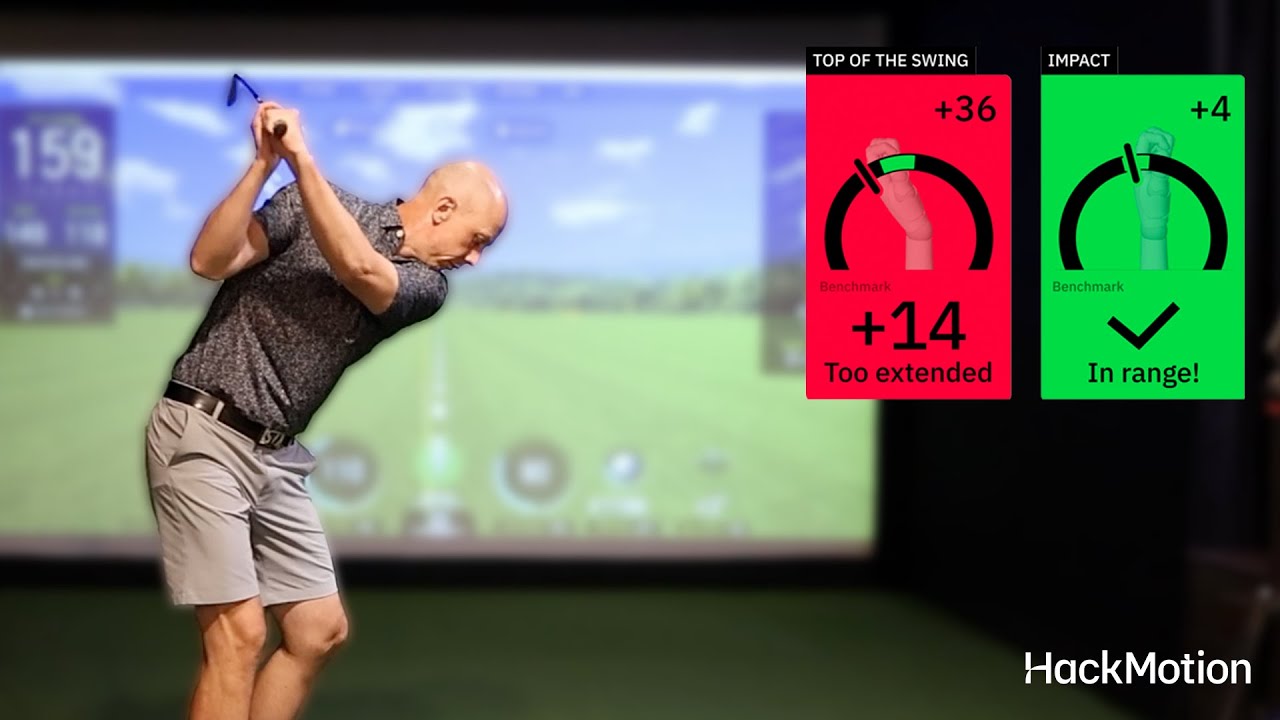
Primary Drill – Top-of-the-Backswing Check (20 minutes): Use the HackMotion Top Drill to repeatedly check your position at the top.
- Swing to the top and stop.
- Confirm the lead wrist is not overly extended.
- Feel the club supported, not loose.
- Reset and repeat.
HackMotion Top Drill
Train your top position by mastering optimal wrist angles. Challenge yourself to reach the ideal wrist position during a full-speed backswing.
Short Game Work (15 minutes): Now remove the pause and focus on passing through the same position. Hit continuous pitch shots with no stopping at the top. Use the same setup, same rhythm and if contact changes, slow the swing down.
This mirrors the full-swing work and reinforces that the top position doesn’t need to be forced to be reliable.
Checkpoint & Feel (5 minutes):
- The top feels structured and balanced.
- Transition feels quieter.
Practice Session 2 (45 minutes): Maintain the Top Without Stopping
Warm-up (5 minutes): Use short irons only and gradually remove the pause at the top.
Primary Focus – Motorcycle Drill Through the Top (20 minutes): This session trains lead wrist control at the top of the backswing and into the start of the downswing.
- Swing to the top and slightly flex the lead wrist (reduce extension).
- Begin the downswing with a Motorcycle-style rotation to keep the face stable.
- Start with slow, continuous swings.
- Gradually add speed only if wrist position stays consistent.
- This helps you eliminate excess lead wrist extension at the top and teaches how flexion naturally increases as the downswing begins.
Motorcycle Drill – Master Wrist Flexion in the Downswing
Focus on continuously adding flexion until the club reaches parallel, then smoothly complete your swing.
Short Game Work (15 minutes): Controlled pitch shots working on distance control. Focus on wrist rotation through transition, not added speed and play around with flexion and extension and how it impacts ball flight through impact.
Checkpoint & Feel (5 minutes):
- Downswing feels quieter in the hands.
- Lead wrist feels supported, not held.
- Contact improves without extra effort.
If you have extra time: Film a few swings from face-on, compare paused vs. flowing swings, see how your HackMotion numbers are improving from your earlier sessions.
Week 4: Create Forward Shaft Lean Without Pushing or Blocking Shots
Many mid-handicap golfers try to improve compression by forcing their hands forward at impact. The result is often weak pushes, blocks, or shots that feel stuck.
This week focuses on creating functional shaft lean that works with the clubface instead of against it.
The goal is compression that happens naturally, not something you manufacture mid-swing.
Practice Session 1 (45 minutes): Shaft Lean With Structure
Warm-up (5 minutes): Hit short wedge shots with a neutral setup, focusing on clean contact.
Primary Drill – Casting Drill (20 minutes): Use the HackMotion casting drill to maintain wrist structure into impact.
- Make controlled swings, focusing on maintaining structure as the club approaches the ball.
- Do not try to hold angles.
- Let the body rotation support the wrists.
- This drill helps you feel compression without forcing the handle forward.
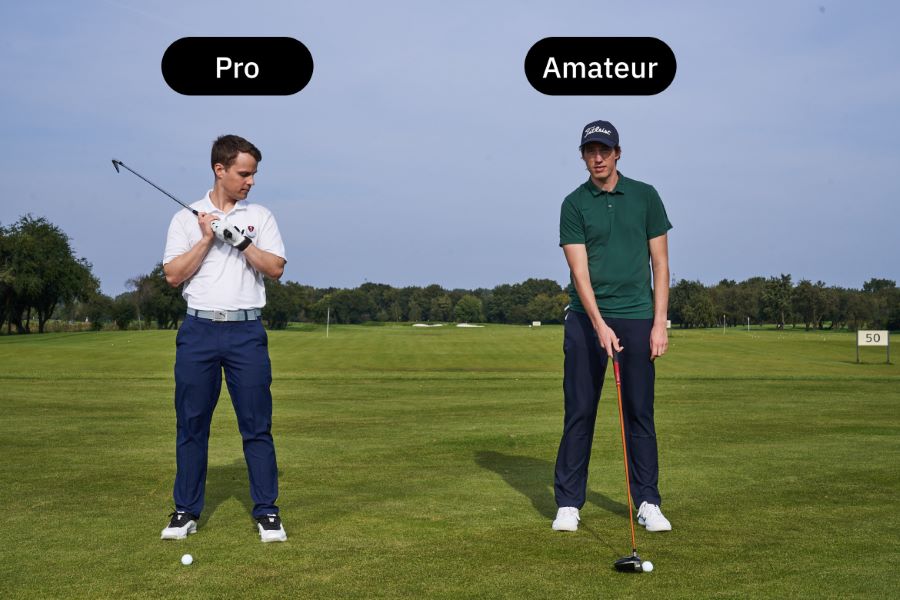
Fix Your Casting with HackMotion
Train to fix casting by generating power with your core and lower body.
Short Game Work (15 minutes): Hit low-flight chip shots with one club. Focus on solid strike and learn how to keep the trajectory predictable.
Checkpoint & Feel (5 minutes):
- Compression feels heavier, not faster.
- Pushes often mean the face is lagging behind the hands.
- Pay close attention to the sequence of the downswing and how it plays into shaft lean at impact.
Practice Session 2 (45 minutes): Delivering Lean Without Forcing It
This session is about allowing shaft lean to show up dynamically, not trying to place it at impact.
Warm-up (5 minutes): Short wedge swings, focus on clean contact and balanced finish.
Primary Focus – Hit Hard, Stop Quick (20 minutes): Use the Hit Hard, Stop Quick drill to train how wrist flexion and shaft lean appear as a result of sequencing.
- Make a full backswing.
- Swing aggressively.
- Stop the club quickly just after impact.
- Keep the finish short and controlled.
- If the club releases early or contact weakens, slow the swing and reset.
- This drill forces the body to brace, allowing the wrists to flex and the shaft to lean without trying to manufacture it.
Short Game Work (15 minutes): Hit low-to-mid pitch shots with short, controlled finishes, same wrist structure as the full swing the goal is to feel compression without adding effort.
Checkpoint & Feel (5 minutes):
- Strike feels heavy and compressed.
- Lean shows up naturally at impact.
- No urge to “hold” angles.
Week 5: Square the Clubface Without Needing Perfect Timing
Mid-handicappers often rely on timing to square the face. At this point in the practice plan you should have some more control of the low point and the clubface.
This week focuses on clubface stability through the swing, not last-second manipulation.
Practice Session 1 (45 minutes)
Warm-up (5 minutes): No ball at first, waist-high to waist-high rehearsals, notice where the clubface is pointing at the finish.
Primary Drill – Waist-High Face Control Swings (20 minutes): Use waist-high to waist-high swings to isolate face control.
- Swing to lead-arm parallel back and through.
- Stop the club on both sides.
- Observe where the face is pointing at the finish.
Progression:
- First 10 balls: neutral face, straight start line.
- Next 10 balls: slight face closed, ball starts left.
- Final reps: slight face open, ball starts right.
This teaches cause and effect between wrist movement and face direction.
Short Game Work (15 minutes): Hit low chips landing on a straight start line, focus on clubface orientation, not trajectory. If the ball starts offline, adjust wrist feel, not swing path.
Checkpoint & Feel (5 minutes):
- Start direction becomes intentional.
- Misses are predictable, not random.
Practice Session 2 (45 minutes): Controlling the Face While Swinging Freely
Now we test whether face control holds up with a larger swing.
Warm-up (5 minutes): Waist-high swings, no pause.
Primary Drill – Intentional Face Manipulation (20 minutes): This is deliberate practice, not correction.
- Hit one half shot starting left.
- Hit one half shot starting right.
- Alternate intentionally.
Rules:
- No swing changes.
- Only adjust wrist feel.
- Ball flight doesn’t need to curve the start line is what matters, If you can’t move the start line on purpose, you don’t yet control the face.
Short Game Work (15 minutes): Pitch shots to the same landing spot, alternate lower and slightly higher flights.
Checkpoint & Feel (5 minutes):
- You can move the start line on command.
- Less need to “save” shots mid-swing.
- Clubface feels manageable, not reactive.
Week 6: Add Speed Without Losing Structure
At this stage, you’ve built awareness of low point, clubface control, and wrist conditions. The next step is learning how to add speed without reverting to effort-based swings.
This week focuses on producing speed through sequencing and deceleration, not overswinging.
Practice Session 1 (45 minutes): Speed Comes From Braking, Not Swinging Harder
This session teaches you how controlled acceleration and a stable finish create speed naturally.
Warm-up (5 minutes): Start with short irons, gradually lengthen the swing, stay at 70–80% effort.
Primary Drill – Hit Hard, Stop Quick (20 minutes): This drill is used again this time to train both proper sequencing and speed through impact.
- Swing aggressively through the ball.
- Stop the club abruptly at chest-high in the follow-through.
- Finish balanced on the lead side.
Key rules:
- No overswinging.
- No falling out of posture.
- If balance is lost, slow down.
Short Game Work (15 minutes): Hit wedge shots to specific carry numbers, maintain the same tempo, change only swing length.
Checkpoint & Feel (5 minutes)
- Speed feels sharper, not forced.
- Finish feels compact and balanced.
- Contact stays solid as effort increases.
Practice Session 2 (45 minutes): Transferring Speed to the Driver
Now we apply speed principles to the club where most golfers lose them. Adding speed to the driver is tricky because you tend to lose control when speed is added.
Warm-up (5 minutes): Smooth driver swings at normal tempo focus on rhythm and balance
Primary Drill – P6 Acceleration (Pull-Down & Stop Drill) (20 minutes): This drill trains hands and club acceleration through the bottom of the swing (P6), which is where power is created, while maintaining wrist structure.
- Hold the club with normal grip.
- From the top, drop the hands and pull down quickly to P6.
- Stop the club’s motion when the shaft is horizontal (P6).
- Repeat 8–12 reps per set.
- Focus on initiating with lower body and hips, not the hands.
What This Trains:
- Early downswing acceleration.
- Lag retention and wrist sequencing.
- Torque and timing that builds speed in the driver.
- Less reliance on late flipping to gain distance.
Short Game Work (15 minutes): Lag Putting for Speed Control, long putts focusing on pace, not line.
Checkpoint & Feel (5 minutes):
- Speed feels repeatable, not risky.
- Balance holds up even with driver.
- Effort shifts from “swing harder” to “move better”.
Week 7: Make the Short Game More Consistent
The short game exposes wrist control faster than the full swing. There’s no speed to hide behind and no time to “save” the shot.
This week uses constraint-based drills to make contact, face control, and distance predictable without adding complexity.
Practice Session 1 (45 minutes): Control the Bottom and the Face
Warm-up (5 minutes): No ball at first, chip motion rehearsals with a wedge and feel the club brushing the turf in the same spot every time.
Primary Drill – Low-Point Chip Control (20 minutes): This drill makes low point and wrist structure non-negotiable.
- Place a towel or headcover just behind the ball.
- Hit standard chip shots without touching the towel.
- Use a neutral setup and a simple motion.
Focus Points:
- Lead wrist stays stable through impact.
- Strike happens first, then turf.
- Clubface stays quiet through the hit.
Progression:
- First 10 reps: very small chips.
- Next 10 reps: slightly longer chips with the same low-point control.
Secondary Drill – Start-Line Chipping (10 minutes): Once you have your low point under control, you can start layering in awareness of the clubface.
- Pick a very narrow target line.
- Hit chips that start on the same line, regardless of rollout.
- If the ball starts left or right, adjust wrist feel, not swing size.
Checkpoint & Feel (5 minutes):
- Contact feels shallow and crisp.
- Start line is predictable.
- No need to “help” the ball up.
Practice Session 2 (45 minutes): Distance Without Guessing
This session replaces “feel-based” guessing with repeatable carry control.
Primary Drill – Wedge Carry Windows (25 minutes):
Set up three landing zones:
- Short
- Medium
- Long
Using the same motion, adjust only swing length, not effort. Take the same setup and tempo every time, and don’t feel like you add a “hit” into the shot. Rotate targets every 2–3 balls.
Putting Tie-In (10 minutes): Speed Matching
- Putt three balls to the same hole.
- First ball finishes short.
- Second ball hole-high.
- Third ball just past.
Checkpoint & Feel (5 minutes):
- Carry distances repeat more often.
- Less manipulation with the hands.
- Misses are short or long, not left and right.
Week 8: Control Launch and Distance Even When Contact Feels Solid
Solid contact alone doesn’t guarantee consistent distance. Two shots can feel identical and still fly very differently if loft and wrist conditions at impact change.
This week focuses on understanding and controlling dynamic loft, so distance gaps tighten and ball flight becomes predictable.
Practice Session 1 (45 minutes): Learn What Changes Launch
Warm-up (5 minutes): Short irons only, take half swings focusing on clean strike.
Primary Drill – Loft Awareness Swings (20 minutes): This drill teaches you to recognize loft changes before trying to control them.
- Use half to three-quarter swings with a short or mid iron.
- Hit 3–4 balls focusing on one feel at a time.
Feels to Rotate:
- Slightly more lead-wrist flexion through impact.
- Slightly less lead-wrist flexion (more neutral).
- Neutral wrist with quieter hands.
What to Observe:
- Launch height.
- Peak height.
- Carry distance.
Do not chase speed. The goal is seeing how small wrist changes alter launch and distance, even when strike feels good.
Secondary Drill – Same Swing, Different Flight (10 minutes):
- Hit two shots with the same swing length.
- First shot: lower flight.
- Second shot: higher flight.
Rules:
- No stance or ball-position changes.
- Adjust wrist condition only.
- This reinforces that launch is controlled at impact, not during the swing.
Short Game Work (5 minutes): Hit one low chip, one medium and one higher, rotate continuously.
Checkpoint & Feel (5 minutes):
- Flight changes feel intentional.
- Distance differences make sense.
- Fewer “that felt pure but flew short” shots.
Practice Session 2 (45 minutes): Blend Loft Control Into Full Swings
Now we test whether loft awareness holds up as swing length increases.
Warm-up (5 minutes): Half swings, gradually lengthening, maintain the same wrist feel through impact.
Primary Focus – Flight Windows With Full Swings (20 minutes):
Choose one club only. Hit three shots:
- Lower window.
- Stock window.
- Slightly higher window.
Rules:
- Same tempo
- Same effort
- No intentional manipulation late in the swing
Short Game Work (15 minutes): Flighted pitch control, pick a single landing spot, alternate between lower flight and higher flight.
Checkpoint & Feel (5 minutes):
- Distance feels easier to predict.
- Trajectory changes don’t require effort.
- Launch no longer feels random.
Week 9: Learn to Release the Club Without Losing Compression
Casting usually isn’t a lack-of-knowledge problem. It’s a release problem.
Golfers either hold angles too long and block the ball, or panic and flip to square the face. This week teaches you how to release the club at the right time, with the help of HackMotion feedback.
Practice Session 1 (45 minutes): Release Control With Irons
This session trains what a proper release feels like with an iron before adding speed or length.
Warm-up (5 minutes): Short iron waist-high rehearsal swings focus on rhythm and balance.
Primary Drill – HackMotion Release Drill (25 minutes): Use the HackMotion Release Drill to train the correct sequence through impact.
Perfect Your Release with HackMotion
Fine-tune your release for consistent contact. Start with a short swing to master control before adding power.
How to do it:
- Make slow to medium-speed swings.
- Focus on maintaining structure into impact.
- Allow the club to release naturally after the ball.
- Use HackMotion feedback to ensure the release isn’t happening early.
Progression:
- Start with half swings
- Move to three-quarter swings
- Only increase speed if strike stays solid
Short Game Work (10 minutes): Slight shaft lean at setup, let the clubhead pass naturally through impact, no forced wrist action.
Checkpoint & Feel (5 minutes):
- Contact feels compressed, not trapped.
- Hands feel active but not flippy.
- Ball launches stronger with less effort.
Practice Session 2 (45 minutes): Releasing the Club With the Driver
The release with the driver is similar.
Warm-up (5 minutes):
- Smooth driver swings at 70–75%.
- No ball for the first few reps.
Primary Drill – HackMotion Driver Release Drill (25 minutes):
Use the same release concept, now with a longer club.
Focus Points:
- Maintain wrist structure into impact.
- Let the club release fully through the follow-through.
- No steering or holding the face off.
- Use the HackMotion release drill even with the driver to learn to square the clubface through impact.
Short Game Work (10 minutes): Putting for Flow:
- Lag putting.
- Focus on rhythm and free motion.
- Let the stroke release naturally.
Checkpoint & Feel (5 minutes):
- Driver speed feels effortless, not forced.
- Face control improves without manipulation.
- Release feels automatic, not timed.
Week 10: Make Your Driver Swing Feel Like Your Iron Swing
Many golfers treat the driver like a completely different swing. That usually leads to added wrist extension, early breakdown, and timing-dependent contact.
This week helps you prove to yourself that the wrist action is largely the same, and shows what actually needs to change when the club gets longer.
Practice Session 1 (45 minutes): Same Wrists, Different Clubs
This session establishes that your top-of-swing and impact wrist conditions do not need to change between irons and driver.
Warm-up (5 minutes): Short iron, slow swings, brief pause at the top to confirm lead wrist is flat or slightly flexed.
Primary Drill – Top Check With Club Switching (25 minutes):
- Hit 3 balls with a mid-iron.
- Switch immediately to driver for 3 balls.
- Repeat the cycle.
- You’re checking whether: the lead wrist adds extension with the driver, the top position feels rushed or loose.
Putting (10 minutes): Start-Line Control practice with straight putts, focus on stable face through impact.
Checkpoint & Feel (5 minutes):
- Top-of-swing feels familiar regardless of club.
- Driver no longer feels like a “special” swing.
Practice Session 2 (45 minutes): Why Driver Feels Different (But Isn’t)
This session explains why the driver challenges wrist control and fixes it without changing wrist angles.
Warm-up (5 minutes): Driver rehearsals focusing on lower-body movement.
Primary Focus – Body Motion That Supports Driver Wrist Angles (25 minutes): The wrist angles at setup, top, and impact stay similar what changes is how much the lower body moves forward.
Drill:
- Make slow driver swings.
- Focus on hips moving toward the target before impact.
- Keep the head relatively stable.
- Allow shoulder tilt to happen from lower-body motion, not leaning back.
- If the body stalls, the wrists break down.
Putting (10 minutes): Speed Control – Medium-length lag putts with smooth rhythm, no steering.
Checkpoint & Feel (5 minutes):
- Driver contact feels stronger without effort.
- Less urge to “help” the ball up.
- Wrist angles feel automatic, not forced.
Week 11: Build Putting Speed and Start Line That Holds Up Under Pressure
Most three-putts come from poor speed control and inconsistent start line.
This week separates those two skills and trains them deliberately, then reconnects them under mild pressure.
Practice Session 1 (45 minutes): Speed Control Without Steering
This session removes the urge to guide the putter and teaches you to control distance through stroke length and tempo.
Warm-up (5 minutes): No ball at first, make putting strokes of different lengths, notice how stroke length changes speed, not effort.
Primary Drill – Ladder Drill (25 minutes):
- Place targets or tees at increasing distances (for example: 10, 20, 30, 40 feet).
- Putt one ball to each distance in order.
- Ball must finish within a defined zone (circle or putter-length).
- Miss short or long = restart the ladder.
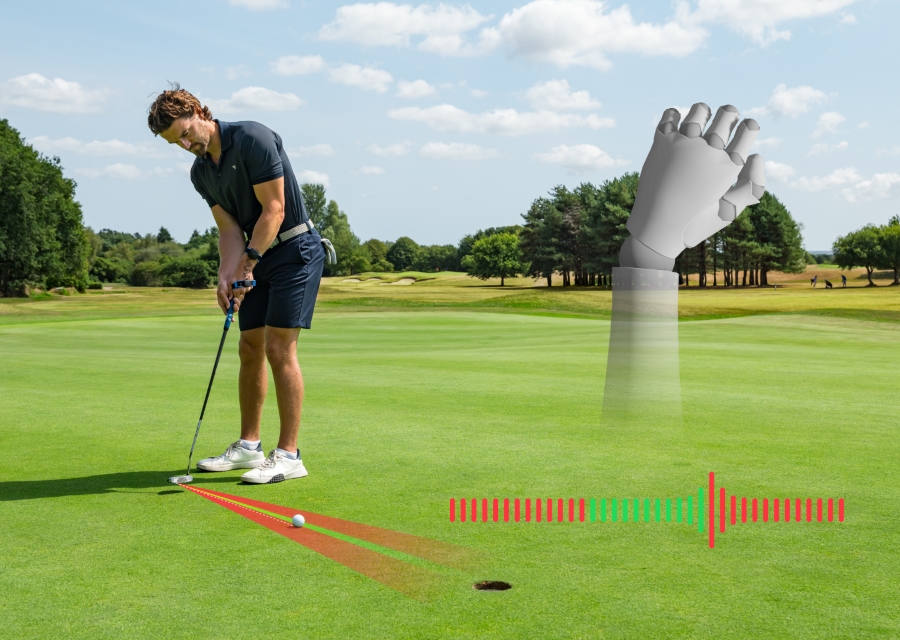
- In addition you can wear the HackMotion and monitor consistency in wrist movement, look for repeatable motion.
Checkpoint & Feel (5 minutes):
- Speed comes from stroke length, not effort.
- Fewer runaway putts.
- Better first-putt finishes.
Practice Session 2 (45 minutes): Start Line That Holds Up Under Pressure
This session builds confidence on short and mid-range putts by isolating start direction.
Warm-up (5 minutes): Short putts, no hole, focus only on rolling the ball end-over-end.
Primary Drill – Gate Start-Line Challenge (25 minutes): Using the HackMotion paper-cup gate drill:
- Create a gate just wider than the golf ball.
- Place it a short distance in front of the ball.
- Roll putts through the gate.
- Start with wider spacing.
- Narrow the gate as consistency improves.
- To add pressure try and make ten in a row through the gate.
Checkpoint & Feel (5 minutes):
- Direction feels intentional.
- Speed and line feel separate.
- Less tension over short putts.
Week 12: Make Your Practice Transfer to the Course
This final week isn’t about fixing mechanics. It’s about learning how to trust what you’ve built and take it onto the course without overthinking.
Practice Session 1: Random Practice With Purpose
Instead of repeating the same shot, practice like you play. Hit one ball at a time with a clear intention, then switch clubs, targets, or shot types. No do-overs. No groove swings.
Use this session to:
- Pick different targets each swing.
- Change clubs frequently.
- Commit fully before each shot.
If something breaks down, don’t rebuild your swing. Go back to one drill from the course that helped you most whether that was a top-of-swing check, a release feel, or a short-game motion and use it briefly to reset.
Wearing HackMotion here helps because it gives you confirmation instead of guesses, letting you return to playing mode faster.
Practice Session 2: Simulate the Course
This session is about decision-making and trust. Create “holes” on the range or simulator:
- Pick a fairway target, then a realistic approach.
- Play the shot you’d actually choose on the course.
- Accept the result and move on.
Between shots, stay out of mechanical thoughts. If you use HackMotion, let the feedback be background reassurance, not something you chase. The goal is to feel what solid swings produce not to adjust mid-round.
Bringing It to the Course:
When you play:
- Choose one feel for the day, not five
- If a miss shows up, resist fixing it on the spot
- Trust the patterns you trained over 12 weeks
Final Thoughts
This practice plan isn’t about building a perfect swing. It’s about solving the problems mid-handicap golfers actually face with a structure that keeps practice focused and realistic.
If you follow the plan and stay patient with the feels, you should finish these twelve weeks with better contact, better control, and a game that holds up more consistently on the course.
If you’re ready to keep building from there, the From 20 to 10 Handicap Practice Plan and the Driving Range Practice Plan are natural next steps.