Average Golf Swing Speed by Age (With Charts): What’s Normal and How to Get Faster at Any Age

At some point, every golfer wonders: “Is my swing speed normal for my age—or am I way behind?”
Golf swing speed generally peaks in your 20s and 30s and then starts to decline. But the drop isn’t nearly as dramatic as most golfers assume.
In fact, most of the distance loss in your 40s, 50s, and 60s is caused by stiff hips, shorter backswings, poor wrist mechanics, and tension, not just by age itself.
We will give you an overall look at what to expect with your driver swing speed as you age, why it changes, and some exact drills you can work on to gain swing speed regardless of your age.
If you want more distance with the swing you already have, this is your blueprint.
Average Swing Speed by Age (Key Takeaways)
- Most golfers hit their top clubhead speed in their 20s and early 30s, followed by a gradual decline.
- Average male amateur driver speed sits in the low–mid 90s mph; female amateurs typically range from the mid-70s to mid-80s mph.
- Loss of speed is almost always caused by reduced rotation, shorter hand path, tension, and poor wrist positions, all fixable.
- You can absolutely increase swing speed at any age by training your body turn, wrist mechanics, and release pattern.
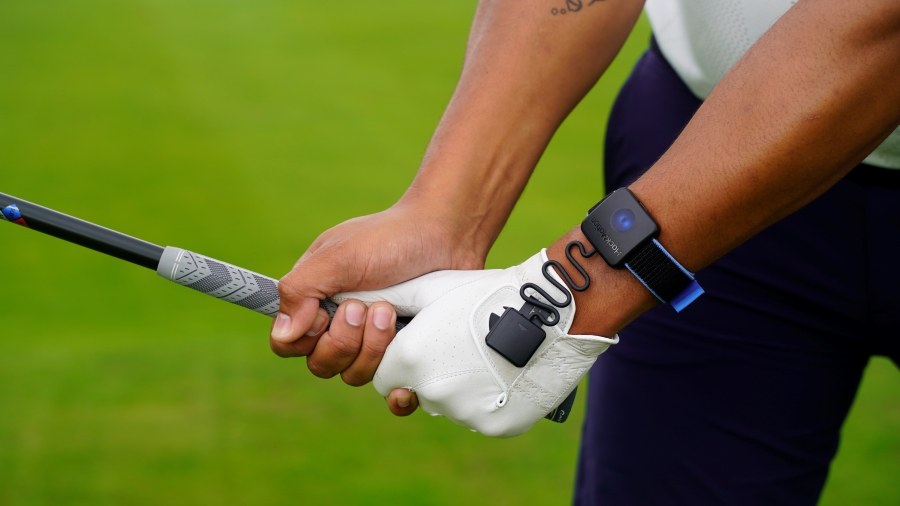
- HackMotion acts like a coach on your wrist, showing you whether your wrist angles support or sabotage speed.
Contents
Average Driver Swing Speed by Age (Men)
These are typical amateur ranges, not Tour-level numbers. They assume reasonable contact and modern equipment.
Physical fitness, flexibility, and skill level all play into these numbers, so they won’t be perfect, but they should give you a general idea of what to expect.
| Age Group | Typical Driver Swing Speed (mph) | Estimated Carry Distance | Estimated Total Distance |
|---|---|---|---|
| 20–29 | 95–105 mph | 230–260 yds | 250–280 yds |
| 30–39 | 93–102 mph | 225–255 yds | 245–275 yds |
| 40–49 | 90–98 mph | 215–245 yds | 235–265 yds |
| 50–59 | 85–95 mph | 205–230 yds | 225–250 yds |
| 60–69 | 80–90 mph | 190–215 yds | 210–235 yds |
| 70+ | 72–85 mph | 170–205 yds | 185–225 yds |
Average Driver Swing Speed by Age (Women)
Women’s speeds are lower on average, but the pattern is similar: a peak in the late 20s–30s, with small declines only if mobility and strength aren’t maintained.
| Age Group | Typical Driver Swing Speed (mph) | Estimated Carry Distance | Estimated Total Distance |
|---|---|---|---|
| 20–29 | 78–88 mph | 180–205 yds | 195–220 yds |
| 30–39 | 75–85 mph | 175–200 yds | 190–215 yds |
| 40–49 | 72–82 mph | 170–195 yds | 185–210 yds |
| 50–59 | 68–78 mph | 160–185 yds | 175–200 yds |
| 60+ | 62–72 mph | 145–170 yds | 160–185 yds |
Want to explore more ways to improve your distance and consistency?
Check out our guides on how far you should hit your driver and proper wrist action in the golf swing.
How to Use These Numbers
The numbers in the swing speed charts above are to give you a general idea of where you stand. If you’re slightly below average, it’s actually an opportunity.
Most golfers leave easy speed on the table because of mechanical inefficiencies, not lack of athletic ability.
Start by:
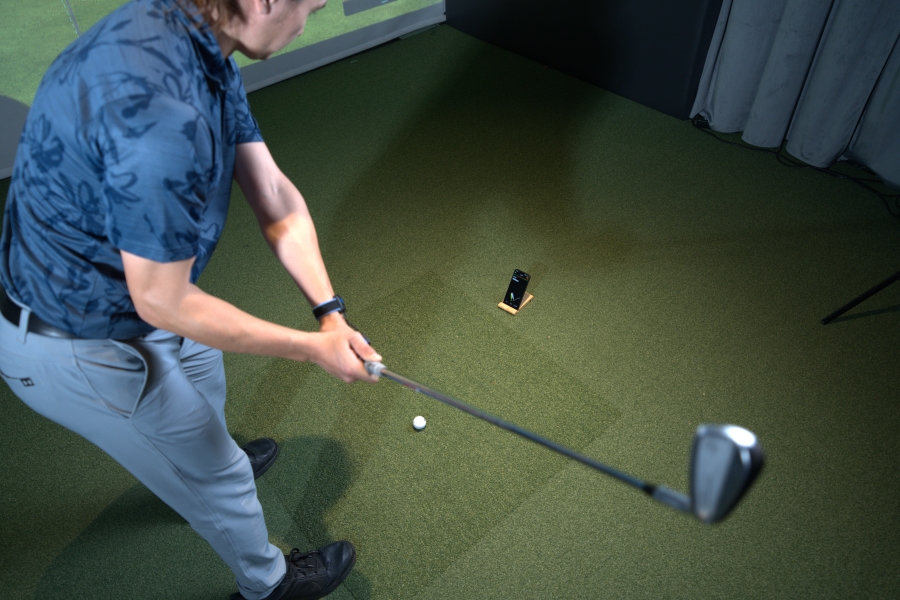
- Getting a 10-swing average on a simulator or launch monitor.
- Compare your number to the chart.
- Identifying whether your limitation is mobility, strength, tension, or wrist mechanics.
- Using the drills below to target the biggest speed killers.
With the right mechanics and training, golfers in their 40s, 50s, 60s, and even 70s can absolutely gain and not lose speed.
Why Swing Speed Drops With Age
Swing speed tends to decline with age because of reduced rotation. However, there are other reasons that should be addressed if you find yourself losing your ability to swing the club fast.
These fixable reasons that swing speed drops include:
Reduced Rotation that Leads to a Shorter Hand Path
A shorter turn gives you less time to build speed. Older golfers often stop using their hips and ribcage and rely too much on their arms to create power.
Loss of Strength and Power
Strength naturally declines, but explosive power declines faster. Golfers who are able to maintain speed as they age are good at exploding through their golf shots; it’s a skill that needs to be trained, or you’ll lose it.
Poor Wrist Conditions
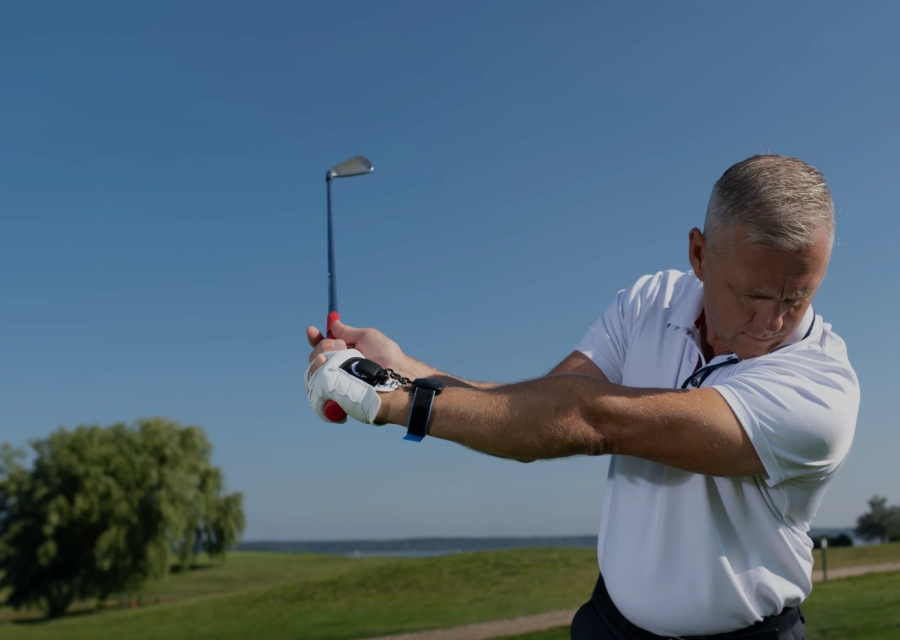
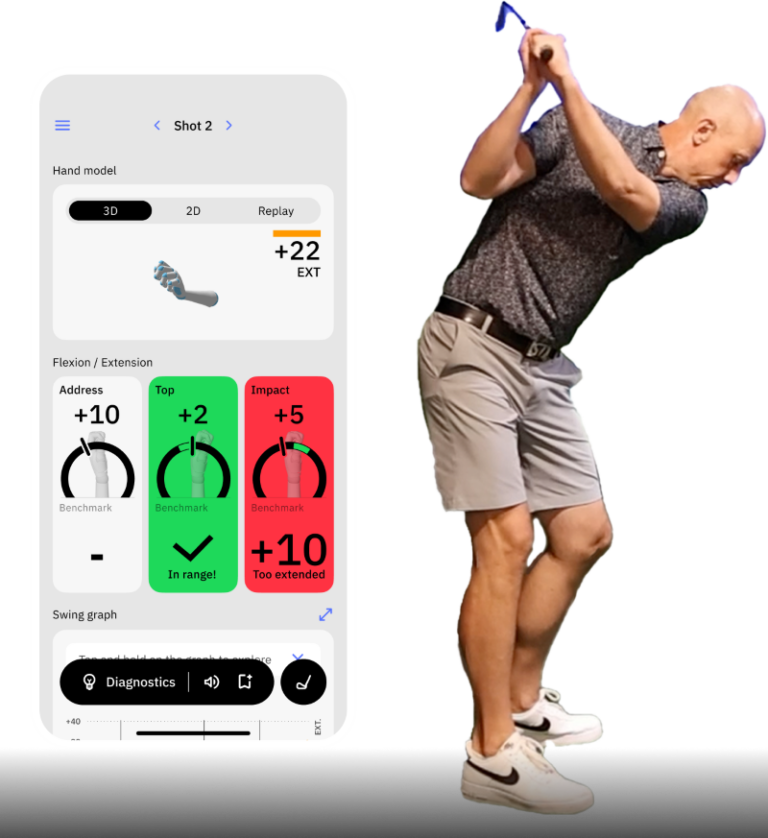
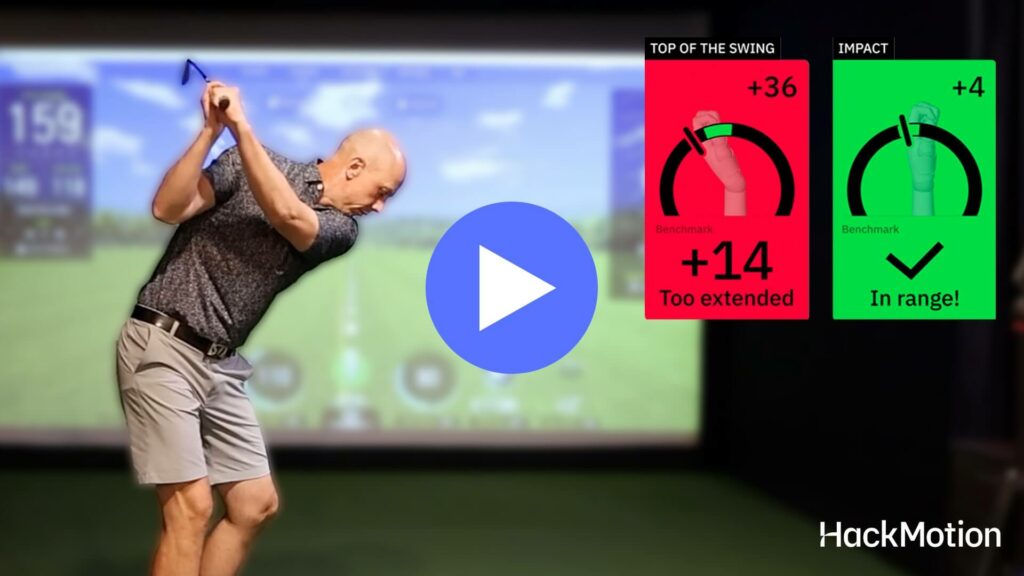
One of HackMotion’s biggest insights is that golfers unknowingly add lead wrist extension (cupping) at the top and down into impact. The extra lead wrist extension:
- Opens the clubface
- Increases spin loft
- Reduces smash factor
- Kills ball speed and distance even if clubhead speed is decent
HackMotion makes this visible and trainable instantly.
Tension
Tension in the hands, forearms, and shoulders shuts down wrist speed and sequencing. A tight swing feels strong but produces slow numbers.
Fear of Missing Fairways
Golfers subconsciously slow down to “steer” the ball. This becomes a habit that is hard to break without retraining mechanics.
Steering the ball almost always causes additional issues with clubface control and weight transfer.
How to Increase Swing Speed at Any Age
The fastest way to increase swing speed is to improve your turn, wrist mechanics and release.
- Turn (bigger hand path).
- Wrist mechanics (stronger clubface positions).
- Release (free speed instead of forced speed).
Improve Your Turn (Bigger Hand Path)
A bigger turn gives your hands a longer path to travel, which means more time to build acceleration.
Most golfers who feel “stuck” or tight in the backswing never give themselves enough room to create speed, especially as flexibility changes with age.
How to improve it:
- Turn both feet slightly outward.
- Let your trail knee lose flex so the hips can rotate.
- Drop the trail foot back an inch or two to make turning easier.
- Make 10 slow “overswings” to feel a longer hand path.
Improve Wrist Mechanics (Stronger Clubface Positions)
Your wrists control the clubface, and the clubface controls both accuracy and ball speed.
When the lead wrist gets too cupped, the face opens, spin increases, and distance drops, even if your swing speed stays the same.
A flatter or slightly flexed wrist makes your strike more efficient, giving you more ball speed for free.
How to improve it:
- Aim for a flatter lead wrist at the top.
- Use HackMotion or a mirror to check extension.
- Feel a gentle “reverse motorcycle” move in transition.
- Use preset-to-P2 drills to train early wrist structure.
Improve Your Release (Free Speed)
Many golfers lose distance because they hold onto the club too tightly, stall the wrists, or try to “steer” the ball.
A good release lets the clubhead accelerate naturally through impact, creating effortless speed without extra strain on your body. When the wrists can hinge and unhinge freely, speed becomes automatic.
How to improve it:
- Keep grip pressure light so wrists can hinge freely.
- Practice the alignment-rod “whoosh” drill to time the bottom.
- Let the forearms rotate, don’t hold the face open.
- Hit a few “feet-together” swings to feel pure wrist and hand speed.
Swing Speed Drills to Increase Clubhead Speed
Sometimes, the easiest way to add speed is to work on drills that will naturally promote added speed through the ball.
Here are a few you can work on today.
Alignment Rod “Whoosh” Drill – Train Wrist-Driven Speed
The alignment rod “whoosh” drill helps release tension, improve issues with lack of release, and slow clubhead speed.
A relaxed wrist-driven release produces far more speed than trying to “muscle” the club with your body.
- Video timestamp – 2:20
Whoosh Drill – Step by Step:
- Hold an alignment rod like a club in your normal driver setup.
- Relax your grip, forearms, and shoulders.
- Waggle the rod freely, using only your wrists, no upper-body movement.
- Make small waist-high swings and listen for a loud whoosh in front of your lead foot.
- Do a few intentionally tense swings to feel how the sound disappears.
- Add HackMotion and hit a few drivers with the same loose-wrist feel.
- Check for stable wrist angles through the strike (no late extension or flip).
Preset-to-P2 Wrist Drill – Build a Stronger Backswing Structure
The preset to P2 wrist drill helps fix an open clubface, cupped top position, and inconsistent ball speed.
Setting the wrist angles early makes the top of the backswing and impact much more powerful and stable.
Preset-to-P2 Wrist Drill – Step by Step:
- Lay an alignment stick parallel to your target line on the ground.
- Take your normal setup with HackMotion on your lead wrist.
- Without moving the hands away, hinge your wrists until the shaft is parallel to the ground over the stick.
- Ensure the clubface points slightly downward, not up (open).
- Check HackMotion: your lead wrist should show less extension than address (ideally near neutral or slight flexion).
- From this preset P2, rotate to the top and swing through.
- Hit half swings from this preset position, then blend into full backswings that naturally pass through the same wrist structure.
Senior Turn & Wrist Flexion Drill – Get Distance Back with Better Turn + Face Control
If your issue in your game is a lack of turn (common for seniors), a short-hand path, or weak ball speed due to an open face, this turn drill could help.
This combines an easier, bigger turn with stronger wrist conditions, which is ideal for golfers who feel stiff or who’ve lost distance.
Senior Turn & Wrist Flexion Drill – Step by Step:
- Turn both feet slightly outward to free up hip rotation.
- Drop your trail foot back to create a slightly closed stance.
- Let your trail knee lose some flex as you turn back (this increases your backswing turn).
- Make a slow backswing, focusing on turning your ribcage and hips, not lifting your arms.
- At the top, check HackMotion for a flatter or slightly flexed lead wrist.
- In transition, gently twist the lead wrist toward flexion (reverse-motorcycle feel).
- Hit two shots, one with your old pattern, one with the improved pattern, and compare ball flight and carry.
Final Thoughts
Swing speed does change with age, but it doesn’t have to fade quickly, and it certainly doesn’t have to limit you.
If you improve how your body turns, how your wrists load and unload, and how you release the club, you can increase speed at 40, 50, 60, 70+, and beyond.
HackMotion makes this process dramatically easier by giving you real-time feedback on the movement that influences speed (and control) more than anything else: your wrists.
Find your current swing speed, try the drills, and give yourself a few weeks of focused practice. Distance gains come surprisingly fast when your mechanics finally support your potential.
If your swing speed still isn’t improving after trying these drills, look into private golf lessons near me with coaches who use HackMotion to build speed safely and efficiently.