
Clubface Open at Impact: Why It Happens and How to Fix It for Good
If your ball starts right and stays right, starts straight and peels right, or feels weak and unpredictable, there’s a good chance your clubface is open at impact.
The mistake most golfers make is treating this like an “impact-only” problem.
In reality, an open clubface almost always shows up earlier in the swing, then reveals itself at impact when it’s too late to save.
Once you know where the face is opening, fixing it becomes much simpler and far more repeatable.
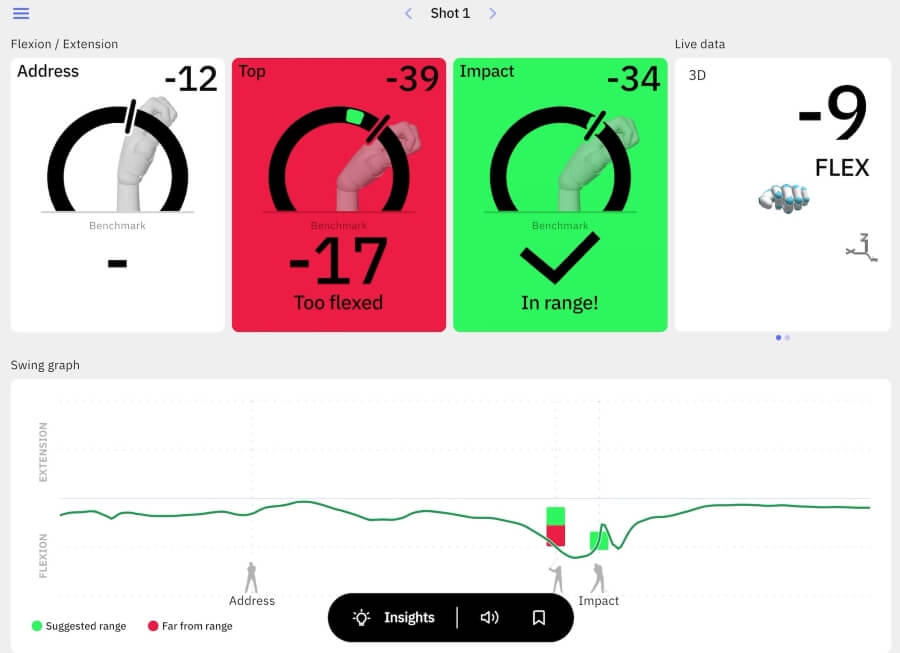
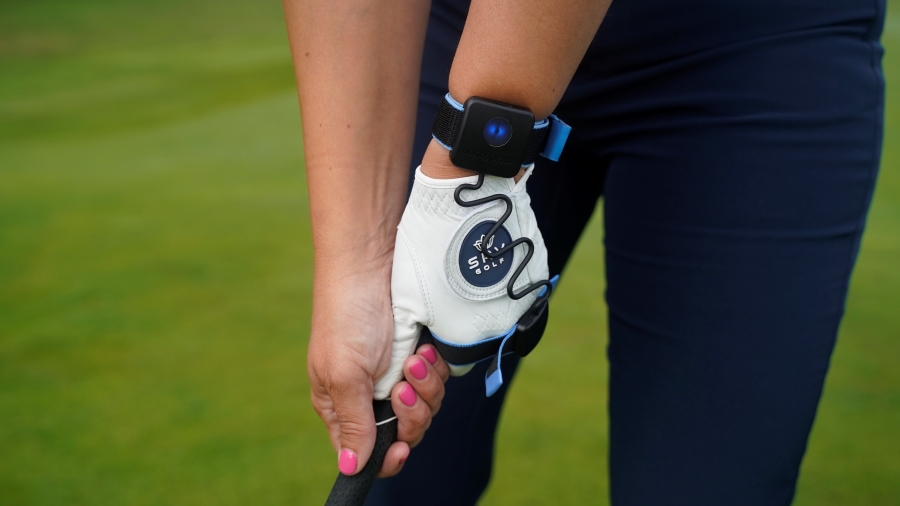
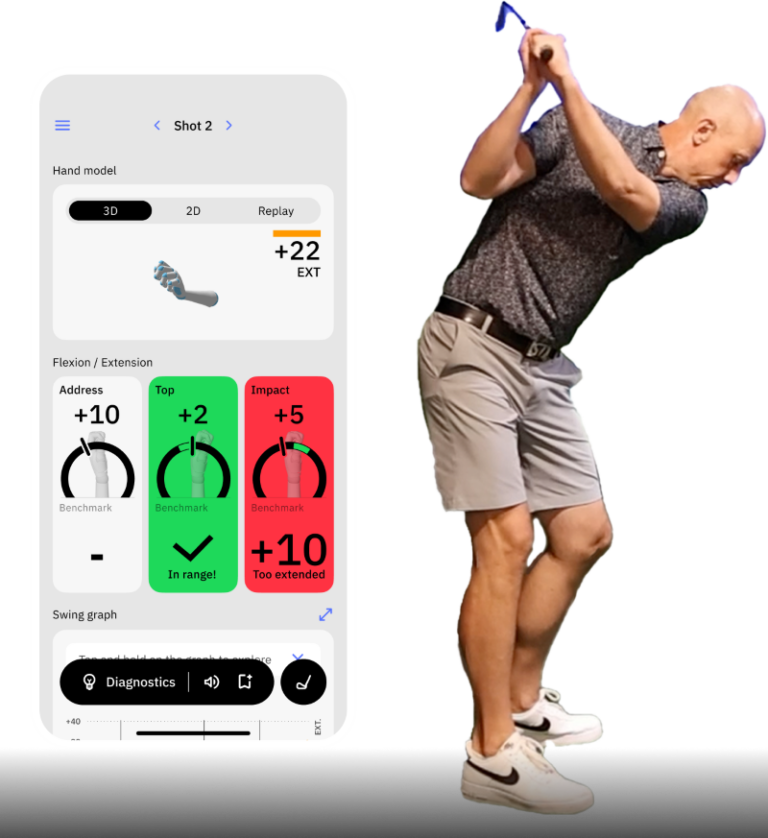
This guide will walk you through four checkpoints that explain why your clubface is open, what you’ll see on video, and how to fix it with simple drills. Using HackMotion while you practice makes this process much faster because it gives you more awareness of your clubface angles throughout the swing.
Open Clubface at Impact (Key Takeaways)
- An open clubface at impact usually starts earlier in the swing, not at impact itself.
- Your wrists control the clubface, not a last-second hand flip.
- Four checkpoints tell you exactly where the face opens and what to fix.
- Most golfers need to exaggerate the feel first, then dial it back.
- HackMotion helps confirm you’re changing wrist action, not guessing.
Contents
Why Your Clubface Is Open (Diagnose It Using These 4 Checkpoints)
Instead of guessing, film your swing to work through these checkpoints in order. If you wear HackMotion while doing this, you’ll also learn what your wrists are doing when the face opens.
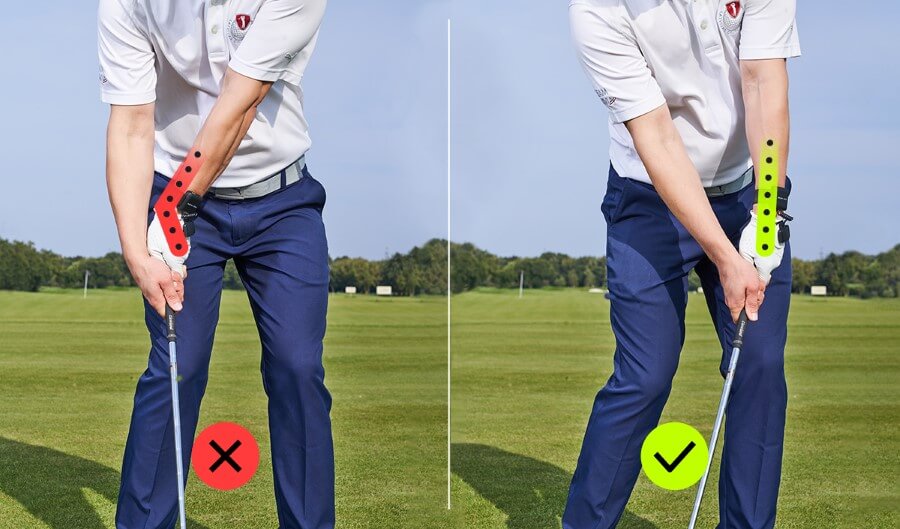
Checkpoint 1: Shaft Parallel in the Backswing (Takeaway)
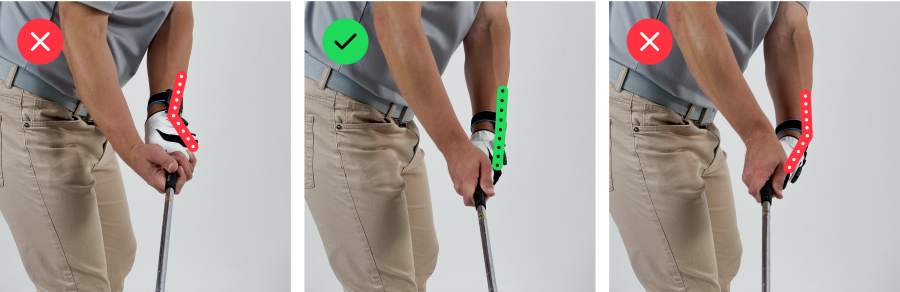
If you take the club back to shaft parallel in the backswing and the clubface already looks like it’s pointing up toward the sky, it’s open.
This typically happens because there is too much extension in the lead wrist.
What to Focus On
Train a takeaway where the clubface feels slightly more “turned down” than you’re used to. For most slicers, neutral feels closed at first.
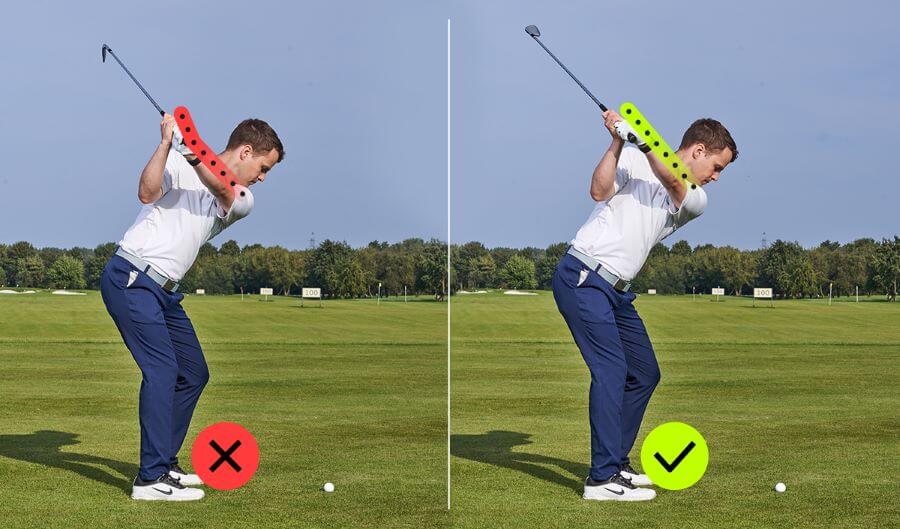
Checkpoint 2: Top of the Backswing
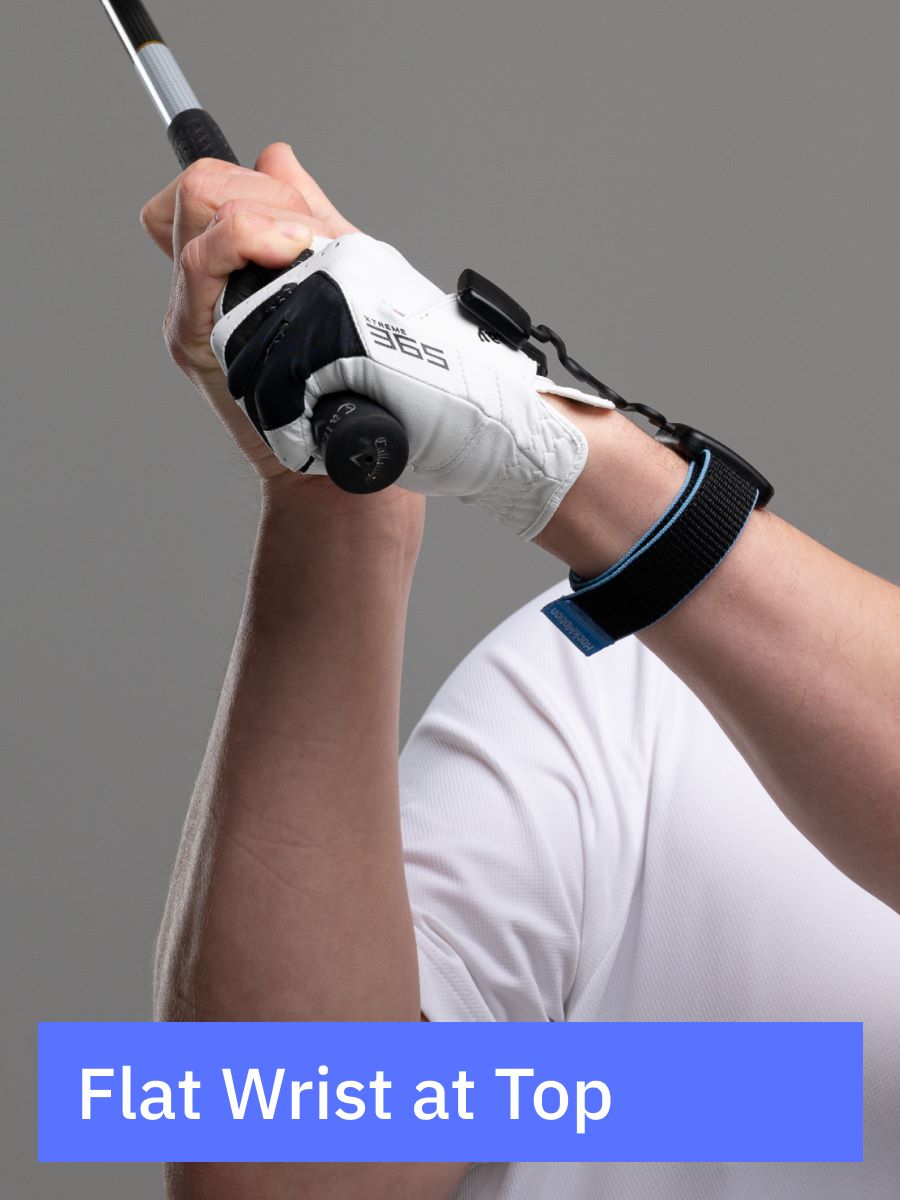
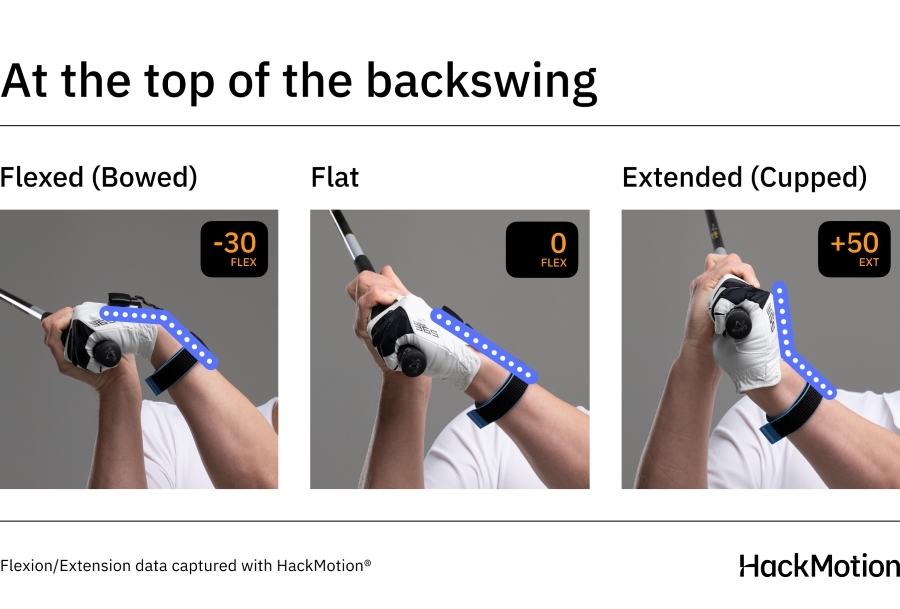
Another issue that will lead to an open clubface at impact is having a noticeably cupped lead wrist at the top of the backswing.
This is often paired with a face that feels hard to square on the way down.
Again, you’ll notice the reason behind this is too much lead wrist extension at the top. While some golfers can recover from this spot and square the face it still forces you to rely on timing or a late flip to square it.
What to Focus On
A lead wrist that’s closer to flat relative to your grip and swing pattern. This doesn’t need to be perfect, it just needs to be functional.
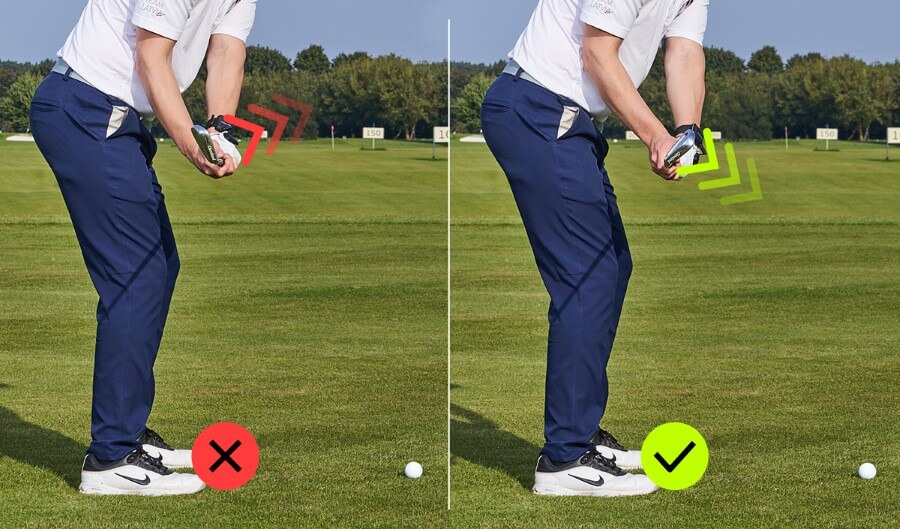
Checkpoint 3: Shaft Parallel in the Downswing
For some players the backswing and the top look fine but the face starts to open again on the way down.
Some players unknowingly twist the club as they add speed and before they get to impact it is too open to fix.
What to Focus On
Maintain the face orientation you had at the top instead of letting it change as you start the downswing.
You can also work on feeling like you close the face a little as opposed to opening it using something like the motorcycle drill.
Checkpoint 4: Shaft Parallel in the Follow-Through
Even after your swing is finished there are signs that the clubface was open at impact. Take a look and see if the clubface is pointing up toward the sky when you finish your golf swing.
You’ll notice the feeling of having to aggressively roll the wrists just to square the face.
The follow-through is showing you what actually happened at the bottom of the swing.
What to Focus On
A follow-through where the leading edge looks closer to vertical without forcing a rollover.
If the clubface keeps opening early, your wrists are usually the reason. This guide on wrist action in the golf swing explains what your wrists should actually be doing and why it affects the clubface.
How to Fix an Open Clubface at Impact
Once you know which checkpoint is causing the issue, the fix becomes much more focused.
Stop Trying to “Roll Your Wrists” to Square the Face
A big wrist roll might occasionally work, but it creates timing-based golf. One swing hooks, the next slices. You don’t want to develop a golf game where it all comes down to timing.
Instead, focus on improving your clubface position before impact and controlling it through better wrist conditions. Check your takeaway and the top of the swing to make sure they are square.
Learn to Square the Face While Keeping Your Hands Forward
Many golfers understand that forward shaft lean is important, but they accidentally open the face while doing it.
You can have:
- hands forward and
- a square clubface
You just can’t get there by shoving the handle forward without controlling the wrists. The feel is forward hands with a stable face, not a shove of the handle and a rescue flip.
Use Exaggeration First, Then Dial It Back
If you slice the ball, your current “neutral” is already open.
That means your practice reps should feel exaggerated at first:
- too closed
- then less closed
- then just right
This is how you retrain feel instead of fighting it. You can use HackMotion to monitor this progress. If the ball starts going hard left you know you are overdoing it.
Let the Grip Help You, Not Hurt You
If your grip makes it hard to close the face, it’s working against you. Small grip changes can give you more range to control the clubface without forcing timing fixes.
Drills to Fix an Open Clubface at Impact
Thinking about the clubface and purposefully manipulating it is very difficult for some players.
Instead you can work on drills that help to train the proper clubface position without you having to think about it.
Follow-Through Stop Drill (Face Control)
The follow-through stop drill makes it easier to feel what the perfect impact position should be.
Interestingly, while you think you are training or controlling your follow-through you’re also working on the impact position.
Follow-Through Stop Drill – Step by Step:
- Make a slow swing and stop when the shaft is parallel in the follow-through.
- Check that the leading edge looks close to vertical.
- Rehearse this position several times without a ball.
- Hit short shots trying to recreate the same finish.
- Exaggerate first if the ball still leaks right, then dial it back.
Small Swings – Build Up Drill
Taking smaller swings can make a bigger problem feel less complicated. This drill fixes the issue with the handle being too far forward and the face opening up.
This drill builds a square face at impact without relying on speed or timing.
Small Swings to Build Up Drill – Step by Step:
- Start with chip-length swings.
- Rehearse the impact feel, then hit the shot.
- Keep the finish short and controlled.
- Gradually lengthen the swing only if the start direction stays predictable.
Hit Hard, Stop Quick Drill
If sequencing is the problem that’s leaving your face open, the hit hard stop quick drill is a great one to practice.
Once you get the face square you can use this drill to work on compressing the golf ball or stopping your flip.
- Video Timestamp: 10:37
Hit Hard, Stop Quick Drill – Step by Step:
- Make a normal backswing.
- Swing with intent and stop the club quickly after impact.
- Start slow and build speed only when contact and direction improve.
- Reset often.
Trail Wrist Bend Retention Drill
While we tend to focus a lot on the lead wrist in the golf swing, it’s important to remember that the trail wrist is actually the dominant wrist.
If you are losing trail wrist bend early and opening the face this is a great drill to try.
Trail Wrist Bend Retention Drill – Step by Step:
- Start with a short club and shorter swings.
- Feel like you’re holding trail wrist bend longer than normal.
- Keep the finish short and controlled.
- Increase speed gradually while maintaining control.
Common Mistakes and Quick Fixes
Most golfers don’t struggle with an open clubface because they lack effort. They struggle because they practice the fix in a way that reinforces the problem.
These mistakes usually show up when golfers jump straight to full-speed swings, chase shaft lean without controlling the face, or focus only on impact while ignoring what happens just before it.
| Common Mistake | Quick Fix |
|---|---|
| Fixing it only at full speed | Start with small swings and earn speed later |
| Pushing the handle forward and opening the face | Train impact alignments before swinging |
| Over-rolling the wrists | Use the follow-through stop instead of guessing |
| Ignoring transition | Film the downswing parallel checkpoint |
Simple Swing Thoughts That Help Square the Clubface
Adding too many swing thoughts to your practice is never a good idea. Once you have the mechanics down, start to focus on finding a thought that helps you.
Here are a few that should help specifically with squaring the clubface:
- “Set the face earlier.”
- “Square it sooner, not later.”
- “Stop and check.”
- “More closed feel, then back to neutral.”
Final Thoughts
An open clubface at impact is almost never random. It starts earlier than most golfers realize and for some it starts as soon as the club moves away from the ball.
Use the checkpoints to find where it opens, choose one or two drills that match that spot, and practice with intent. Exaggerate first, then dial it back.
If you want to train this faster and with less guesswork, HackMotion gives you the feedback most golfers never get on their own.