The Complete 5-Week Golf Speed Training Program (Add Distance Without Losing Control)
Most golf speed programs start with the same idea: swing something heavier, swing something lighter, and hope your body figures it out.
This speed training program takes a very different approach.
Instead of forcing speed with extra weight and max-effort swings, this five-week plan is built around how speed is actually created and transferred in the golf swing.
You’ll train your body to move better, sequence better, and release the club more efficiently. The speed will show up naturally.
Speed without control doesn’t help your scores. A faster swing with a clubface that isn’t stable just makes misses bigger.
By the end of the five weeks, you’ll be swinging faster but you’ll also understand:
- What creates speed in the golf swing.
- How to transfer that speed into the ball.
- And when adding speed actually helps your scoring.
Who This Speed Training Program Is For
This speed training plan is for golfers who already have a basic level of consistency and want to add speed without losing control.
This program is a good fit if you:
- Make fairly consistent contact with the ball.
- Have a repeatable shot pattern (even if it’s not perfect).
- Understand the basics of grip, setup, and alignment.
- Want more distance but don’t want to sacrifice accuracy.
- Are willing to train speed gradually instead of chasing quick fixes.
Below is a quick overview of the full 5-week speed training program, showing what you’ll train each week and the outcome it’s designed to produce.
| Week | Primary Focus | What You’re Training | Key Outcome |
|---|---|---|---|
| Week 1 | Remove Tension | Relaxed wrists, smoother sequencing | Speed starts to appear naturally |
| Week 2 | Sequence Before Speed | Body-arms-wrist timing | Faster swings without forcing effort |
| Week 3 | Release Timing | Throwing speed at the ball | More speed with tighter dispersion |
| Week 4 | Driver Speed Control | Driver-specific speed windows | Distance gains without big misses |
| Week 5 | Playable Speed | Clubface control + speed blend | Speed that holds up on the course |
How This Golf Speed Training Plan Is Structured
This speed training plan is built around two focused 30-minute practice sessions per week. That’s enough volume to create real speed gains without overwhelming your body or your swing.
You’re not trying to swing at max effort every day. Instead, each session is designed to introduce speed gradually, reinforce good mechanics, and give your body time to adapt.
Here’s the structure:
- 2 × 30-minute sessions per week (the minimum effective dose).
- 1 optional repeat session if you have extra time.
- 5 weeks total, then repeat the cycle if desired.
Each 30-minute session follows the same general framework:
- Warm-up and movement prep: Reduce tension and get the body moving freely.
- Primary speed drill(s): Focused work on sequencing, release, or ground interaction.
- Controlled speed swings: Intentful swings that push speed without sacrificing strike or face control.
Week 1: Build the Foundation for Speed (Without Swinging Harder)
The primary focus in week one is to remove tension, establish efficient wrist conditions, and learn where speed actually comes from.
This week is about creating the conditions that allow speed to show up naturally. You are not chasing max speed yet. You are learning how to move faster without forcing it.
Session 1 (30 Minutes): Tension-Free Speed Awareness
This session teaches you what efficient speed feels like when your body is relaxed and your wrists are allowed to move naturally.
The goal is awareness, not effort.
1. Warm-Up: Tension Reset (5 minutes)
This prepares your body to move faster without forcing effort.
- Focus on: soft forearms, loose wrists, smooth tempo.
- You should: hear a clean “whoosh” without trying to add speed.
2. Swish Drill (10 minutes)
This drill teaches where speed actually happens in the swing. Use an alignment stick or turn a club upside down and make continuous swings.
Take a swing, wait twenty seconds, and take another. You don’t need to take 100 swings during this ten-minute period.
- Focus on: loudest swish near the bottom, relaxed arms, natural wrist release
- You should: hear the sound peak near the low point, not late in the follow-through
3. Feet-Together Swings (10 minutes)
This drill helps you feel how the wrists and arms deliver speed to the club. Hit short to mid iron shots with your feet close together. Pick a target and make sure you’re still trying to hit it. Change clubs periodically to see how you adjust to different lengths.
- Focus on: letting the club swing past you, balance, clean contact.
- You should: feel speed increase without extra effort.
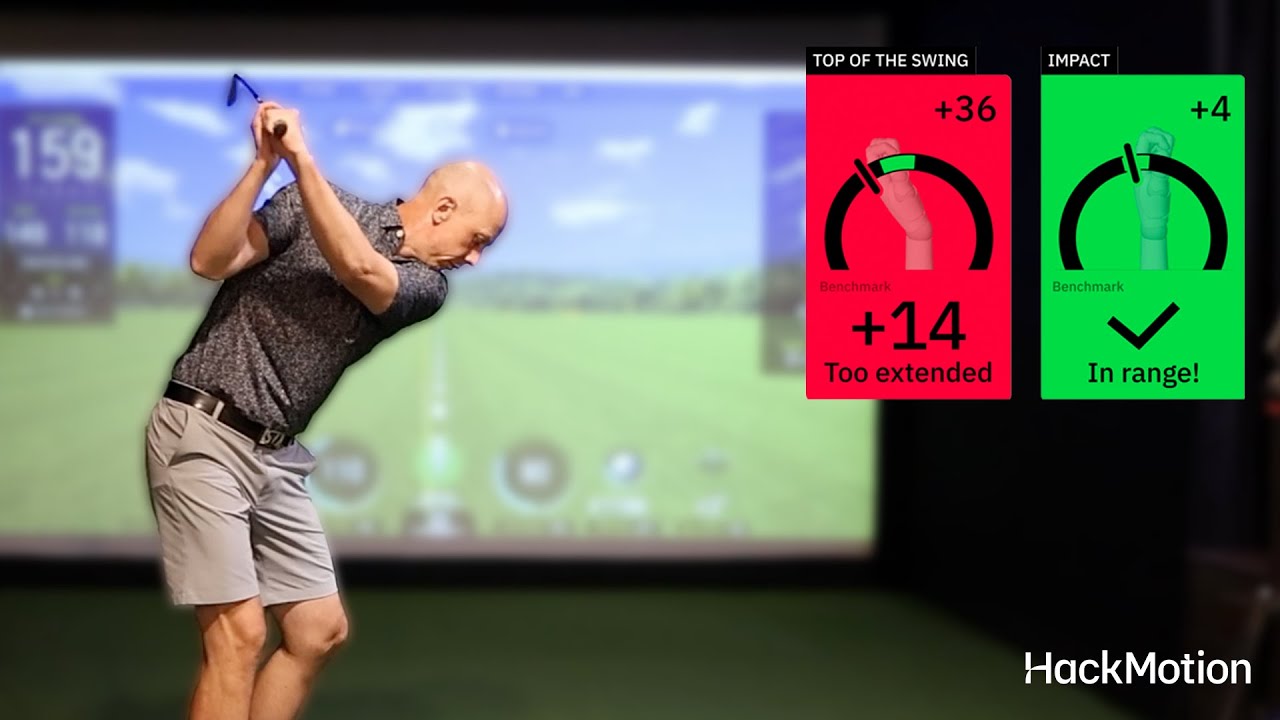
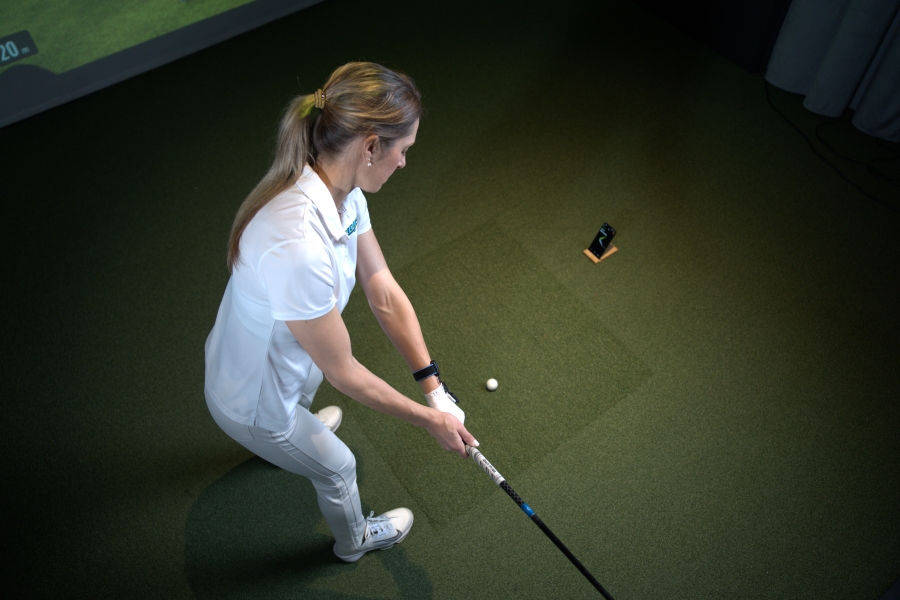
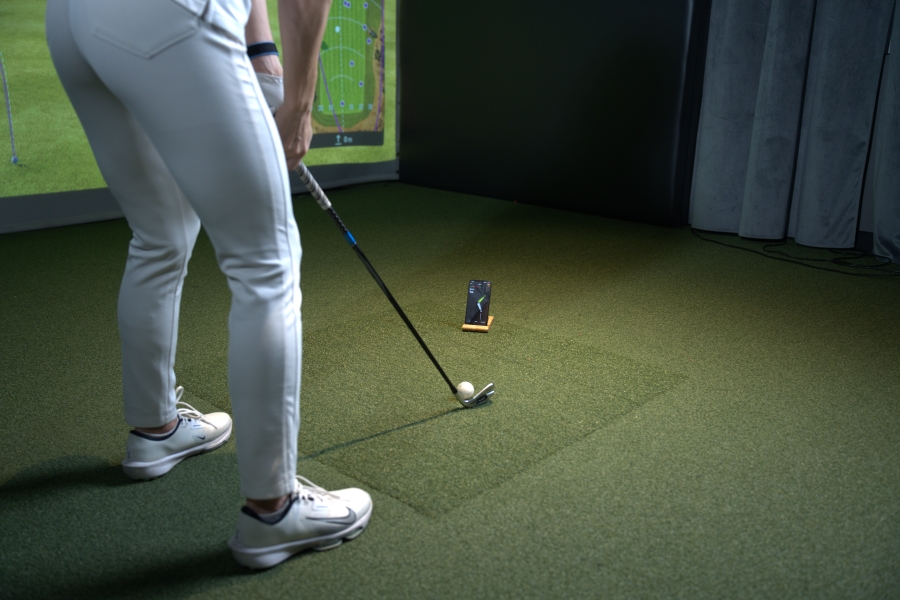
When wearing HackMotion, this is a simple way to confirm that lead wrist flexion increases into impact and then quickly moves toward extension after contact.
4. Reset & Review (5 minutes)
This reinforces your best feels before fatigue sets in. You can hit some shots, but focus on the relaxed feel, less tension and better balance and control through impact. You don’t need much more than a 7-iron for this entire session.
- Focus on: smooth swings, relaxed motion.
- You should: finish feeling loose and confident, not tired.
Session 2 (30 Minutes): Efficient Wrist Conditions for Speed
This session connects wrist position to speed and efficiency so added speed doesn’t come at the cost of contact or control.
1. Warm-Up: Wrist Mobility Check (5 minutes)
This ensures your wrists can move into speed-producing positions. Make half swings, pausing briefly at the top and halfway down.
- Focus on: neutral-to-flat lead wrist, free motion.
- You should: see consistent wrist positions, swing to swing while measuring with the HackMotion.
2. Top-to-P6 Pull-Down Drill (10 minutes)
This Top-to-P6 drill trains speed early in the downswing, where it matters most. Swing to the top, pull down quickly to shaft-parallel, then stop and reset.
- Focus on: fast hands early, controlled stop
- You should: feel speed happening before impact, not at it
3. Controlled Speed Swings (10 minutes)
This blends intent and mechanics without chasing max effort. Hit balls at roughly 70–80% effort.
- Focus on: longer backswing, smooth transition, solid strike.
- You should: notice speed gains without losing contact quality.
4. Review & Cooldown (5 minutes)
This prevents speed gains from becoming bad habits. If you want to move back to the feet together to cool down, it’s a great way to do it.
- Focus on: easy swings, repeatability.
- You should: feel ready to increase intent in Week 2.
Week 2: Apply Speed Earlier and Learn to Control It
The goal here is to train speed earlier in the downswing and begin applying intent while maintaining balance and clubface control.
Week 1 removed friction. Week 2 introduces intent, but in a controlled way. You’ll learn not just to feel more speed but to direct it.
Session 1 (30 Minutes): Early Downswing Speed Training
This session teaches you to apply speed before impact instead of trying to “hit” the ball harder.
1. Warm-Up: Intent Ramp (6 minutes)
Make practice swings without a ball.
- Focus on: gradually increasing intent, athletic motion, free wrists.
- You should: feel faster by the end without feeling rushed or tense.
Guidelines:
- 5 swings at ~50%.
- 5 swings at ~65%.
- 5 swings at ~75%.
- Full reset between each group.
2. Alignment Stick Pull-Downs (Top-to-P6) (12 minutes)
This is the primary drill of Week 2. You are training the moment where speed is actually created.
How to do it:
- Use an alignment stick or very light club.
- Swing to the top.
- Pull down aggressively to shaft-parallel.
- Stop completely.
- Reset every rep.
Volume & rest:
- 4 sets of 5 reps (20 total).
- 20–30 seconds rest between sets.
- Focus on: fast hands early, clean stop, balance.
- You should: feel the fastest motion happen before the club reaches the ball.
This is where HackMotion quietly helps confirm that wrist angles are changing naturally instead of being held.
3. Short-Speed Swings (Ball Optional) (8 minutes)
Now you connect early speed to motion through impact, without full swings. Make waist-high to waist-high swings.
How to do it:
- 10–12 reps total.
- Pause and reset after every swing.
- Focus on: speed early, relaxed release, centered strike.
- You should: feel speed without needing a full backswing.
4. Cooldown: Decompression Swings (4 minutes)
This prevents early-speed work from turning into tension. Don’t leave the session with your fastest swing; the cooldown session is important.
- Focus on: slow tempo, loose arms.
- You should: finish feeling calm and organized.
Session 2 (30 Minutes): Speed With Structure
This session blends early speed with body sequencing, so speed doesn’t come at the cost of control.
You’ll want to get that downswing fast, but if the body isn’t along for the ride, it’s tough to gain the speed.
1. Warm-Up: Sequence Awareness (5 minutes)
This connects body motion to wrist release before hitting balls. Make slow practice swings.
- Focus on: pressure shift, smooth transition.
- You should: feel the downswing start from the ground up.
2. Step Drill (10 minutes)
This is the new element for Week 2. It teaches timing and prevents speed from being dumped late.
How to do it:
- Start with feet together.
- Step trail foot back as club moves away.
- Step lead foot forward as the downswing begins.
- Swing through.
Volume & rest:
- 12–15 reps.
- 10–15 seconds between swings.
- Focus on: timing, balance, early speed.
- You should: feel speed increase without swinging harder.
3. Driver or Iron Speed Swings (10 minutes)
This is where intent increases. Now that you have your body and wrist motion together, you can start to increase speed but stay controlled.
How to do it:
- 8–12 swings (for driver and iron) at ~80–85% effort.
- Full reset after every swing.
- Focus on: early acceleration, stable finish.
- You should: see speed gains without extra curve or poor contact, if ball flight starts widening, reduce effort immediately.
4. Cooldown: Strike Stability Check (5 minutes)
This ensures speed hasn’t compromised fundamentals. Hit 3–5 easy shots with two different short irons.
- Focus on: centered contact, smooth rhythm
- You should: leave feeling in control, not aggressive
Week 3: Release Speed Without Losing Control
Train proper release timing so added speed actually transfers to the ball instead of leaking into glancing contact or bigger misses.
This is where a lot of golfers fail with speed training:
- They swing faster
- The clubface gets worse
- Dispersion explodes
Week 3 prevents that.
Session 1 (30 Minutes): Speed Transfer and Release Timing
This session teaches you how to throw speed at the ball, not hold it or dump it late.
1. Warm-Up: Wrist Mobility + Flow (6 minutes)
This is not about speed yet it’s about freeing motion before increasing the effort.
- Focus on: wrist freedom, smooth transitions, relaxed grip.
- You should: feel the clubhead move easily without forcing it.
Guidelines:
- 8–10 slow practice swings.
- No ball.
- Let the club swing past your hands naturally, feel the release and get the wrists warmed up.
2. Stick Swish – Bottom Location Awareness (8 minutes)
This drill now has a new purpose compared to earlier weeks. You’re no longer just making noise; you’re placing the noise in the correct location.
How to do it:
- Use an alignment stick or upside-down club.
- Make smooth swings.
- Intentionally create the loudest “swish” at the bottom of the swing.
Volume & rest:
- 3 sets of 8 swings.
- 20 seconds rest between sets.
- Focus on: release timing, not effort.
- You should: hear the swish near impact, not past it.
3. Hit Hard, Stop Quick (Basic Version) (12 minutes)
This is the anchor drill of Week 3. Unlike earlier speed drills, this teaches your body to:
- Accelerate aggressively.
- Then brace and release correctly.
How to do it:
- Full backswing.
- Swing with intent.
- Stop the club as quickly as possible just after impact.
- No recoil yet (that comes later).
Volume & rest:
- 10–12 swings.
- Full reset after every rep.
- 15–20 seconds rest.
- Focus on: aggressive intent, controlled finish.
- You should: feel your hands slow down as the clubhead speeds up, wear your HackMotion to confirm that wrist flexion transitions into extension instead of being held too long.
4. Cooldown: Strike Quality Reset (4 minutes)
You never leave a speed session without checking strike. Hit 3–4 easy shots at ~70%.
- Focus on: centered contact, smooth rhythm.
- You should: finish feeling balanced and controlled.
Session 2 (30 Minutes): Speed With Face Awareness
This session connects release speed to clubface angle.
1. Warm-Up: Controlled Intent Swings (5 minutes)
You’re turning intent on, but not increasing effort. Take 6-8 practice swings, then hit five shots build from 60% to about 75%.
- Focus on: smooth acceleration, stable finish.
- You should: feel faster without swinging harder.
2. Split-Hand Release Drill (8 minutes)
The Split Hand Release Drill prevents holding on through impact. If you can release at the correct time, you’ll see straighter shots, more distance, and better speed.
How to do it:
- Grip the club with hands slightly separated.
- Make half to three-quarter swings.
- Let the club release freely.
Volume & rest:
- 10–12 swings.
- Pause after every rep.
- Focus on: release freedom, natural rollover.
- You should: feel the clubhead pass your hands easily.
3. Speed Swings With Ball (Controlled) (12 minutes)
Here you are adding some speed, but not forgetting about the release timing that you just worked on. While you may not be ready for 100% effort swings, you’ll want something with a little more effort here.
How to do it:
- 8–10 swings at ~80–85%.
- Full reset between each swing.
- Focus on: release timing, face stability, balance.
- You should: see speed gains without exaggerated curve, if ball flight starts widening, reduce effort immediately.
4. Cooldown: Tempo Restoration (5 minutes)
We don’t want your new speed to throw off your rhythm, and this cooldown will help ensure that does not happen.
- Focus on: smooth tempo, relaxed arms
- You should: feel in control heading into your next session
Week 4: Driver Speed Without Losing the Clubface
This is the week where speed either starts saving strokes or costing them and the driver is where that shows up first.
Up to this point, you’ve trained:
- How to create speed.
- How to release it.
- How to avoid holding on.
Now we apply that to the longest club in the bag.
If your driver speed goes up but your face control falls apart, dispersion gets ugly fast. Week 4 is designed to prevent that.
Session 1 (30 Minutes): Driver Speed With Control
This session teaches you how to swing the driver faster without adding tension, flipping, or steering the clubface.
1. Warm-Up: Driver Tension Reset (5 minutes)
This is not about hitting balls yet. It’s about removing the tension that kills driver speed. Take 8-10 slow driver practice swings. You don’t need a ball and between swings lightly waggle the club to reset tension.
- Focus on: light grip pressure, relaxed wrists, smooth takeaway
- You should: feel the clubhead swing freely without effort
2. Driver Swish Drill (Bottom-Speed Awareness) (8 minutes)
This drill reinforces that driver speed comes from release timing, not trying to swing harder.
How to do it:
- Use the driver.
- Make smooth, athletic swings.
- Create the loudest swish at the bottom of the swing.
Volume & rest:
- 3 sets of 6–8 swings.
- 20–30 seconds rest between sets.
- Focus on: free release, no steering.
- You should: hear the swish near impact, not well past it.
3. Controlled Driver Speed Swings (12 minutes)
Now you bring the ball back into the session, but speed stays controlled.
How to do it:
- Hit 8–10 balls at ~80–85% effort.
- Full reset between each swing.
- Step away if tension creeps in.
- Focus on: speed with balance, predictable start line.
- You should: see faster ball speed without exaggerated curve, wear HackMotion to confirm that you’re not adding excess lead wrist extension through impact as speed increases.
4. Cooldown: Driver Strike Reset (5 minutes)
Before you leave, make sure speed didn’t cost you contact quality.
Guidelines:
- Hit 4–5 shots at ~70%.
- Prioritize center contact and balance.
- Focus on: clean strike, smooth rhythm.
- You should: feel in control, not rushed.
Session 2 (30 Minutes): Driver Speed Under Structure
This session teaches you how to apply speed without losing sequencing or face awareness. If you’re a slicer, you’ll want to pay close attention here
1. Warm-Up: Narrow-to-Full Swings (5 minutes)
This warms up sequencing before adding effort. Do this with a 7 or 8 iron, no need to use the driver on the warm up.
Guidelines:
- Start with waist-high swings.
- Progress to full swings.
- 6–8 total reps.
- Focus on: centered motion, smooth transition.
- You should: feel organized before increasing speed.
2. Hit Hard, Stop Quick (Driver Version) (10 minutes)
This version reinforces bracing and release with the driver.
How to do it:
- Full backswing.
- Swing with intent.
- Stop the club as quickly as possible just after impact.
Volume & rest:
- 8–10 swings.
- 20 seconds rest between reps.
- Focus on: aggressive intent, controlled finish.
- You should: feel your body absorb force while the clubhead releases, not hangs on.
3. Driver Speed Window Training (10 minutes)
This is where you’ll want to measure your speed and consciously try to increase it. Use a golf launch monitor if you can.
How to do it:
- Pick a clear target window.
- Swing fast, but only as fast as you can control.
- 6–8 balls total.
- Focus on: start line control, balance.
- You should: maintain predictable flight, if dispersion widens, reduce effort immediately.
4. Cooldown: Tempo Restoration (5 minutes)
Take 5–6 smooth swings with no speed intent.
- Focus on: relaxed tempo, athletic finish.
- You should: leave feeling synced up, not overworked.
Week 5: Speed That Holds Up on the Course
By Week 5, you’re no longer trying to prove you can swing faster, you’re proving you can play faster swings without losing the clubface.
This is where speed becomes usable, repeatable and score-friendly. When speed training goes wrong this is usually the missing step.
Session 1 (30 Minutes): Iron Speed With Face Control
This session ensures added speed doesn’t turn into higher loft, weak contact or bigger misses with irons.
1. Warm-Up: Face Awareness Reset (5 minutes)
Before adding any intent, you need to reconnect wrist feel to clubface control.
Take 6-8 slow practice swings and pause briefly at halfway down. Check that the face feels slightly down, not open.
- Focus on: clubface awareness, light grip, slow motion rehearsal.
- You should: feel where the face is without looking.
2. Motorcycle Drill (Iron Version) (10 minutes)
This drill prevents speed from reopening the face and adding loft. It is built directly into the HackMotion app so you’ll be able to work on it in real time and see if you are holding your wrist angles correctly through impact.
Motorcycle Drill – Master Wrist Flexion in the Downswing
Focus on continuously adding flexion until the club reaches parallel, then smoothly complete your swing.
How to do it:
- Take an iron.
- Make slow to medium-speed swings.
- Feel the lead wrist gently “rotate” so the face stays stable.
- Do not exaggerate closure — you’re learning range, not max rotation.
Volume & rest:
- 3 sets of 6–8 swings.
- 20 seconds rest between sets.
- Focus on: face stability through transition.
- You should: see lower, more solid flights without forcing speed.
3. Iron Speed Swings (Controlled Effort) (10 minutes)
Now you test speed after you have the face control.
How to do it:
- 8–10 swings at ~80–85%.
- Full pre-shot reset between swings.
- No rushing reps.
- Focus on: speed without added curve.
- You should: see distance gains without higher flight or weak strikes, if shots start floating or curving more, reduce effort immediately.
4. Cooldown: Strike Confirmation (5 minutes)
Speed sessions only count if contact holds up, go ahead back to hitting some shots with your feet together. You can also work on low point control here to make sure you’re just making clean contact.
- Focus on: centered contact, balanced finish.
- You should: leave feeling in control, not fatigued.
Session 2 (30 Minutes): Blending Speed Across the Bag
This session connects iron and driver speed into one repeatable pattern. It’s the last session of the five week training program and feels the most like what speed should feel like on the golf course.
1. Warm-Up: Flow + Tempo Build (5 minutes)
This warm-up reconnects rhythm before switching clubs. Take 5 slow swings, 5 medium swings and don’t hit a golf ball. Add a golf ball in and do five slow and five medium.
- Focus on: smooth tempo, free motion.
- You should: feel speed building naturally, not forced.
2. Speed Ladder (Iron to Driver) (12 minutes)
This drill teaches your body that speed is transferable. You can use it from one club to the next and the fundamentals of how to generate speed are not club-specific.
How to do it:
- Hit 3 irons at ~75%.
- Hit 3 irons at ~85%.
- Switch to driver.
- Hit 3 drivers at ~80–85%.
Volume & rest:
- 2 total rounds.
- 20–30 seconds between swings.
- Focus on: same release timing across clubs.
- You should: notice driver speed without losing balance or face control.
3. Driver Speed Check (Optional Push Set) (8 minutes)
This is the only place you test higher intent and you’ll notice it’s only done briefly.
How to do it:
- 4–6 swings at ~90%.
- Full reset between reps.
- Stop immediately if dispersion widens.
Focus on: speed window, not max effort.
You should: see speed gains without a bigger miss pattern.
4. Cooldown: Tempo Restoration (5 minutes)
You finish by returning to control. Hit some wedge shots at 50%, keep it controlled teach yourself how to step in and out of speed mode when needed.
- Focus on: rhythm, balance, relaxed grip.
- You should: feel like your “normal” swing now carries more speed.
Final Thoughts
This speed training program isn’t about chasing max numbers or forcing distance. It’s built for golfers who already strike the ball fairly well and want to add speed without losing control, contact, or confidence.
Follow the structure and stay disciplined with your intent, and you should finish these five weeks swinging faster with better balance, tighter dispersion, and speed that holds up on the course.
If you want to keep building from there, the From 20 to 10 Handicap Practice Plan helps structure your overall practice, and the Wrist Mechanics Masterclass deepens your understanding of the wrist conditions that make that speed playable.