The Perfect Golf Warm-Up Routine: Stretches and Exercises for Better Performance
When you don’t warm up for a round of golf, there are a few things you risk.
The most important reason to warm up is to prevent injury. However, once you are sure you are safe, you’ll also want to warm up to shoot lower scores.
Without a golf warmup routine, it may take you until the 5th or 6th hole before you really play well.
Here are some of the best warm-up stretches and exercises to ensure you are ready for your next round of golf. Don’t skip this step, even if it takes just 10 minutes.
Golf Warm-Up Routine (Key Takeaways)
If you don’t have time to go through the specifics of this golf warmup routine, here are some of the most important things to take with you.
- Warm up both your body and your mind; professional golfers start working on visualization and positive thinking as part of their warm-up routine.
- Warming up doesn’t take long — this 15-ball routine is efficient and effective.
- Start with body movement, not ball striking.
- Use smaller swings and wedges to find clean ground contact.
- Gradually build up swing length and speed.
- Finish by rehearsing the shot you’ll hit on the first tee.
- Use HackMotion to check wrist angles and ensure solid impact.
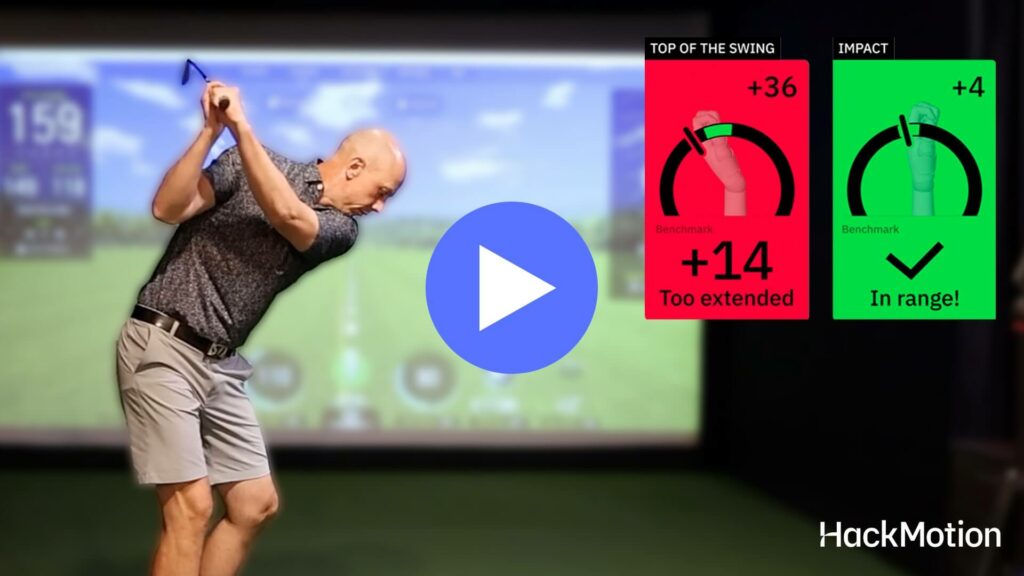
Prefer watching over reading? Watch the video below to see the perfect 15-ball golf warm-up routine in action.
Contents
Perfect Golf Warm-Up Routine – Step By Step
Step 1: Start With Movement, Not the Ball
Before you hit a single golf ball, your focus should be on warming up your body from the ground up.
Think of it as checking in with your joints not forcing a stretch, but giving your body permission to move.
The golf swing asks a lot of your body and if you haven’t started to warm up a little you could end up injured.
A few great warm-up movements include:
- Ankle circles and rotations.
- Leg swings to loosen up the hips.
- Mini squats to wake up the lower body.
- Arm circles to get blood flowing to the shoulders.
You can also place a club across your chest and rehearse a few slow-motion swings. Focus on the turn and tilt, not speed or shape.
These movements don’t take long, but they’ll help you prevent injury and improve mobility before you start swinging.
Step 2: Rehearse Contact With the Line Drill
Once your body feels loose, grab a wedge and do one of the most effective warm-up drills in golf, the Line Drill.
- Spray or draw a line on the grass.
- Make a few mini swings without a ball.
- Focus on brushing the turf just after the line.
This isn’t about distance or trajectory. It’s about training low point control and preparing your body to strike the ball cleanly.
If you can control your low point well throughout the round your contact will always be better.
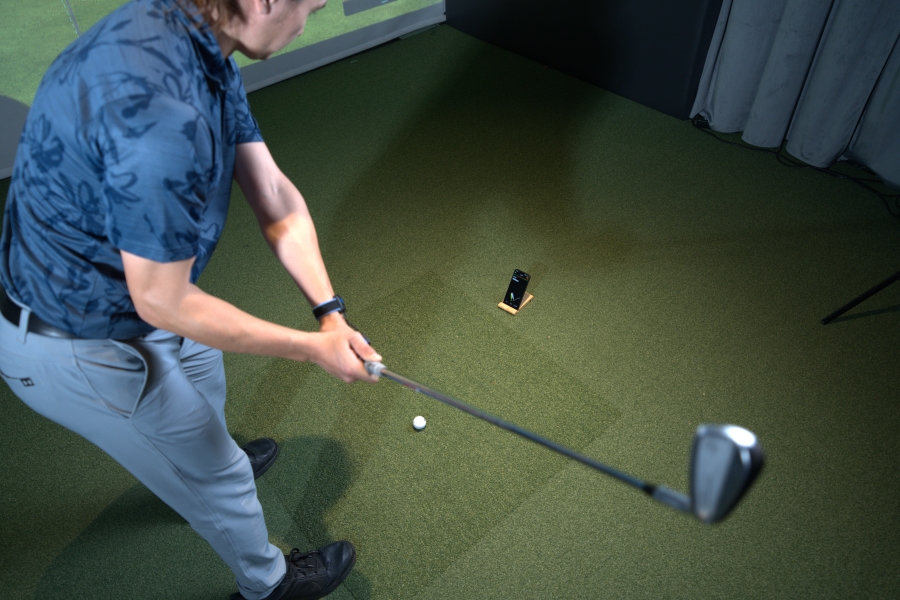
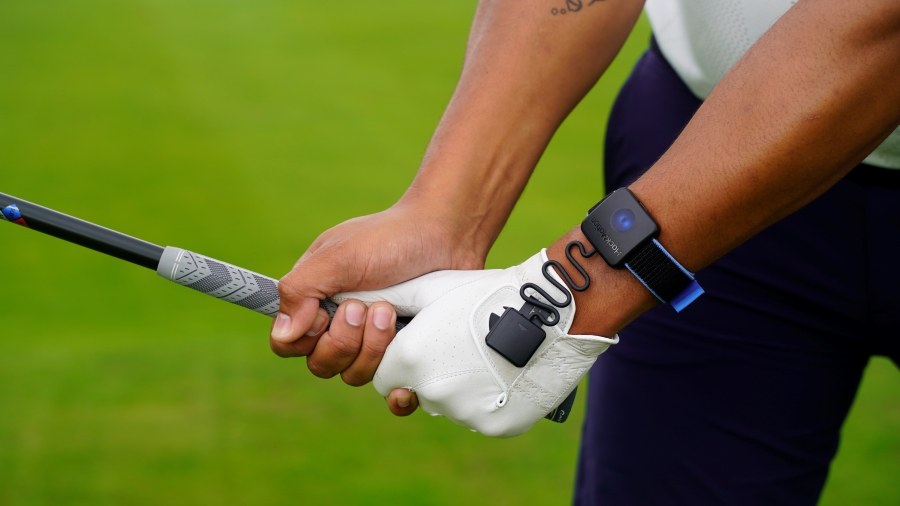
HackMotion Tip: Wear your sensor during this drill and monitor the lead wrist. You want a flat to slightly flexed lead wrist at impact, that’s how you compress the ball and avoid flipping.
Step 3: Hit 15 Balls With Purpose (Adjusted for Your Handicap)
Here’s where the warm-up really starts. You’ll hit just 15 golf balls, but each one has a clear purpose. The structure stays the same for every golfer.
What changes is what you emphasize based on your handicap.
Balls 1–5: Wedge (Establish Contact)
Start small. Use a hip-high to hip-high swing.
- Focus on clean turf contact.
- Match the feel of your body to the feedback of the club.
- Let the swing lengthen naturally as you go.
Handicap Focus
- Higher handicap: Stay here longer if needed. Clean contact matters more than moving on, if it needs to be 10 golf balls, that’s acceptable.
- Mid handicap: Focus on controlling low point and strike location.
- Lower handicap: Add a target and flight the ball intentionally, low then neutral.
Balls 6–10: Mid-Iron (Build Rhythm)
Move into a mid-iron, something like a 7-iron you’re likely to use early in the round.
- Keep your focus on contact, not distance.
- Start with half or three-quarter swings.
- Gradually let your swing and speed increase.
If you’re playing your home course and you know your round starts with a par 3 or an early approach shot, practice that here.
Handicap Focus
- Higher handicap: Stay smooth. Avoid chasing speed.
- Mid handicap: Blend contact with tempo and start line.
- Lower handicap: Work only on the stock shot here, but if you want to add a few ball,s hit a draw and fade for the last few.
Balls 11–15: Tee Club (Prepare for the First Tee)
Grab the club you’ll use on the first tee and rehearse that shot.
- Tee it up exactly like you will on the course.
- Visualize the hole and your intended start line.
- Commit to your normal shot shape.
If your last ball is a good one, walk away and keep that feel.
Handicap Focus
- Higher handicap: Prioritize control over speed. Fairway first.
- Mid handicap: Match your swing to the hole, pick a target not just the entire range.
- Lower handicap: Rehearse the exact shot the hole demands, shape, trajectory etc.
How to Use HackMotion in Your Warm-Up
Wrist mechanics don’t just matter in your full swing, they’re critical during your warm-up.
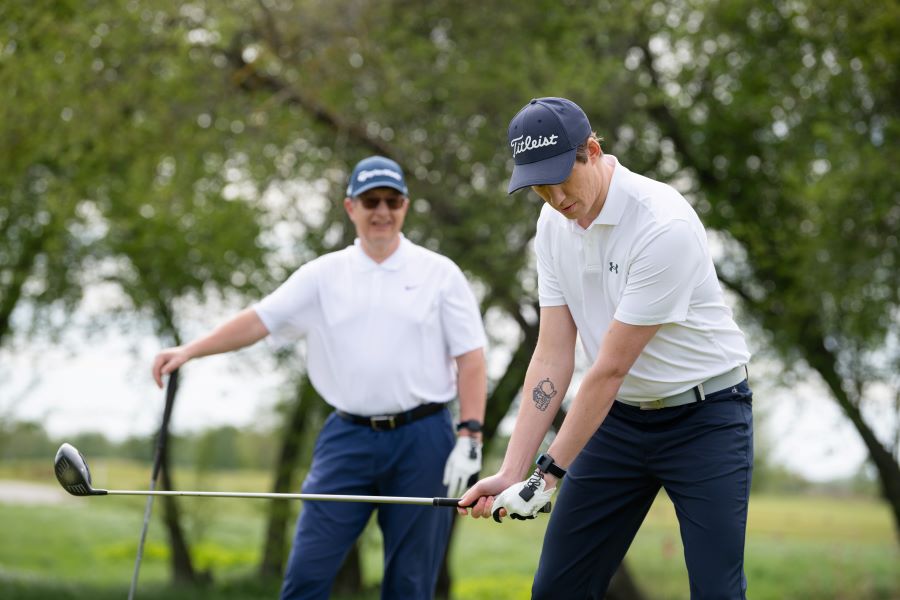
Wearing your HackMotion as you warm up for a round can clue you into some key issues that you may face in the course of a round of golf.
Use your HackMotion to:
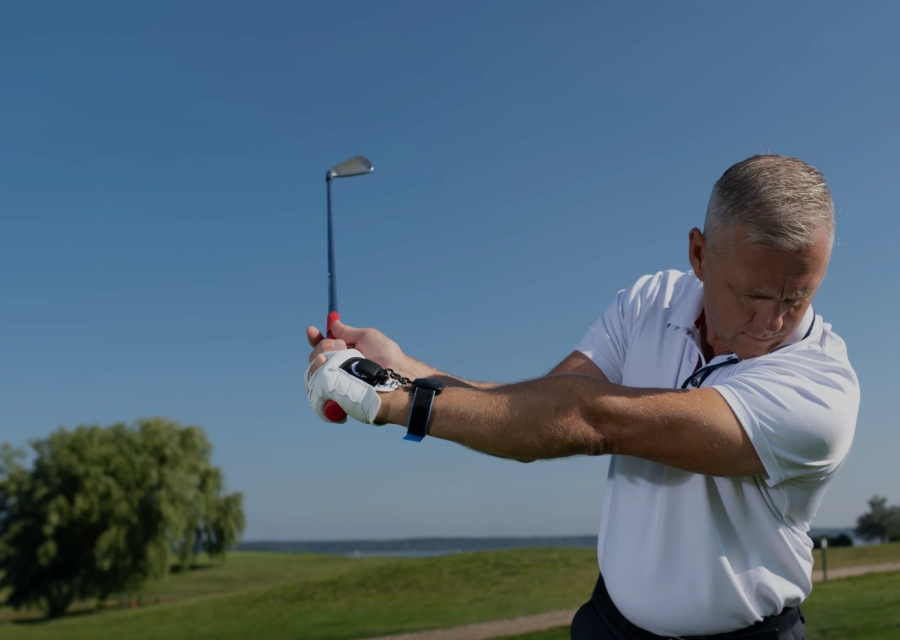
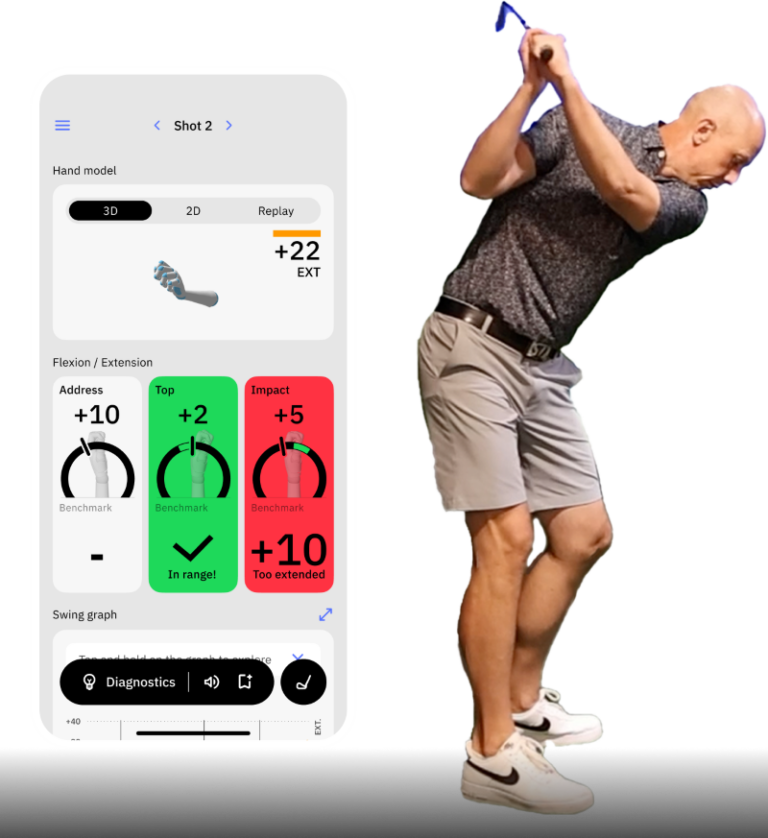
- Check for a flat lead wrist at the top of the swing.
- Monitor lead wrist flexion at impact.
- See whether your trail wrist maintains extension through the downswing.
- Ensure your hands are placed on the club in a consistent way each time.
What If You’re Just Warming Up for a Practice Session?
This entire warm-up routine is designed for getting ready to play. If you’re heading to the range for a practice session instead of a round, make a few simple adjustments.
- Spend more time on movement and stretching.
- Stay longer with wedges and short irons.
- Use drills that exaggerate feels or positions.
- Expect some poor shots while you’re working on changes.
- Don’t judge the session by ball flight alone.
Also, remember that practice sessions can get long. Stay hydrated and take short breaks so fatigue doesn’t turn good reps into sloppy ones.
It’s easy to get stuck grinding on one club or one miss. Set a rough time limit for each focus area so you don’t overwork a single movement or chase fixes that don’t need fixing.
This is the ideal time to use feedback tools like HackMotion to explore wrist movement, test changes, and build awareness without the pressure of scoring.
Additional Warm Up Tips
Even if you follow the 15-ball warm-up routine, a few small habits can help you feel more prepared by the time you reach the first tee.
Get Moving Before You Arrive
If you have time, go for a short walk before heading to the course. Even a few minutes helps loosen your legs and get blood flowing, so your first swings don’t feel stiff.
Use Your Club to Stretch
Your golf club works well as a warm-up tool. Hold it across your shoulders to rehearse turns or use it for balance during light squats and hip hinges.
These movements mirror the swing and help reduce tension.
Give Yourself Enough Time
A good warm-up doesn’t take forever, but it does take planning. Try to arrive about 20 minutes before your tee time so you can move, stretch, and go through your routine without rushing.
Don’t Camp Out on One Miss
Warm-ups are about readiness. If something feels off, take note and move on instead of grinding on one issue right before the round.
Have One Go-To Drill
Keep one simple drill you trust to reset feel. The Towel Drill can help you find clean contact, and the Casting Drill in the HackMotion app can help if your losing power and consistency.
Take a look at the HackMotion Golf Drills Library to find drills that match your warm-up goals.
How do the Professionals Warm Up
Every professional golfer has a warm-up routine that works for their body and their game. It may look different on a practice day versus a tournament round, but the purpose is always the same: get loose, find your feel, and step onto the first tee with confidence.
As an example, here’s a simplified look at Phil Mickelson’s warm-up, broken down by what he focuses on and why it matters.
| Warm-Up Focus | Why It Matters |
|---|---|
| Shoulder activation | Loosens the joints and reduces injury risk before swinging |
| Single-arm movement | Activates stabilizing muscles and improves coordination |
| Core stability | Builds balance and control to support a repeatable swing |
| Lower body mobility | Prepares hips and legs to rotate without restriction |
| Short game calibration | Establishes distance control and touch early |
| Speed preparation | Primes the nervous system without forcing full-speed swings |
| Mental preparation | Helps players commit to shots with clarity and confidence |
Final Thoughts
Now, you can get to work building your perfect golf warmup routine. Start by carving out enough time, learning some stretches, and determining how you can make clean contact prior to your round.
Wearing your HackMotion as you complete your golf warm-up exercise will help alert you to any issues you may see in your wrist action and ball striking. This can make all the difference when you head out to the golf course.
If you want help building a warm-up routine that actually improves your swing, use our directory to find a personal golf trainer near me who uses HackMotion to teach better movement and impact fundamentals.