Pause at the Top of the Backswing: Why It Works and How to Practice It (Drills Included)
Pausing at the top of the backswing is one of the most misunderstood ideas in golf. Some golfers think it’s a swing style. Others try to copy tour players who appear to “stop” at the top.
The pause is really just a practice tool that helps you organize the swing and the swing sequence.
Used correctly, a pause can clean up wrist positions, improve sequencing, and smooth out tempo. Used incorrectly, it can create tension and timing issues.
The difference comes down to how you practice it and what you’re paying attention to at the top.
Pausing at the Top of the Backswing (Key Takeaways)
- Pausing at the top is a practice exaggeration, not something you need to use on the course.
- The pause helps expose and improve wrist conditions at the top of the swing.
- Better players tend to lose extension during the backswing, not add it.
- A brief pause can improve downswing sequencing and reduce casting.
- HackMotion helps confirm whether your pause is actually fixing the problem.
Contents
What Does “Pausing at the Top” Really Mean?
Pausing at the top doesn’t mean freezing your body or holding the club in place for seconds. In practice, it usually ends up feeling like a slightly slower backswing with a brief moment of awareness at the top before starting down.
For most golfers, the pause lasts just long enough to:
- Feel where the club finished loading
- Sense wrist position and clubface orientation
- Start the downswing with the proper sequence
On the course, this pause usually disappears and becomes a feel, not necessarily a visible stop.
Why Golfers Practice a Pause at the Top
A pause works because it interrupts rushing and forces the swing to organize itself at the most important transition point.
Benefits of Practicing a Pause
- Slows down a fast or out-of-control backswing.
- Helps smooth out tempo naturally.
- Improves awareness at the top of the swing.
- Makes sequencing into the downswing easier.
- Reduces early release and flipping.
When a Pause Can Cause Problems
- Holding it too long and losing rhythm.
- Locking up instead of staying athletic.
- Trying to use it as a permanent swing style.
The key is practicing with longer pauses, then letting them shorten naturally over time.
Pause at the Top of the Backswing and Wrist Action
This is where the pause becomes extremely valuable.
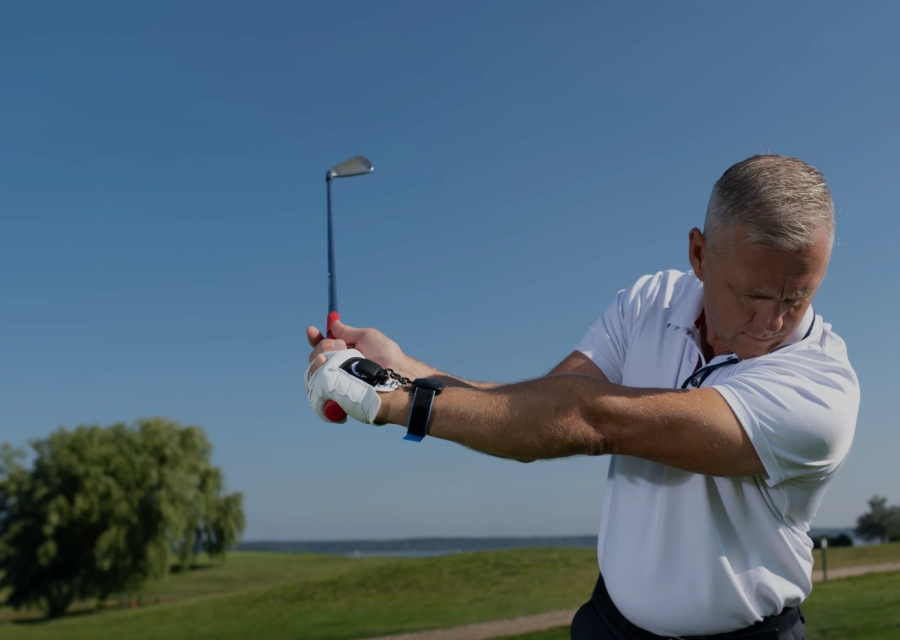
The top of the backswing is one of the few positions where wrist action can be clearly evaluated because the club is changing direction. What happens here directly impacts the clubface and the downswing that follows.
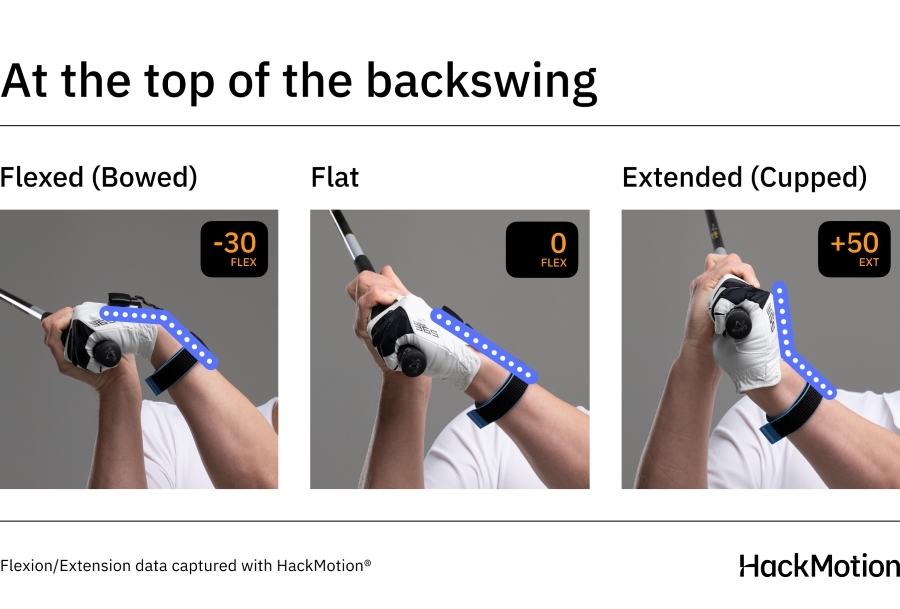
With a neutral grip:
- A flat lead wrist is a strong reference point at the top.
- The back of the lead hand and forearm should appear roughly aligned.
- The clubface should match the angle of the lead wrist.
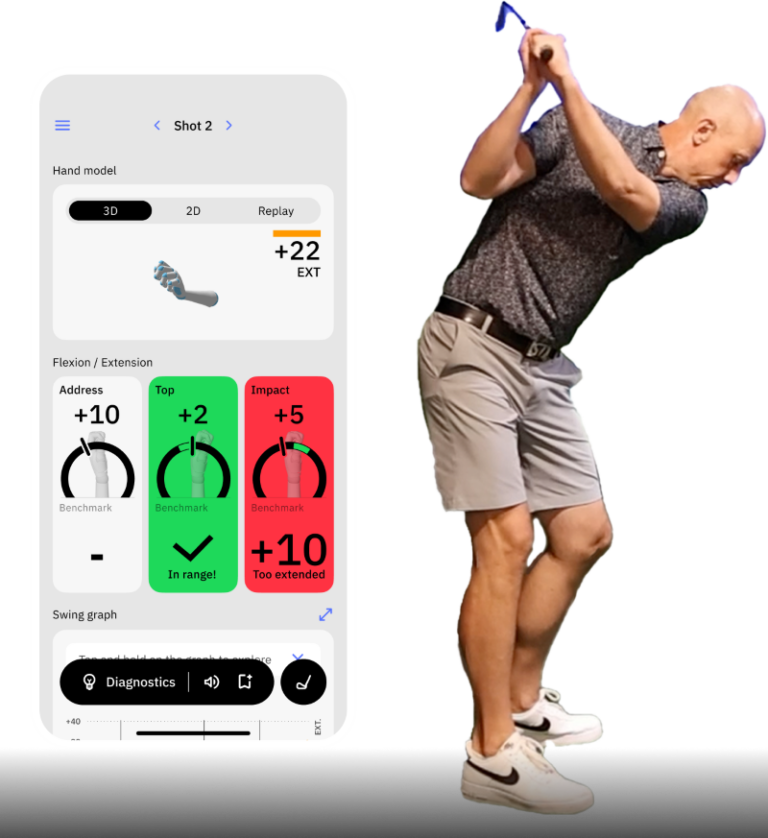
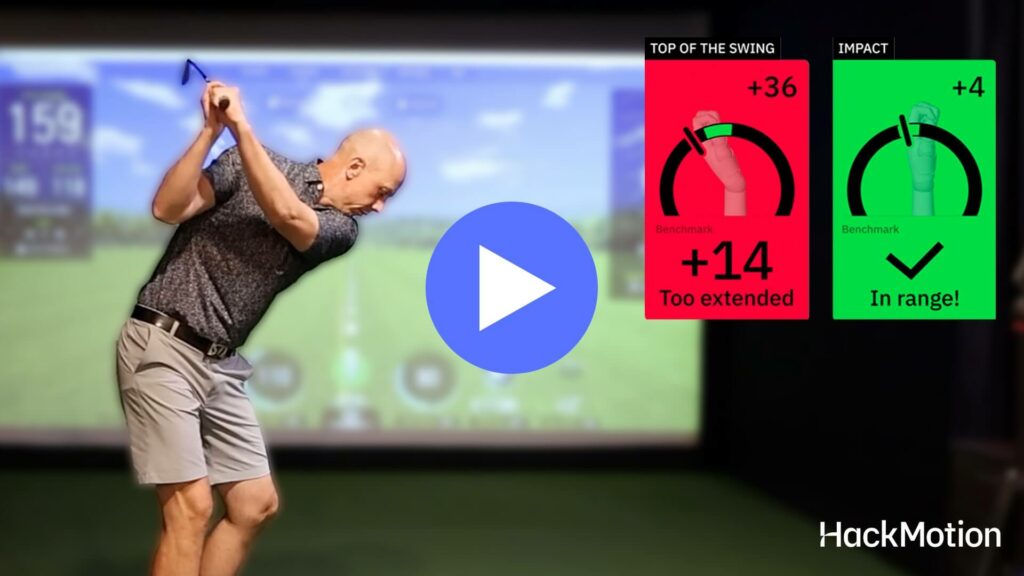
What HackMotion data shows consistently is that higher-handicap golfers tend to add lead wrist extension during the backswing, while better players often remove extension and arrive flatter or slightly flexed.
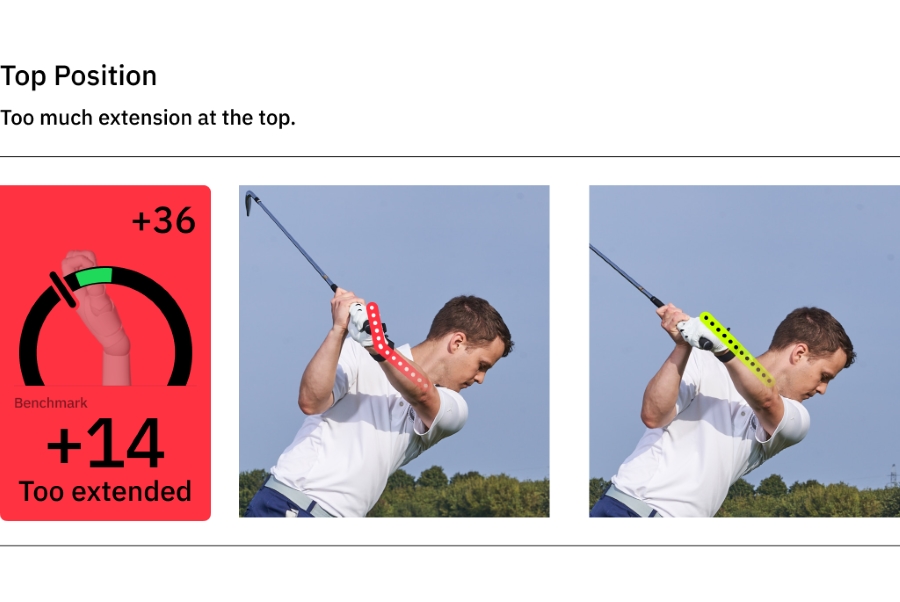
Pausing at the top makes this impossible to hide. If the clubface feels unstable or open when you pause, the wrist conditions are likely off.
This is where HackMotion becomes a powerful training tool. It measures whether you are:
- Adding extension on the way back
- Staying stable
- Or gradually moving toward a flatter or slightly flexed position
How the Pause Improves Tempo
One underrated benefit of practicing with a pause is how it naturally slows the backswing down.
When golfers know they’re going to pause:
- They stop rushing to the top
- The backswing becomes smoother
- The transition becomes more controlled
Even when the pause fades, the improved tempo often stays.
If the clubface feels open when you pause at the top, learn how a cupped wrist at the top affects the downswing.
Why the Pause Helps Downswing Sequencing
The pause doesn’t have anything to do with the backswing, it sets up the downswing.
When golfers rush the transition, the wrists often unhinge early. That’s casting.
A brief pause:
- Helps maintain wrist angles longer.
- Gives the body time to start rotating.
- Reduces the urge to throw the clubhead at the ball.
The result is often better shaft lean, improved compression, and more consistent contact but only if the clubface is managed correctly.
Drills to work on Pausing at the Top of the Backswing
The basics of pausing at the top of the backswing are simple. You don’t have to overthink this one. Simply feel that pause when you get to the top.
However, there are drills to work on where you can turn this strategic pause into a bit more of a learning exercise. Here are a few to use.
Pause-and-Check Top Position
This drill helps you feel and confirm correct wrist conditions at the top before starting down. It creates awareness of wrist position and clubface alignment at the top of the swing.
Pause-and-Check Top Position – Step by Step:
- Make a slow backswing.
- Pause briefly at the top.
- Feel the lead wrist flat or slightly flexed.
- Start the downswing smoothly without rushing.
Using HackMotion during this drill confirms whether you’re adding extension or losing it as you pause.
Not sure if you’re doing this correctly? Find a golf coach who uses HackMotion to get clear feedback on your position at the top and transition.
Pause to Casting Drill
This drill uses the pause to train proper wrist angles into the downswing. It reduces early release and teaches you how to maintain wrist angles longer.
Pause to Casting Drill – Step by Step:
- Swing to the top and pause briefly.
- Begin the downswing slowly.
- Focus on keeping the wrist angles intact.
- Progress from slow reps to short punch shots.
HackMotion provides feedback when the angles are maintained and alerts you when they are lost too early.
Pause + Motorcycle Drill Combination
The Motorcycle drill is one of the most popular wrist action drills in the game of golf.
This one blends angle retention and clubface control and it helps golfers prevent casting and flipping. The Motorcycle drill tends to be one of the best for fixing a slice.
Motorcycle Drill – Master Wrist Flexion in the Downswing
Focus on continuously adding flexion until the club reaches parallel, then smoothly complete your swing.
Pause + Motorcycle Drill – Step by Step:
- Pause at the top.
- Start the downswing slowly.
- Use the motorcycle feel to control the clubface.
- Maintain wrist structure into impact.
Final Thoughts
Pausing at the top is a training tool that helps you feel better wrist positions, sequence the downswing more effectively, and smooth out tempo.
If you struggle with casting, inconsistent contact, or an open clubface, the pause exposes those issues quickly. You can use it to work on positions or just as a simple warm up tool before a round of golf.
Use HackMotion to check your position at the top of the backswing and see if the wrist position is correct.