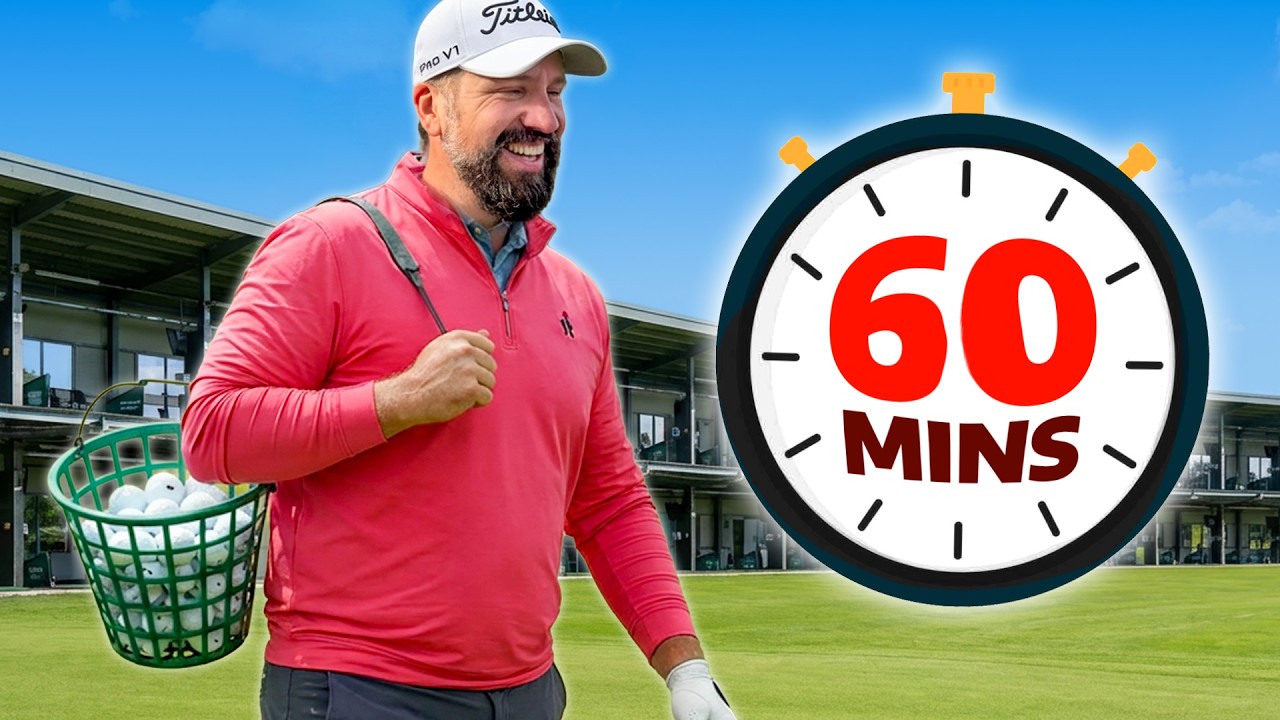
Peter Finch’s 100-Ball, 60-Minute Driving Range Practice Session (Full Breakdown)

Most golfers go to the driving range with good intentions and leave unsure if anything actually improved. Unfortunately, there is often no real improvement, yet practice sessions repeat this way over and over.
That’s the problem this routine is designed to solve.
This is a structured 100-ball, 60-minute driving range session developed by Peter Finch.
The goal isn’t to hit more balls. It’s to warm up properly, practice with intention, use feedback to guide improvement, and finish the session knowing exactly what worked and what needs attention next time.
Key Takeaways Before You Start
Before you hit the first ball, keep these principles in mind:
- Warming up isn’t optional. Unprepared swings waste balls.
- Every session should have one clear intention.
- Feedback is required if improvement is the goal.
- Fewer balls with focus beat more balls without purpose.
- Practice must eventually include pressure to transfer to the course.
Contents
Why Feedback is the Most Important Part of Practice
One of the strongest points Finch makes is that practice without feedback is guessing.
Ball flight alone only tells part of the story, and video is also helpful. However, until you understand why a shot happened, you’re practicing and guessing all at the same time. That’s where feedback tools matter.
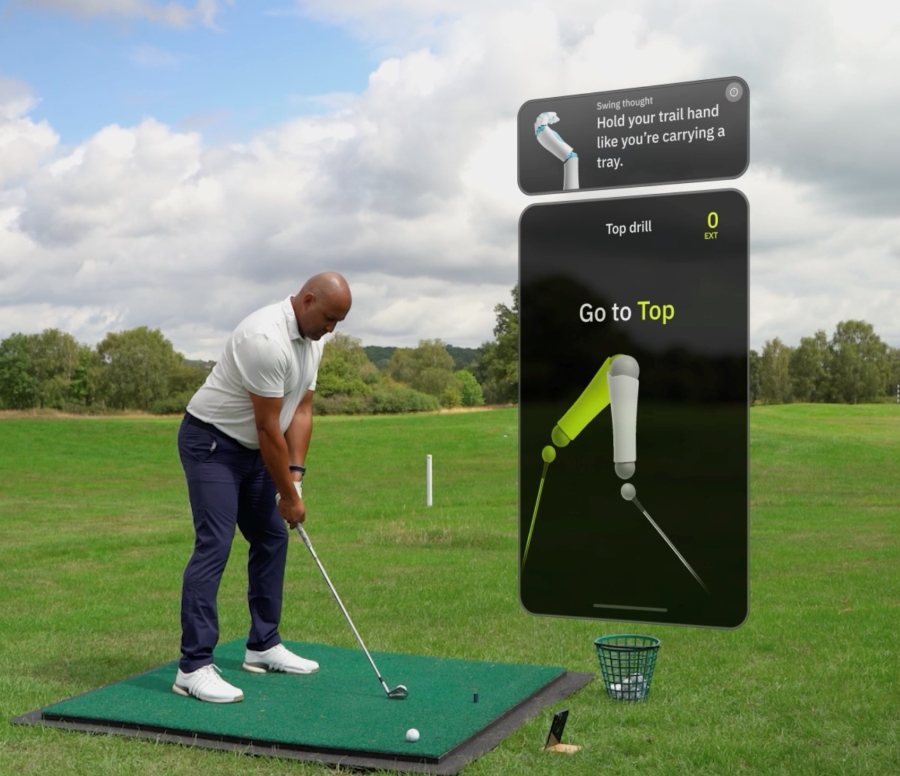
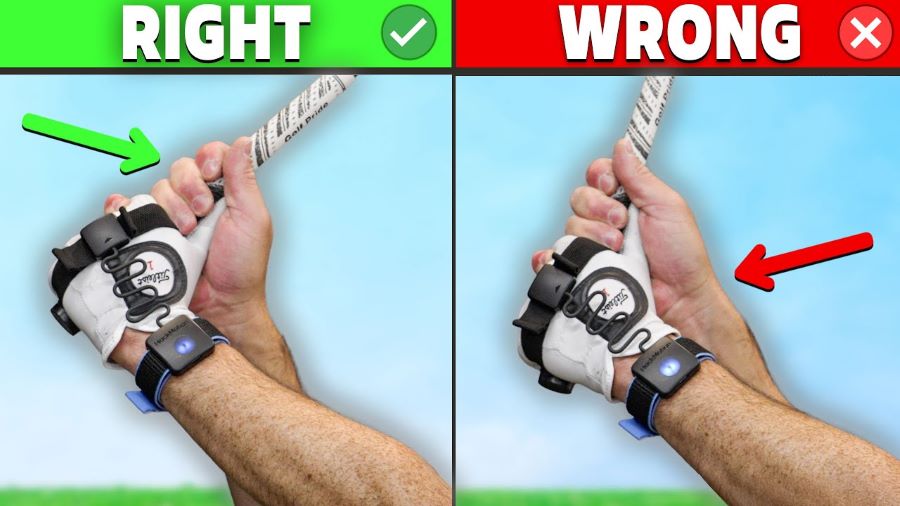
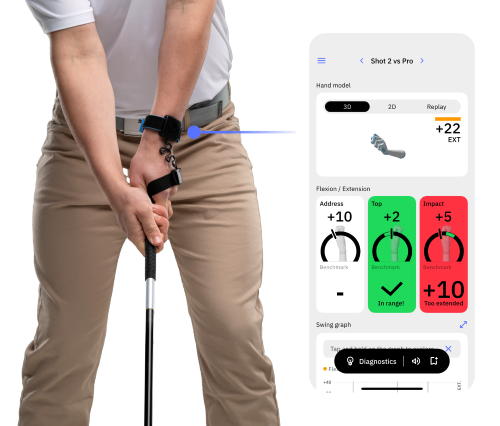
Using HackMotion during practice gives you real-time insight into your wrists and clubface position.
Instead of guessing whether you’re holding angles, releasing too early, or adding loft, you can confirm it immediately. That feedback shortens the learning curve and prevents repeating the same mistake for an entire bucket of balls.
The 100-Ball, 60-Minute Driving Range Session
Below is a sample session built around Finch’s practice framework, with exact time blocks and ball counts.
0–10 Minutes | Dynamic Warm-Up + Wedge Progression (20 balls)
- Start with dynamic movement for shoulders, hips, and rotation.
- Avoid static stretching.
- Begin hitting balls with half swings only.
- Progress through wedges from lob to pitching wedge.
- No swing mechanics or targets yet.
Goal: Prepare your body and establish rhythm.
10–15 Minutes | Set Your Intention (5 balls)
Before moving on, pause and decide:
- Are you working on ball flight or movement?
- How will you measure success today?
Examples:
- Straighter start lines.
- More consistent contact.
- Better control of loft or release.
15–30 Minutes | Drill Work With Feedback (20 balls)
- Choose one drill only.
- Hit balls in sets of 3–5.
- Take long pauses between shots.
- Stretch time, not ball count—10 balls can take 10 minutes.
This is where feedback matters most. Use HackMotion, video, or both to confirm that the movement you’re working on is actually happening. If you need some drills to work on, check out our Drill Library. You’ll find plenty of great options.
30–45 Minutes | Performance Practice (30 balls)
This phase makes practice start to feel like golf.
- Pick one problem distance (for example, 150–180 yards).
- Choose one club.
- Define a clear target window or cone.
- Hit 6 sets of 5 balls.
- Track how many finish inside your window.
Add pressure:
- “I need 3 out of 5”.
- “I don’t leave until I hit X”.
45–55 Minutes | Variable Practice (15 balls)
- Change clubs and targets.
- One swing per scenario.
- Mimic on-course randomness.
55–60 Minutes | Review & Transfer (No balls)
Before leaving the range, reflect:
- What worked?
- What didn’t?
- What feeling mattered most?
- What’s the focus next session?
Write it down. The next time you go back to the range, you’ll be able to look back at your progress and remember what worked and what didn’t.
Want a practice routine built around your game?
Use our Driving Range Practice Plan to create a custom range session based on your swing, goals, and time available.
Final Thoughts
A productive driving range session isn’t about emptying a bucket. It’s about structure, intention, and feedback. When every ball has a purpose, practice becomes efficient and improvement becomes easier to track.
If you want clearer feedback during practice, HackMotion helps turn feel into confirmation so you know the work you’re putting in is actually moving you forward. Think of it as a coach on your wrist.
Use this session as a warm-up or follow-up to your spring practice plan, and you’ll get more out of your range time without hitting a single extra ball.