Putting Practice Routine: Structured Putting Practice Plans by Handicap (High, Mid, and Low)
Putting practice shouldn’t look the same for every golfer.
High-handicap golfers lose strokes for different reasons than low handicap players. That’s why this practice plan is split into three distinct putting practice routines, each tailored to a different handicap range.
The drills, challenges, and HackMotion focus points change as the golfer’s needs change.
- High Handicap (20+): Builds stable wrist motion, basic speed control, and a reliable start line.
- Mid Handicap (10–19): Tightens timing, contact quality, and distance control across putt lengths.
- Low Handicap (0–9): Sharpens precision, rotation control, and speed dispersion under pressure.
Each section includes three 20–25 minute practice sessions. Learn all three within your handicap range, then rotate them throughout the week.
Jump directly to the putting practice plan built for your handicap level. Each routine focuses on the skills that actually lower scores at that stage.
Putting Practice Routine for High Handicappers (20+)
Data consistently shows that higher-handicap golfers struggle with excessive wrist movement, poor speed control on first putts, and unreliable start lines on short putts. Those three issues lead directly to missed tap-ins and far too many three-putts.
This plan is designed to fix that.
Below, you’ll find three different 20–25 minute putting practice routines. Learn all three, then rotate them based on how often you practice. You can do one per week, or all three in a single week if you have time.
The goals of this plan:
- Build wrist stability for better face control
- Improve speed control to reduce three-putts
- Train a reliable start line on short putts
High Handicap Putting Practice Overview
| Session | Primary Focus | Why It Matters |
|---|---|---|
| Session 1 | Wrist Stability & Contact | Controls face angle and speed |
| Session 2 | Distance Control | Reduces three-putts |
| Session 3 | Start Line | Improves short-putt confidence |
Practice Session 1: Wrist Stability & Contact Control (20-25 Minutes)
Most high handicappers fight excessive wrist motion that changes the face angle and strike quality. This session helps you feel what a stable, connected stroke actually feels like and how to repeat it.
Drill 1: Wrist Stability (Ball Between Forearms) – 8 minutes
Place a small ball or soft object between your forearms and take your normal putting grip. Make slow strokes first without a ball, then with a ball.
- What to feel: arms, chest, and putter moving together
- What to notice: less flipping or breaking down through impact
- HackMotion focus: smoother flexion/extension with fewer sudden spikes in numbers
Drill 2: Putter Head Gate (Tees or Cups) – 7 minutes
Set two tees or cups just wider than your putter head. Putt through the gate without worrying about making the putt.
- What to feel: the putter swinging freely through impact
- What to notice: more consistent center contact
- HackMotion focus: reduced radial and ulnar deviation through impact
Challenge: 10-in-a-Row Stability Test – 5-10 minutes
From 4–5 feet, roll putts through the gate. The goal is 10 in a row.
- Rule: hit a tee or miss the gate, and the count resets.
- Why it works: adds light pressure without overthinking technique, don’t put pressure on making putts just yet, focus on the stroke alone.
Practice Session 2: Distance (Speed) Control (20–25 Minutes)
Three-putts almost always start with a poor first putt. This session trains your ability to control speed so your second putt is simple and shorter.
Drill 1: Ladder Drill (Wide Zone) – 8 minutes
Create a large target zone using tees or alignment sticks. Putt balls progressively farther into the zone.
- What to feel: smooth acceleration and no sudden wrist hit at impact
- What to notice: tighter grouping of finished putts
- HackMotion focus: avoid sudden extension through impact
Drill 2: Heads-Up Distance Awareness – 7 minutes
Make practice strokes while looking at the target, then step in and hit the putt. Some golfers find this drill so effective they start to use it on the course.
If you’ve ever felt like you don’t feel natural on the putting green, this drill can help.
- What to feel: natural rhythm instead of forced speed
- What to notice: better distance control without steering
Challenge: Two-Ball Speed Match – 5–10 minutes
Hit two balls to the same target. Try to finish them within one putter head of each other.
Why it works: trains consistency instead of perfect distance, you’ll need that consistency as you work your way around the golf course.
Practice Session 3: Start Line & Short Putts (20–25 Minutes)
Most missed short putts happen because the ball never starts on the intended line. This session focuses on start line first, not results.
If you can get the ball started on the correct line it has a better chance of ending close to the hole.
Drill 1: Start Line Gate (Cups or Tees) – 8 minutes
Place two cups or tees just wider than the ball 12–18 inches in front of it. Start from 3–4 feet. Get the ball rolling between the tees and eventually move back a foot further.
- What to feel: stable wrists and centered contact
- What to notice: the ball consistently passes through the gate
- HackMotion focus: minimal wrist rotation through impact
Drill 2: Hold-the-Finish Stroke – 7 minutes
Putt and hold your finish for two seconds after impact. You’ll have to have stable wrists, and no flipping in order to hold the finish after your stroke.
Also work on keeping your head down through impact and not following the path of the ball.
- What to notice: cleaner start lines when wrists stay quiet
- HackMotion focus: consistent wrist angles at impact
Challenge: Make 15 From 5 Feet – 5-10 minutes
Use the gate and attempt to make 15 putts from 5 feet.
Rule: the ball must pass through the gate to count
Putting Practice Routine for Mid Handicappers (10–19)
Mid-handicap golfers usually have a functional putting stroke, but consistency breaks down as putt length changes.
Data shows players in this range lose strokes on the greens primarily due to inconsistent speed control and contact, not because they can’t start the ball on line.
This plan is designed to tighten those gaps.
Below, you’ll find three 20–25 minute putting practice routines. Learn all three, then rotate them based on how often you practice. The goal is to create repeatable speed and contact, not just make putts during practice.
The goals of this plan:
- Improve stroke timing so speed comes from rhythm, not effort
- Maintain centered contact across different putt lengths
- Reduce three-putts by tightening distance control
Mid Handicap Putting Practice Overview
| Session | Primary Focus | Why It Matters |
|---|---|---|
| Session 1 | Stroke Timing | Controls speed across distances |
| Session 2 | Distance & Contact Control | Reduces three-putts |
| Session 3 | Stability on Longer Putts | Prevents breakdowns under pressure |
Practice Session 1: Stroke Timing & Rhythm (20-25 Minutes)
Many mid handicappers unknowingly change their tempo when the putt gets longer.
This session trains consistent timing, so distance comes from stroke length not from hitting the putt harder.
Drill 1: Timing Metronome – 8 minutes
Use the HackMotion metronome to match your backswing and follow-through to the beeps. Start without a ball, then introduce one.
- What to feel: smooth rhythm with no rushing in the downswing
- What to notice: stroke feels “in sync” instead of forced
- HackMotion focus: timing ratio staying consistent across reps
Drill 2: Same Timing, Different Distances – 7 minutes
Using the same metronome setting, hit short, medium, and long putts while keeping the rhythm identical.
- What to feel: same tempo regardless of distance
- What to notice: longer putts come from a longer stroke, not more effort
- HackMotion focus: timing numbers remain stable as stroke length changes
Challenge: Tempo Window Test – 5-10 minutes
Hit 12 putts from mixed distances, never hit two putts in a row going to the same target.
Goal: at least 8 of 12 putts fall inside your acceptable timing window using HackMotion
Why it works: introduces accountability and helps with making the adjustments you’ll have to make on the course.
Practice Session 2: Distance & Contact Control (20-25 Minutes)
Speed control isn’t just about feel. Golfers who struggle with getting the speed of the greens down often come to realize that they are not striking the putter on the face in the correct location.
This session connects centered contact with predictable rollout.
Drill 1: Ladder Drill (Moderate Zone) – 8 minutes
Create a 6–8 foot landing zone using alignment sticks, clubs, or tees. The goal is to roll each putt slightly farther than the last, while keeping every ball inside the zone.
Start by finishing just inside the front edge. Each putt must beat the previous one without rolling past the back.
Reset the drill if:
- A putt finishes short of the previous ball
- A putt rolls past the back of the zone
- What to feel: smooth acceleration with no sudden wrist hit at impact
- What to notice: tighter grouping of finished putts
- HackMotion focus: avoid sudden flexion or extension spikes through impact
Drill 2: Sweet Spot Drill – 7 minutes
Place two cups (indoors) or tees (outdoors) just wider than the putter head. Swing the putter through the space without touching either side. Focus on solid contact, not making putts.
- What to feel: the putter returning to center naturally
- What to notice: ball speed becomes more predictable when contact is solid
- HackMotion focus: tighter radial and ulnar deviation patterns
Challenge: Contact Consistency Test – 5–10 minutes
Hit 10 putts from mid-range, focusing only on producing the same strike and stroke each time rather than reacting to whether the putt goes in.
Goal: at least 7 putts feel solid and finish within a tight distance cluster
Why it works: reinforces strike quality instead of outcome-based practice, if your strike quality improves you’ll make more putts.
Practice Session 3: Wrist Stability on Longer Putts (20–25 Minutes)
As the stroke gets longer, many mid handicappers add unwanted wrist motion. This session focuses on maintaining stability while still producing speed.
Drill 1: Fix Loft at Impact – 8 minutes
Practice delivering the same shaft lean at impact that you set at address, across short and long putts.
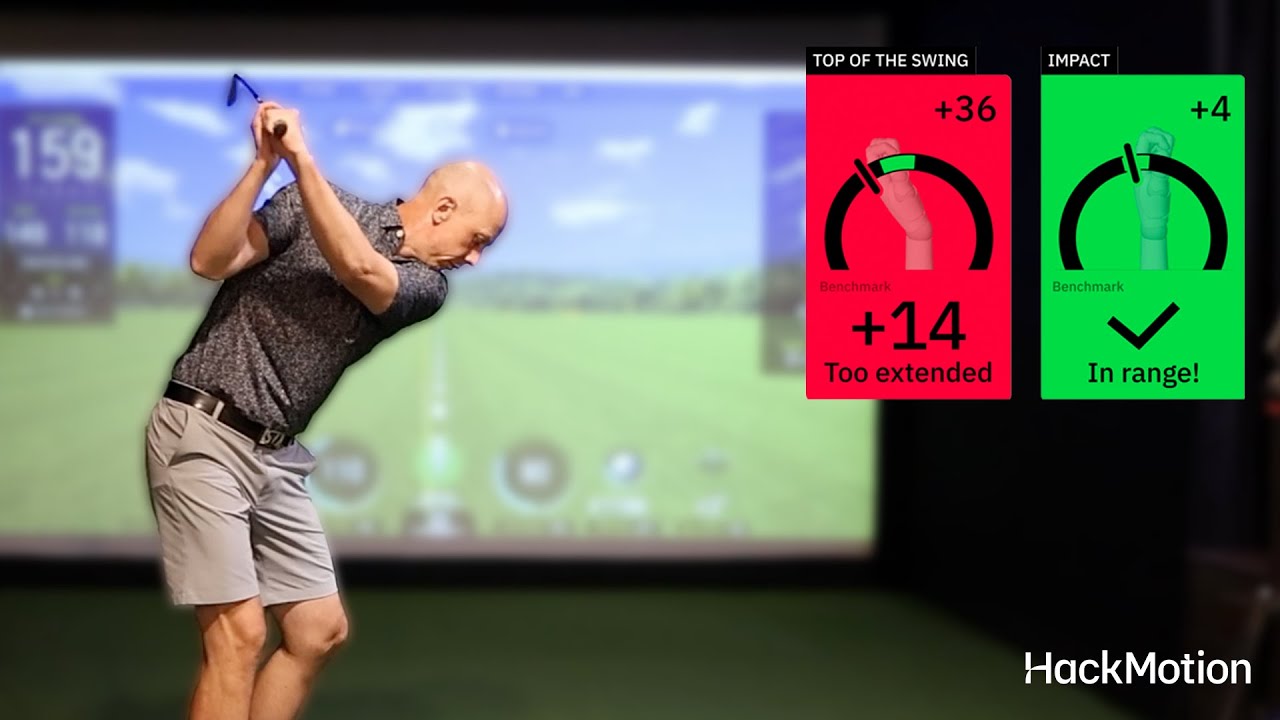
HackMotion makes this visible by showing how much your lead wrist moves into flexion or extension during the stroke, helping you spot small changes that affect speed and roll.
- What to feel: stable handle with no flipping or pressing
- What to notice: ball speed becomes more consistent
- HackMotion focus: consistent flexion/extension at impact
Drill 2: Connected Stroke (Chopsticks) – 7 minutes
Use alignment sticks under the arms to promote connection between arms, torso, and putter.
- What to feel: torso controlling the stroke
- What to notice: wrists stay quieter as stroke length increases
- HackMotion focus: reduced volatility in wrist angles
Challenge: Long Putt Proximity Ladder – 5–10 minutes
From 25–40 feet, hit putts to increasing distances. Use HackMotion to check that your lead wrist isn’t adding extra extension through impact, which can change loft and make long putts jump or come off inconsistently.
Goal: finish each putt inside a 3-foot circle
Why it works: trains speed control while maintaining wrist stability
Putting Practice Routine for Low Handicappers (0–9)
Low-handicap golfers don’t miss many short putts and they generally read greens well. Where strokes are lost is in precision under pressure.
There are subtle breakdowns in speed control, face delivery, and rotation on longer or breaking putts. HackMotion data at this level often shows that problems aren’t constant, they’re situational.
This plan is designed to expose and clean up those situations.
Below, you’ll find three 20–25 minute putting practice routines. Learn all three and rotate them throughout the week. These sessions are about owning face control, speed, and rotation so those skills hold up when it matters.
The goals of this plan:
- Maintain consistent timing and delivery across all putt lengths
- Tighten speed dispersion on long and mid-range putts
- Eliminate steering by trusting rotation and start line on breaking putts
Low Handicap Putting Practice Overview
| Session | Primary Focus | Why It Matters |
|---|---|---|
| Session 1 | Timing Consistency | Keeps speed predictable under pressure |
| Session 2 | Distance Control Precision | Separates great putters from good ones |
| Session 3 | Rotation & Steering Control | Improves performance on breaking putts |
Practice Session 1: Timing Consistency Across Distances (20–25 Minutes)
Elite putters don’t change tempo when distance changes they change stroke length, not effort.
This session reinforces timing as a constant so speed stays predictable even under pressure.
Drill 1: Metronome Timing Calibration – 8 minutes
Use the HackMotion metronome to match the end of your backswing and follow-through to the beats. Begin without a ball, then introduce one.
- What to feel: rhythm that feels repeatable and unforced
- What to notice: cleaner contact when timing stays consistent
- HackMotion focus: stable timing ratio across reps
Drill 2: Same Timing, Different Distances – 7 minutes
Using the same metronome setting, rotate between short, medium, and long putts while keeping tempo identical.
- What to feel: distance coming from stroke length, not acceleration
- What to notice: speed stays predictable even as targets change
- HackMotion focus: timing numbers remain consistent
Challenge: Random Distance Timing Test – 5–10 minutes
Hit 12 putts to different distances without repeating the same target twice.
Goal: stay within your acceptable timing window on at least 9 of 12 putts
Why it works: mirrors on-course demands where no two putts feel the same
Practice Session 2: Distance Control Precision (20-25 Minutes)
At a low handicap, distance control is about finishing putts in a tight window so pressure second putts disappear.
This session sharpens speed control by linking stroke length, wrist delivery, and contact quality.
Drill 1: Speed Window Drill (Long Putt Precision) – 10 minutes
Create a 3–4 foot deep landing window using alignment sticks or tees. This window can be placed around the hole or at a specific target distance if no hole is available. From 25–40 feet, every putt must finish inside the window.
There is no building up and no margin for drifting long or short.
- What to feel: smooth acceleration with no added hit through impact
- What to notice: misses tend to correlate with subtle changes in wrist delivery
- HackMotion focus: consistent flexion/extension through impact, especially on longer strokes
Why this matters: low handicappers lose strokes when long putts miss by 5–6 feet instead of 2–3. This drill directly attacks that gap.
Drill 2: Sweet Spot Drill – 7 minutes
Place two cups (indoors) or tees (outdoors) just wider than the putter head. Focus on moving the putter through the space cleanly.
- What to feel: centered strike without manipulation
- What to notice: ball speed becomes more predictable
- HackMotion focus: tighter radial and ulnar deviation patterns
Challenge: Distance Dispersion Test – 5-10 minutes
Hit 10 putts from the same long distance.
- Goal: at least 7 finish within a 3-foot radius
- Why it works: emphasizes consistency over perfection
Practice Session 3: Rotation & Steering on Breaking Putts (20-25 Minutes)
At this level, missed breaking putts are usually caused by steering. Subtle face manipulation near impact when trust breaks down. HackMotion often shows this as abrupt changes in forearm rotation.
This session trains you to separate natural rotation from manipulation.
Drill 1: Natural Rotation Awareness – 8 minutes
Hit breaking putts while allowing the putter to naturally open in the backswing and close through impact.
Avoid steering the face open or closed near impact. HackMotion helps you confirm that forearm rotation is smooth and continuous, not manipulated.
- What to feel: free rotation with no face control effort
- What to notice: cleaner starts when rotation stays smooth
- HackMotion focus: continuous rotation without impact spikes, use the HackMotion rotation drill
Drill 2: Aim-Point Commitment Drill – 7 minutes
Choose a clear intermediate aim point on the intended start line and commit to starting the ball there.
When the aim point is unclear or tentative, golfers often steer the putter face through impact. A committed aim allows the putter to rotate naturally and the stroke to stay consistent.
- What to feel: trust in start line rather than the hole
- What to notice: reduced urge to guide the ball
- HackMotion focus: stable rotational patterns
Challenge: Steering Elimination Test – 5–10 minutes
Hit 10 breaking putts from the same slope and distance.
- Goal: consistent start line with no visible manipulation
- Measure success: HackMotion shows smooth rotation through impact
- Why it works: exposes steering that only appears under repetition and pressure
Final Thoughts
Better putting doesn’t come from hitting more putts, it comes from practicing the right skills for where your game actually is.
Stop wasting your time on the putting green and start using practice routines to see changes and improvements in your scoring.
These practice plans are designed to meet you at your current level, then push you forward with purpose. Use HackMotion to validate what you feel and to keep track of your progress. When your practice has structure, feedback, and progression, putting stops being a mystery and starts becoming a scoring advantage.