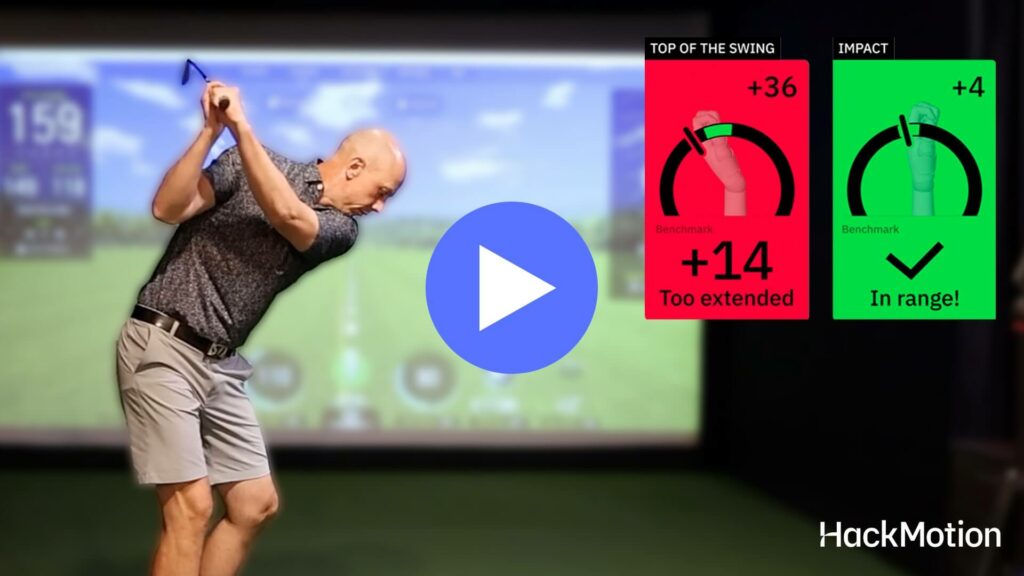
Standing up in the Golf Swing – Why it Happens, What Causes it, and How to Cure it
If you’ve ever hit a thin shot and someone told you to “keep your head down,” they were only seeing the symptom, not the cause.
Most golfers stand up because they lose their posture, not because their head happens to lift.
Standing up changes your strike, your club path, and your consistency, but it’s also one of the easiest faults to fix once you understand why it happens.
Below, we’ll break down the real causes and give you simple steps and drills (including HackMotion feedback) to stay in posture and stop standing up for good.
Contents
Standing Up in the Golf Swing (Key Takeaways)
Many golfers stand up in their swing, but few know why or how to stop it. Here are the key takeaways to understand if you want to stop standing up in your golf swing today.
- Standing causes multiple problems in various aspects of your game.
- You risk injury when you stand during a swing due to the high speeds involved.
- Standing is caused by either a physical, technical, or mental error.
- Use 4 simple steps to eliminate standing up and take your game to the next level.
- Utilize specific drills to address the issue and avoid it once and for all.
What Happens When You Stand Up?
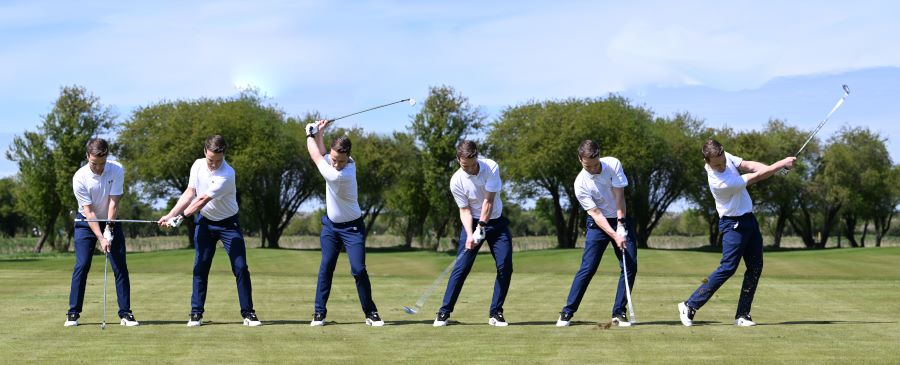
When you stand up in the golf swing, you lose the posture you established at address.
That small change affects everything that happens next, including your low point, your ability to rotate, and the direction the club is traveling at impact.
The result is inconsistent contact and ball flight, even if the rest of your swing feels solid.
Ball Flight Problems
Standing up slightly often causes pulls or slices as the club crosses your target line at impact. If you stand up abruptly, you could hit your shots thin or top them or even miss the ball altogether.
Consistency Problems
Standing up at any point throughout the swing makes it much more difficult for your body to return the club to the ball.
If you stand up during your backswing, your body will have to make last-second adjustments on the downswing, which will never produce a consistent shot.
Varying Attack Angles and Club Paths
Since golfers who stand up never stand up the same amount every time, your club will always be traveling on a different plane and attack angle.
This affects your ball striking and your overall confidence when choosing a club.
Injury Risk
Standing up is not a natural move; it’s a reaction to something wrong in your swing or setup.
Forcing your body to adjust for this movement during a swing increases your chances of injury to your muscles, knees, and especially your back.
Affects the Overall Game
For golfers who are actively trying to improve and lower their handicap, there may not be a telltale sign that you’re standing up.
But if you notice your scores creeping up, your greens in regulation going down, your fairways in regulation going down, and you’re having trouble controlling trajectory – especially low, stinger-style shots – there is a good chance you are subtly standing up in your swing.
How to Know If You Stand Up in Your Swing
Most golfers don’t realize they’re standing up until they see it on video or get feedback from HackMotion.
Here are the clearest signs you’re losing posture during the swing:
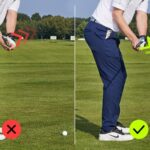
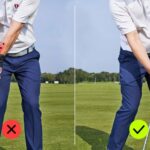
- Your head rises on video; even a small lift signals posture loss.
- Thin, topped, or inconsistent strikes show your low point is moving upward.
- You struggle to hit low, flighted shots, especially stingers or knockdowns.
- Your hands move farther from your body at impact, a classic reaction to standing up.
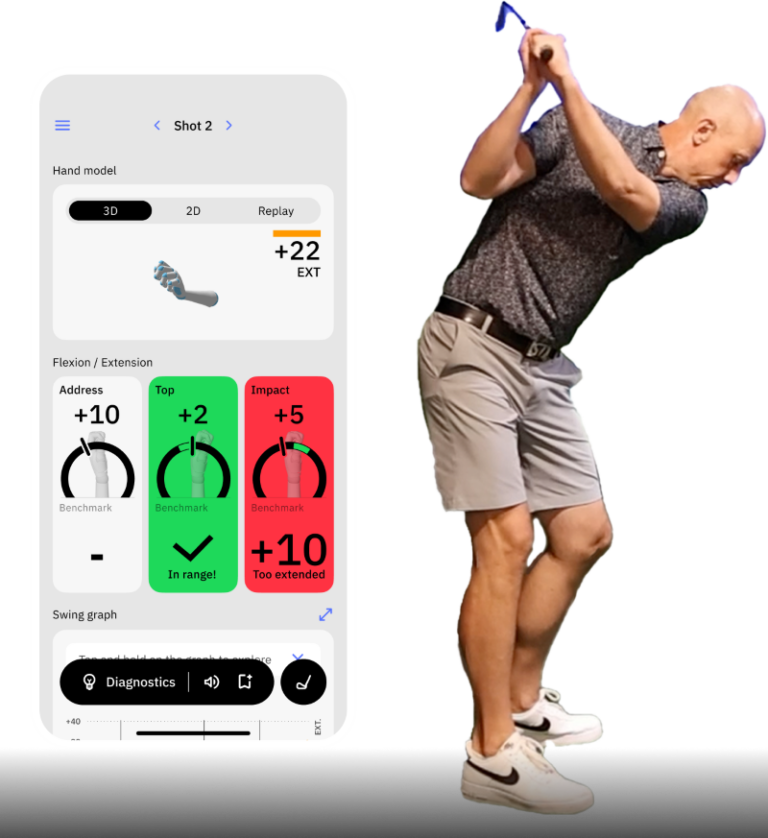
- HackMotion shows abrupt changes in wrist extension or flexion instead of a stable pattern through impact.
- You feel “stuck” or cramped as the club approaches the ball, causing a last-second bailout into a higher posture.
Why Do I Stand Up in My Golf Swing?
Standing up in the golf swing usually comes from a breakdown somewhere in your setup, movement, or body mechanics.
When one part of the motion gets out of position, your body reacts by lifting out of posture. Below are the specific physical, technical, and mental reasons this happens.
Physical Causes
- Weak glutes or core make it hard to maintain posture, leading to early extension.
- Limited hip or ankle mobility restricts rotation, forcing the body to stand up to compensate.
- Tight hamstrings or lower back issues prevent you from holding a stable spine angle.
- Poor balance or limited pelvic control makes the body adjust by straightening during the swing.
Technical Causes
- Poor setup posture or standing too upright promotes loss of spine angle.
- “Over the top” moves force the body to lift to create space.
- Early hand release (casting) shifts weight incorrectly and pulls the upper body upward.
- Poor sequencing, starting the downswing with the upper body, encourages early extension.
Mental Causes
- Fear of hitting the ground or making poor contact causes golfers to “help” the ball into the air.
- Pressure, tension, or overthinking mechanics disrupts rotation and leads to an early lift.
- Lack of confidence creates hesitation, and the body reacts by changing posture mid-swing.
- Distraction or uncertainty about the shot can cause posture loss as a protective response.
| Symptom | On-Course Effect |
|---|---|
| Raised posture | Thin/top shots |
| Loss of spine angle | Inconsistent ball striking |
| Hands far from the body | Pushes, hooks, or blocks |
Steps to Fix Standing Up in the Golf Swing
Follow these steps to maintain your spine angle, keep your head still, and avoid standing up in your golf swing.
1. Set Up Phone/Camera Behind the Target Line
Doing this will let you see firsthand when you stand up. Use a point of reference on the horizon and mark it to the top of your head. As soon as your head deviates from that spot, you’ll know when you stand up.
2. Adjust Posture and Setup Position
You may need to adjust your setup by standing a bit taller or moving further from the ball. This will depend on when and why you stand up, which can be determined by video evidence and from the table above.
3. Take Slow-Motion Swing and Pause at Impact
Once you’ve diagnosed the issue, take practice swings to implement the adjustments.
It’s important to focus on the point of impact, since that is the fastest area of the swing and the most crucial in determining the shot’s success.
4. Use Training Aids
You can use an apparatus or have a friend hold their club above your head. A camera works well (see step 1), or you can use HackMotion. The sensors and app work together to monitor your movements and will alert you when your posture is not in sync.
You can track shots, and the app will even make personalized drill suggestions based on your results.
Struggling to stop standing up in your golf swing?
Find a HackMotion-verified golf coach who can diagnose posture loss and help you fix it faster.
Drills to Avoid Standing Up in the Golf Swing
You can’t just tell yourself, “Don’t stand up.” Unfortunately, golf and your body don’t work like that.
The key to change is to use these specific drills that focus your mind and body on other aspects of your swing, indirectly forcing you to stay in the shot and preventing you from standing.
Wrench Drill
Standing up will affect your point of impact. So, use this drill to train your body to recognize the perfect impact position and how to get there.
If you give your body and mind a clear picture of where you want to be, then your subconscious will be a great help in delivering your club exactly where it should be.
- Video Timestamp: 0:29 – 1:58
Wrench Drill – Step by Step:
- Take your usual stance and address the ball.
- Before initiating your practice swing, bump your hips laterally towards the target so your lead hip is directly over your lead foot.
- This will shift your weight and mimic where your weight should be at impact.
- Take your backswing and downswing without shifting your weight; rotate your body instead.
- Swing through to a complete follow-through.
Alignment Stick for the Lead Wrist Drill
Maintaining a neutral lead wrist will help prevent standing because it will eliminate “flipping” through impact.
Use this drill with HackMotion to monitor your wrist movement so your body stays in the shot and doesn’t stand up at any point.
- Video Timestamp: 4:19 – 6:30
Alignment Stick for the Lead Wrist Drill – Step by Step:
- Grasp your club and an alignment stick so the club head is about four inches behind the end of the alignment stick.
- Take slow-motion backswings and downswings, ensuring the distance between the alignment stick and the clubhead doesn’t change.
- Do not hit balls with this drill, but rather focus on keeping your lead arm driving through impact at the correct angle.
Drive Follow-Through Drill
For those who stand up in their golf swing, the driver is usually the toughest club to hit.
As the longest club in the bag, it has a small margin for error, so if you can successfully implement this drill and hit drives with consistency, you can do so with any club in the bag.
- Video Timestamp: 6:58 – 10:34
Drive Follow-Through Drill – Step by Step:
- Take your normal address and set up position with your driver and a ball.
- Initiate your backswing and downswing into the ball.
- On the follow-through, stop when your chest faces the target and your arms are extended, pointing at it.
- Keep your arms as extended as possible throughout the swing to widen your arc, but also give yourself enough room to swing through the ball.
- Many people get trapped at impact, which forces them to stand. If you can keep your arms extended all the way through, you know your posture is good, and you won’t need to stand up.
Final Thoughts
Standing up in the swing is a common issue, but fixing it is a major step toward more consistent ball striking.
When you stay in posture, your contact improves, your path stabilizes, and even your half-swings and pitch shots become more reliable.
Use the steps and drills above to retrain your movement, and rely on HackMotion for feedback as you practice. Seeing your wrist and posture patterns in real time helps the change actually stick.