The 7 Most Effective Driver Tips for Senior Golfers to Hit It Farther (Without Swinging Harder)
One of the biggest frustrations for senior golfers is loss of distance.
However, if you really dig deep in a conversation with older players, you’ll realize it’s not just distance that’s bothering them; it’s accuracy off the tee, too. Many seniors start to hit a weak fade, and it creates issues in their game.
The good news is that there are ways to tap into straighter and longer drives by working on things like setup, rotation, balance, and wrist mechanics.
These seven tips are senior-friendly, practical, and easy to use in your next practice session. Some will give you instant results. Others take a bit of repetition. All of them help you create a better launch, more ball speed, and more consistent contact.
Senior Golf Driving Tips (Key Takeaways)
- Seniors lose distance because rotation shrinks, the hand path shortens, and the clubface opens too easily.
- Setup improvements: foot flare, knee movement, and trail-foot positioning unlock effortless turn.
- Wrist mechanics control 80% of the clubface and are the biggest ball-speed factor that many seniors overlook.
- Use drills to help improve consistency and get a better feeling with the driver.
- Efficiency is more important than effort: better launch, better contact, better face control.
Contents
- 7 Proven Driver Tips for Senior Golfers to Hit It Farther and Straighter
- Turn Your Feet Out to Create Instant Rotation
- Drop the Trail Foot Back for an Easier, Bigger Turn
- Let the Knees Change Flex to Unlock Hip Turn
- Improve Lead Wrist Action to Regain Lost Ball Speed
- Release the Club Instead of Holding the Face Open
- Use a Wider, More Stable Stance for Better Balance
- Smooth Your Tempo: “Wait… Then Go”
7 Proven Driver Tips for Senior Golfers to Hit It Farther and Straighter
Turn Your Feet Out to Create Instant Rotation
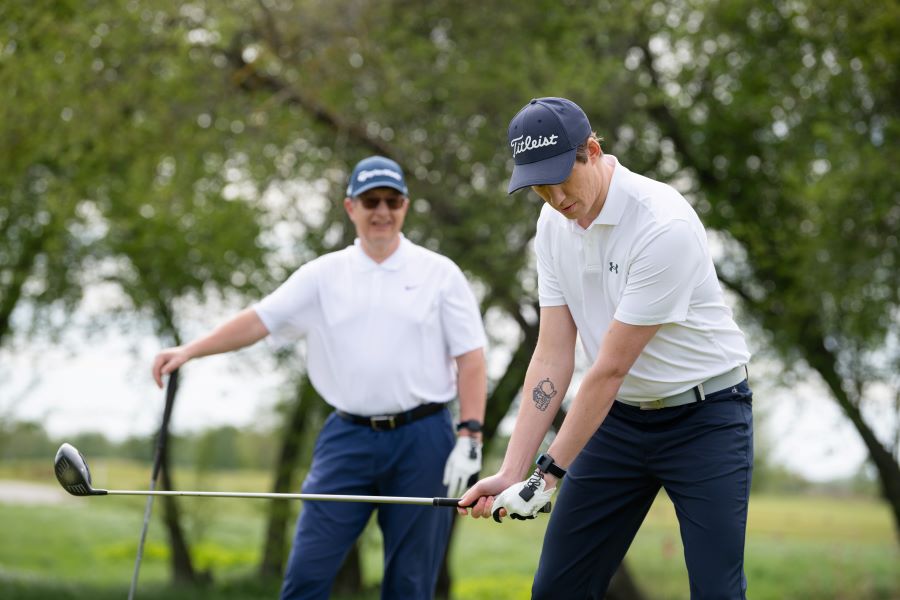
Foot flare at setup unlocks the hip joints. Seniors often lose rotational range as they age, and turning the feet outward is the quickest way to regain it. If you’re still keeping your feet perfectly straight when you set up, it’s time to turn them just slightly.
Flaring the feet leads to more rotation, a longer hand path, and more speed with less strain.
How to Do It
- Turn both feet outward 20–30° at setup.
- Keep your knees relaxed rather than locked.
- Make a few slow backswings to feel the new freedom in your hips.
Drill: Free Turn Rehearsal
- Cross your arms over your chest.
- Turn your shoulders fully until your back faces the target.
- Pause for one second, then rotate back.
- Repeat 5–8 times.
This prepares your body to make a full, comfortable turn. Do this before your round, and anytime you feel like your turn is restricted.
Drop the Trail Foot Back for an Easier, Bigger Turn
Once your feet are turned out, consider dropping the trail foot back a little. This will close the stance a bit.
A slightly closed stance gives your hips room to rotate, especially helpful for seniors with stiff backs or limited mobility. It lengthens your hand path without needing more flexibility.
In addition, it can make it easier to square the clubface at impact.
How to Do It
- Move your trailing foot 2–4 inches behind the lead foot.
- Keep your shoulders parallel to your target line.
- Feel your trail hip turning behind you with no resistance.
Let the Knees Change Flex to Unlock Hip Turn
Before you start “bending your knees” at setup, make sure to read through this one carefully. Rigid legs can make rotation more difficult.
When seniors allow the knees to move naturally, the hips and shoulders can rotate farther, producing effortless speed. This move is more about letting the knees move than setting up with a knee bend.
How to Do It
- Let the lead knee move inward toward the ball.
- Let the trail knee straighten slightly.
- Maintain athletic softness; never locked legs.
Improve Lead Wrist Action to Regain Lost Ball Speed
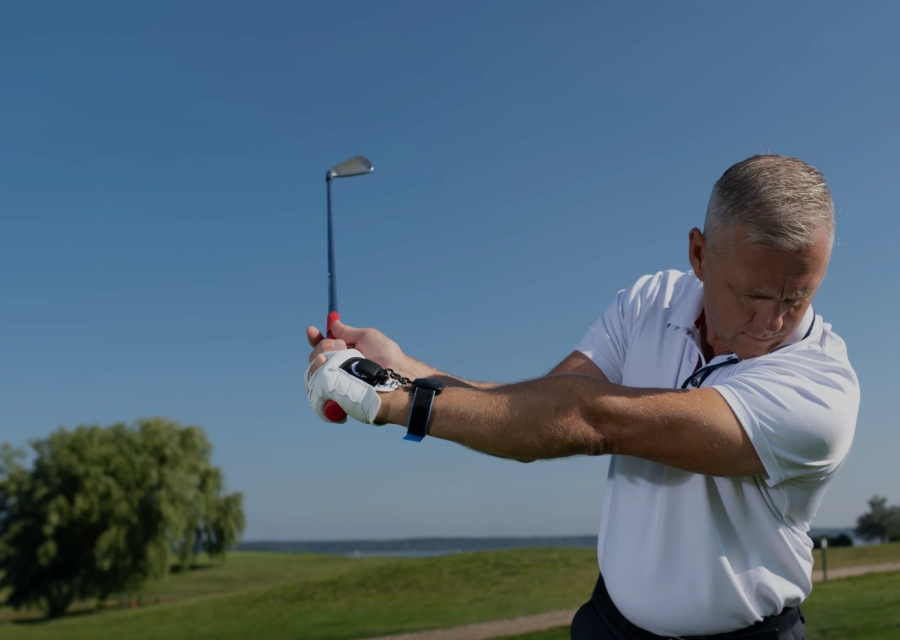
A source for both improved accuracy and distance off the tee for senior golfers is wrist action. It’s an area where many have neglected to pay attention, but it can make a big difference in the game.
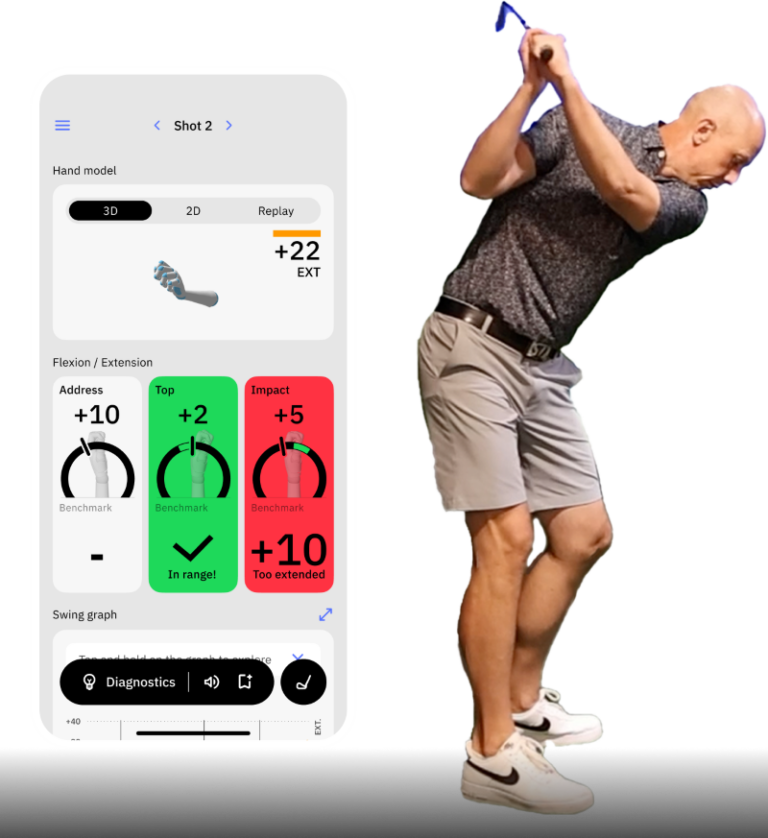
Too much lead-wrist extension (cupping) is one of the biggest distance killers for seniors.
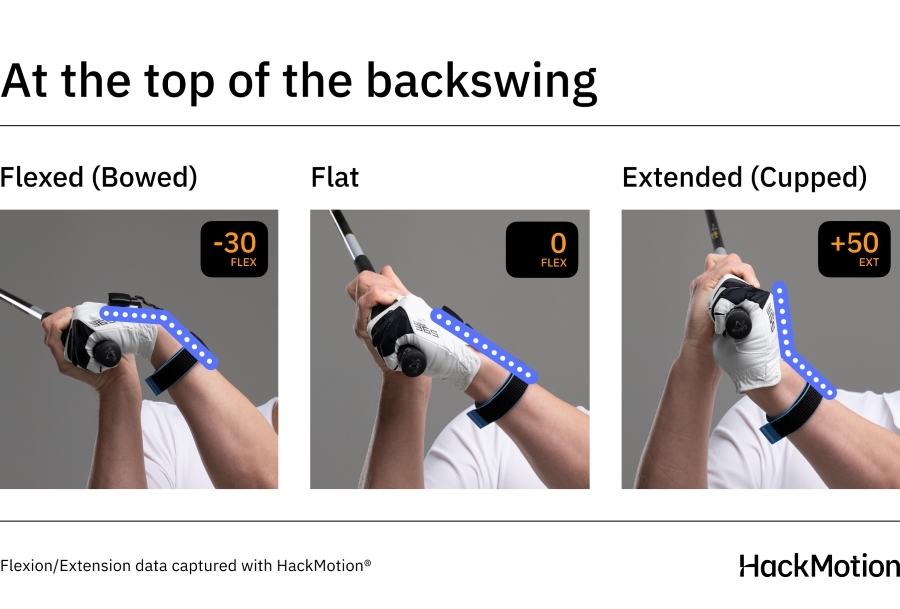
It opens the clubface, increases spin, and sends drives high and weak. A flatter or slightly flexed lead wrist helps square the face and increases ball speed, even at slower swing speeds.
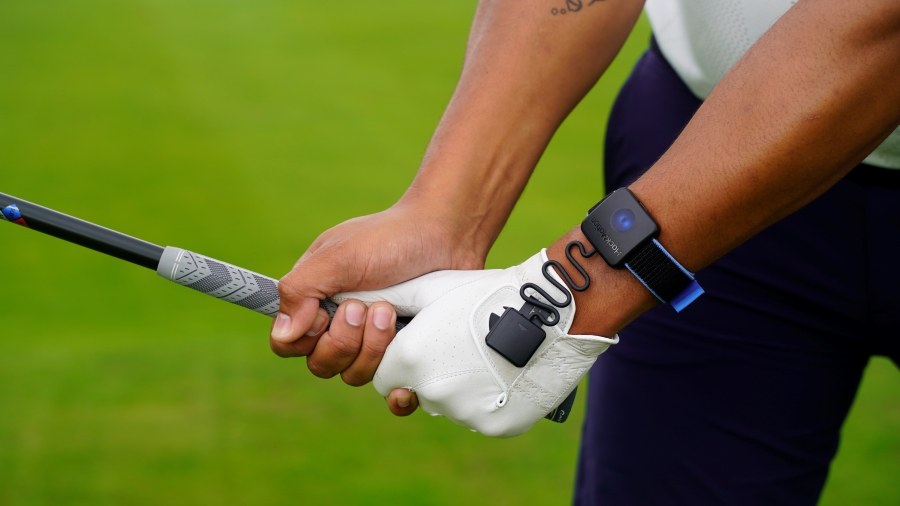
HackMotion helps seniors see extension vs flexion clearly, making improvement measurable.
How to Do It
- Swing halfway back.
- Flatten the lead wrist slightly (remove the cup).
- Continue to the top, feeling the clubface “looking down” a bit.
- Hit half-speed shots while maintaining that feel.
- Use HackMotion to check that extension is decreasing and flexion is improving.
Drill: Motorcycle Drill (HackMotion Built-In)
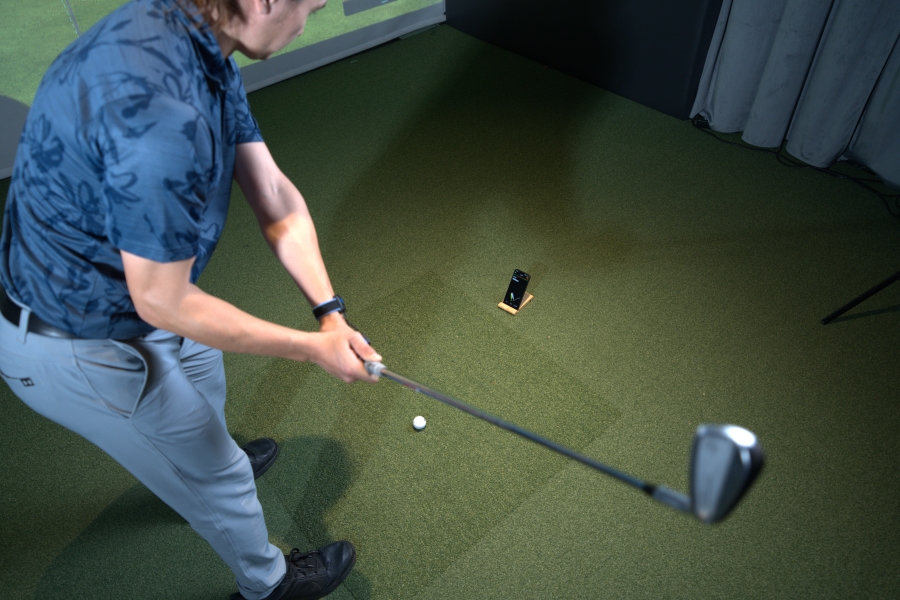
- Take your normal setup and load the Motorcycle Drill in the HackMotion app.
- Move the club to the top of the backswing.
- “Motorcycle” the lead wrist by gently bowing it (like turning a throttle downward).
- Make sure you are in the green.
- Make slow-to-medium swings, keeping the same wrist angle and watching how it closes the face.
Motorcycle Drill – Master Wrist Flexion in the Downswing
Focus on continuously adding flexion until the club reaches parallel, then smoothly complete your swing.
This drill teaches seniors how to control the lead wrist and keep the face square longer, one of the fastest ways to regain ball speed and eliminate the weak high-right drive.
Perfect as a warm-up or a lead-wrist refresher during practice.
Want help applying these driver mechanics to your own swing?
Work with one of our HackMotion-certified golf coaches to improve distance and accuracy faster.
Release the Club Instead of Holding the Face Open
Many seniors try to “guide” the ball and end up holding the face open through impact. This kills ball speed and sends the ball weakly to the right.
As a senior golfer (or golfer of any age), you have to use all the speed you have through impact. A natural release adds speed and helps square the face earlier.
How to Do It
- Let the club rotate through impact.
- Feel the toe move past the heel instead of dragging the face open.
Drill: Toe-Up to Toe-Up Release
- Make a waist-high backswing and check that the toe points upward.
- Swing through to waist-high and match that same toe-up position.
- Let the club rotate naturally—don’t force it.
- Build to full swings.
Use a Wider, More Stable Stance for Better Balance
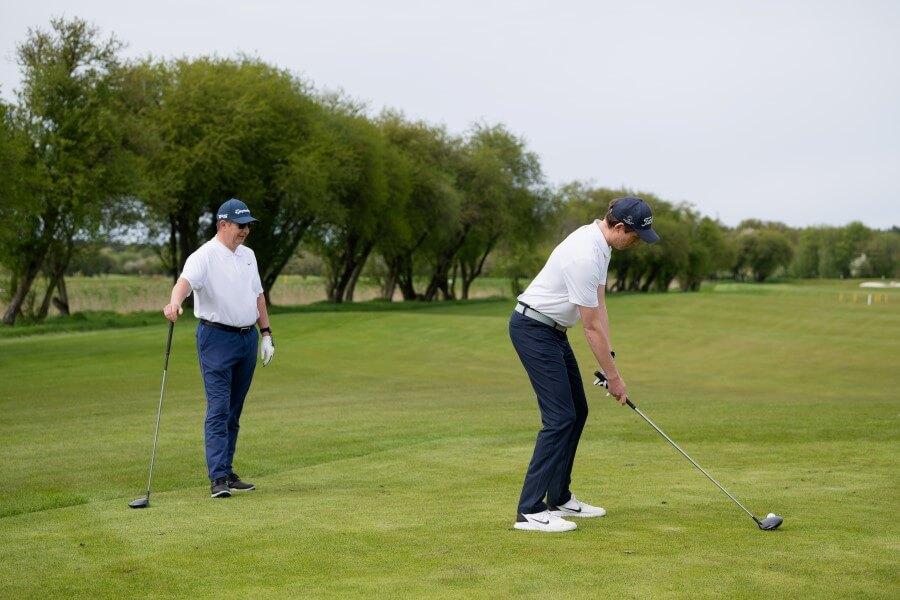
Balance and stability get more difficult as golfers age. Add in trying to swing a club at 70 or more miles per hour, and stability becomes even more of a challenge.
When the balance drops, seniors shorten their swings subconsciously. A wider stance provides stability, allowing a fuller turn and better strike quality.
How to Do It
- Widen your stance 1–2 inches beyond your normal driver setup.
- Add a slight spine tilt away from the target.
- Stay athletic and centered—not rigid.
- If you struggle to hit straight shots from the wider, more stable stance, work on the release drill a bit, and try again before narrowing.
Smooth Your Tempo: “Wait… Then Go”
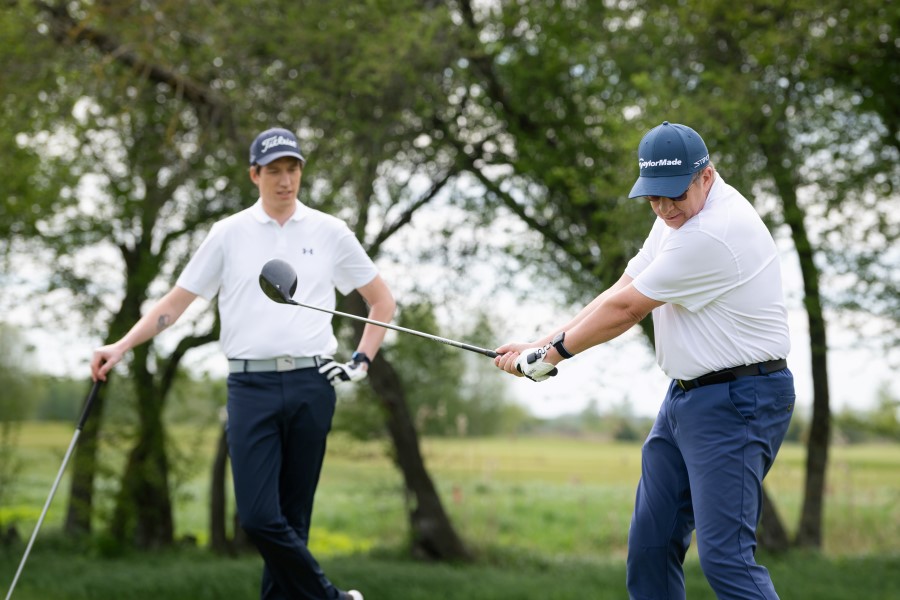
Seniors often rush from the top of the backswing. It’s almost a natural move because they are trying to gain extra power.
Unfortunately, that’s not the way to go about it.
When tempo gets quick, sequencing breaks down, and the face stays open. A smoother transition helps the club shallow naturally and gives the wrists time to square.
How to Do It
Use the rhythm: “Wait … then go.”
- Don’t rush the first move down.
- Shift pressure into the lead side.
- Then accelerate through the ball.
Drill: The One-Count Pause
- Make your normal backswing.
- Pause for a very short one-count at the top (“one…”).
- Shift pressure into the lead side.
- Then swing through smoothly.
This drill fixes rushing and helps seniors create powerful, sequenced drives. It’s a great swing to have on the golf course.
Want to keep improving your driving distance the smart way?
Check your numbers with our senior golf distance chart and follow it up with these senior-friendly golf swing drills.
Final Thoughts
As a senior golfer, it’s not really a strength that’s going to take your game to the next level. Instead, if you can become more efficient, improve your turn, and square the clubface, you’ll see some serious improvement.
Use HackMotion to guide you in the process. You’ll make things like clubface control measurable, and you’ll ensure that as you increase your hand path length, you still have a square face.
Don’t give up on other aspects of the game, like improved putting, short game, and course management. Play your best golf as you age.