Long Irons vs Short Irons: What Actually Changes in Your Swing and Setup? (Drills Included)
Most golfers know their long irons feel different from their short irons, but few understand why.
The clubs get longer, the loft drops, the ball launches lower, contact feels harder, and your 4-iron starts producing a completely different level of stress than your 9-iron.
When switching between long irons and short irons, your overall swing shouldn’t change dramatically.
Long irons require speed, width, and just enough height to make the ball climb. Short irons require precision, tighter contact, and a predictable flight window.
The fundamentals are the same, but how you set up and release the iron determines whether each iron does its job.
This guide breaks everything down simply: the setup, the swing differences, the angle of attack, the release pattern, and the wrist action that helps you get it done.
Long Irons vs Short Irons (Key Takeaways)
- Long irons and short irons follow the same swing pattern, but the intent and delivery change.
- Long irons need more speed and a shallower strike; short irons need more control and a steeper strike.
- You can use a constant ball position and change stance width instead.
- Long irons benefit from a full release, while short irons favor a quieter, hold-off release.
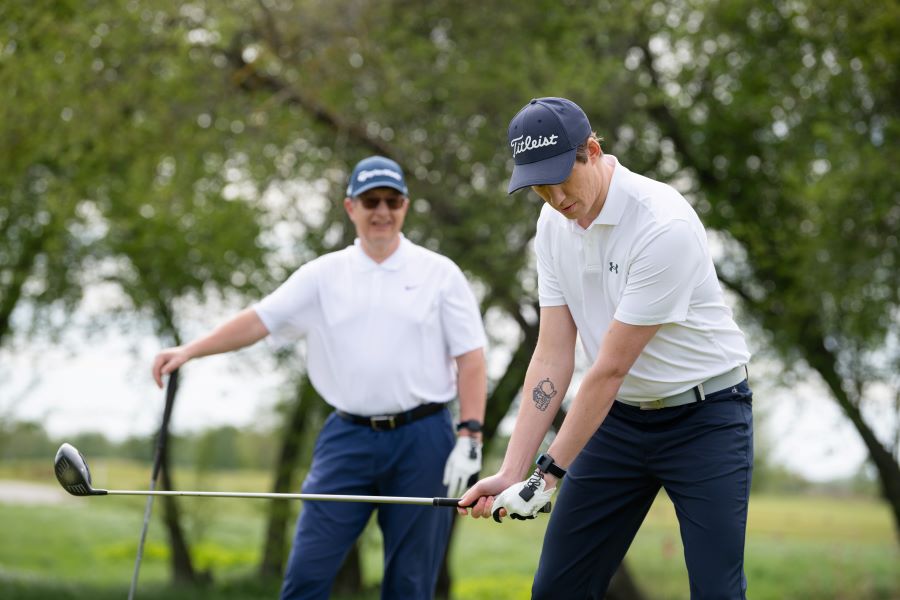
- Forward shaft lean and consistent wrist angles improve contact for every iron, something HackMotion measures directly.
Contents
Long Irons vs Short Irons: A Quick Comparison
The art of hitting a solid iron shot is very similar between the short iron and the long iron.
However, there are adjustments to setup, weight at setup, and even the wrist action that can help improve your success.
Here’s a brief look at the difference between long irons and short irons:
| Aspect | Long Irons (3–5) | Short Irons (8–PW) |
|---|---|---|
| Purpose | Distance | Precision + control |
| Stance Width | Wider | Narrower |
| Weight at Setup | ~50/50 | 55–60% forward |
| Angle of Attack | Shallow descending | Steeper descending |
| Swing Intention | Full, committed, high finish | Controlled, measured, hold-off finish |
| Wrist Focus | Maintain shaft lean at higher speed | Maintain shaft lean with calmer face rotation |
Want to know your ideal yardages? Check our Iron Distance Chart and learn drills to add more distance.
Long Irons vs Short Irons: What Changes in Each Part of the Swing
Setup: How to Let the Club Do Its Job
If you can master setup, half the battle is already won.
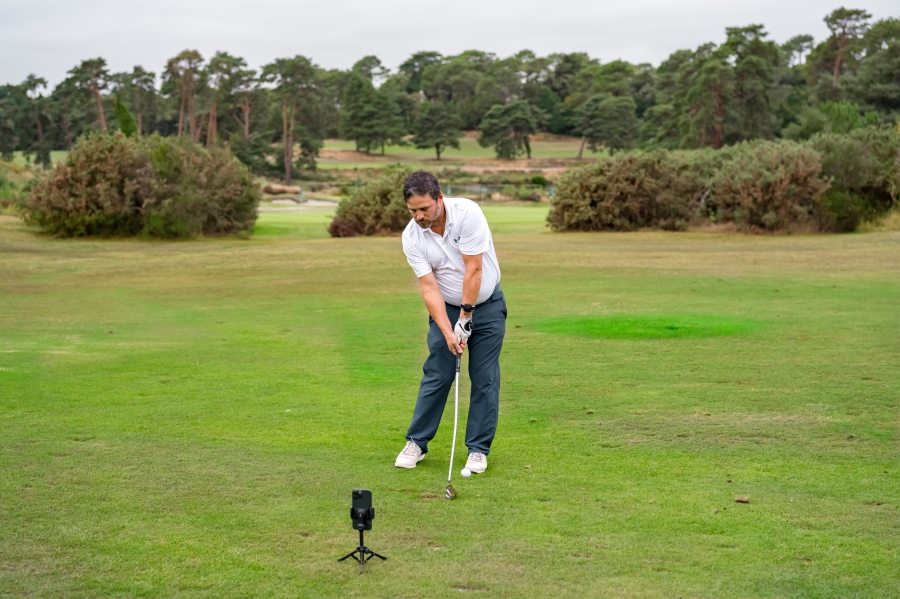
Instead of moving the ball around, use a single reference point and play all shots one clubhead inside the lead heel.
With a Long Iron
When you widen your stance, the ball looks slightly forward and sets up the shallow, speed-driven delivery long irons need.
Your chest sits a touch more behind the ball simply because your base expanded.
With a Short Iron
Narrowing your stance pulls your pressure forward, pushes your chest more over the ball, and positions you perfectly for a steeper descending strike.
You’re closer to the ball, more centered, and built for control.
Swing Differences: Same Motion, Different Intention
The swing for long irons and short irons is the same. However, with the length of the club being different, you may feel some adjustments in the way the swing feels.
Long Irons – Let It Release
Long irons reward commitment. The best long-iron swings have:
- a longer arc
- more width
- a full release of the clubhead
- a complete finish
When you watch elite players like Tiger Woods hit a long iron, the toe of the club clearly passes the heel through impact, a sign the club has fully released. This release helps launch the ball, close the face naturally, and produce the speed the long iron was engineered for.
If you struggle specifically with long irons, you can also check out our full guide on how to hit long irons more consistently for setup keys, release patterns, and additional drills.
Short Irons – Calm It Down
Short irons aren’t about height or speed. They’re about hitting a number. Great short-iron swings look quieter:
- less face rotation through impact
- a shorter, controlled finish
- the shaft often points more behind the player rather than wrapped around the shoulder
Many players describe this as a “Tommy Fleetwood hold-off” finish. The face stays stable, the hands stop sooner, and the shot stays predictable.
For a deeper look at short-iron control, see our dedicated breakdown on how to hit short irons with better accuracy.
Wrist Mechanics
No matter the club, great ball-strikers all share a few things at impact. These include:
- Lead wrist flatter or slightly flexed (bowed).
- Trail wrist is more extended (bent back).
- Hands ahead of the clubhead (forward shaft lean).
This position will let you strike the ball on the correct position of the face. The sweet spot sits several grooves above the bottom. To get the ball to those grooves, you need:
- hands leading
- shaft leaning
- wrists stable and organized
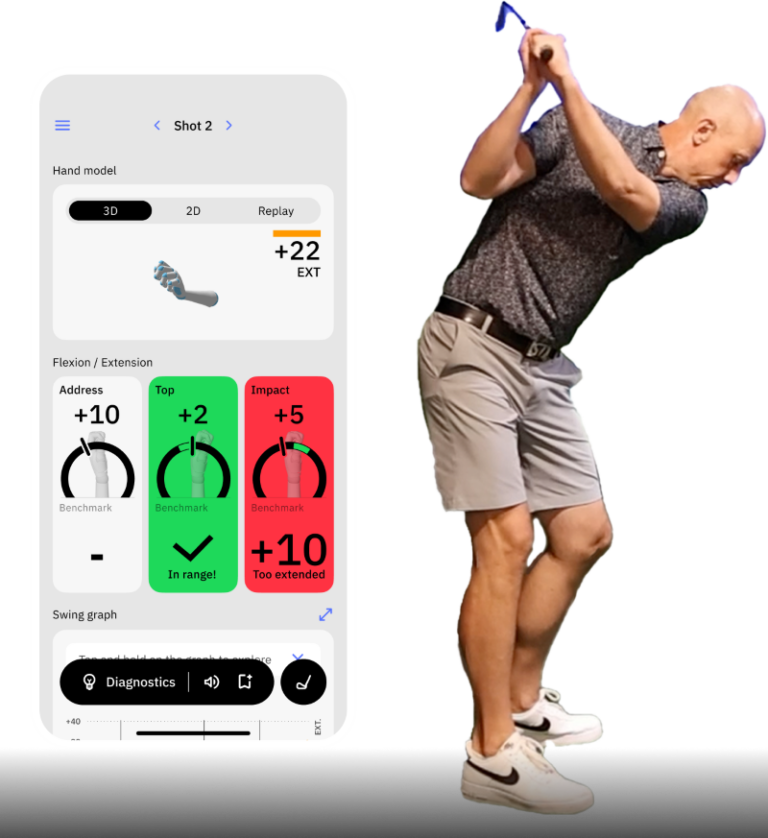
At setup, your lead wrist will always be slightly extended because the trail hand sits lower. That’s normal.
But at impact, that extension needs to be reduced. Sometimes drastically, regardless of if you have a long or short iron in the bag.
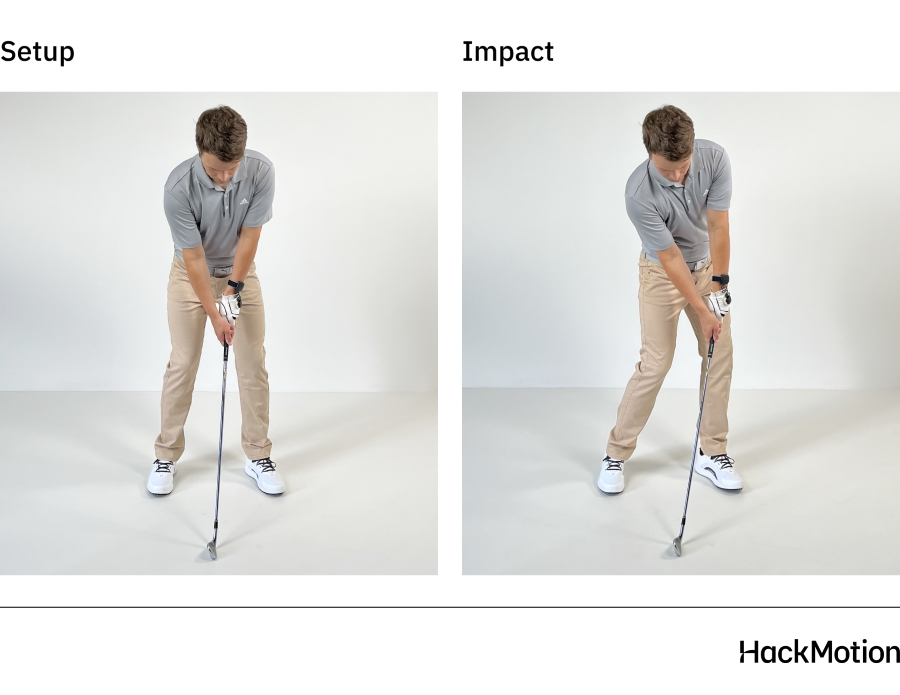
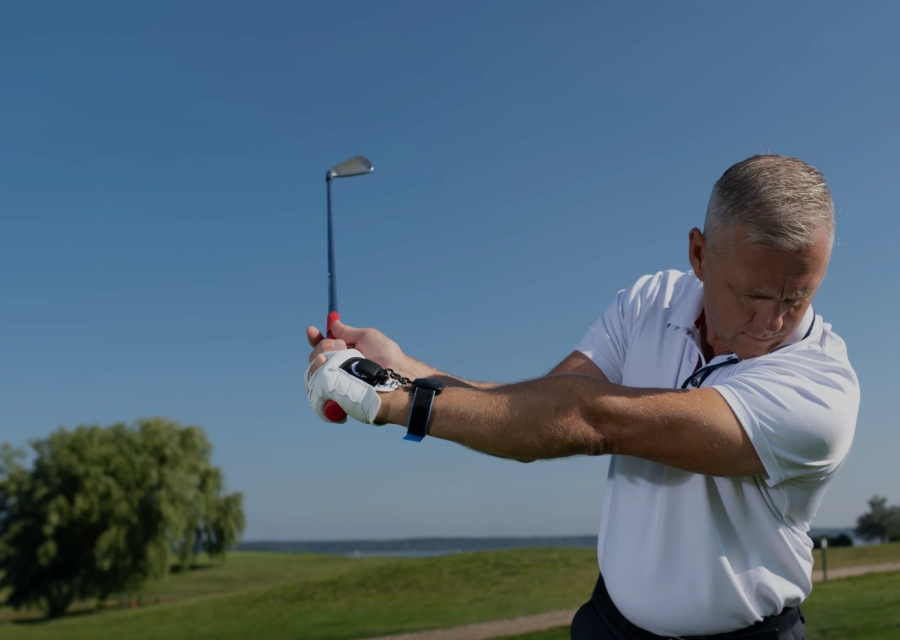
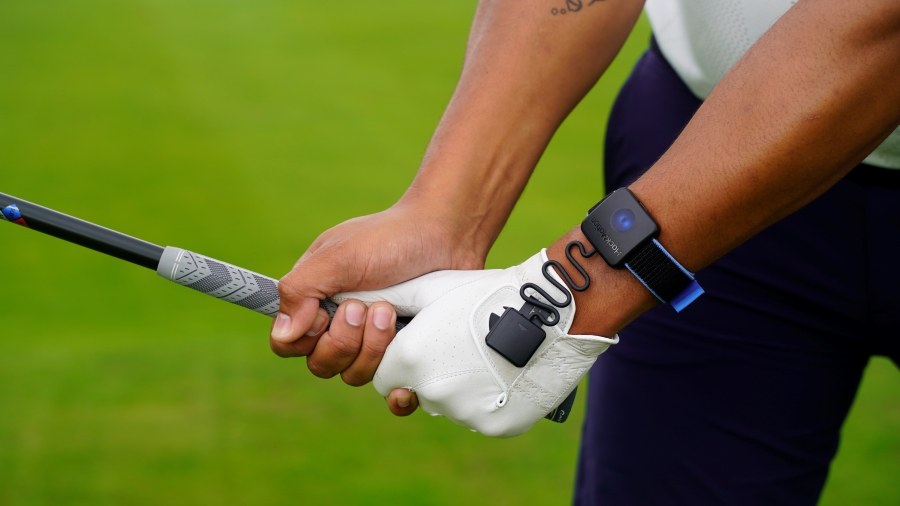
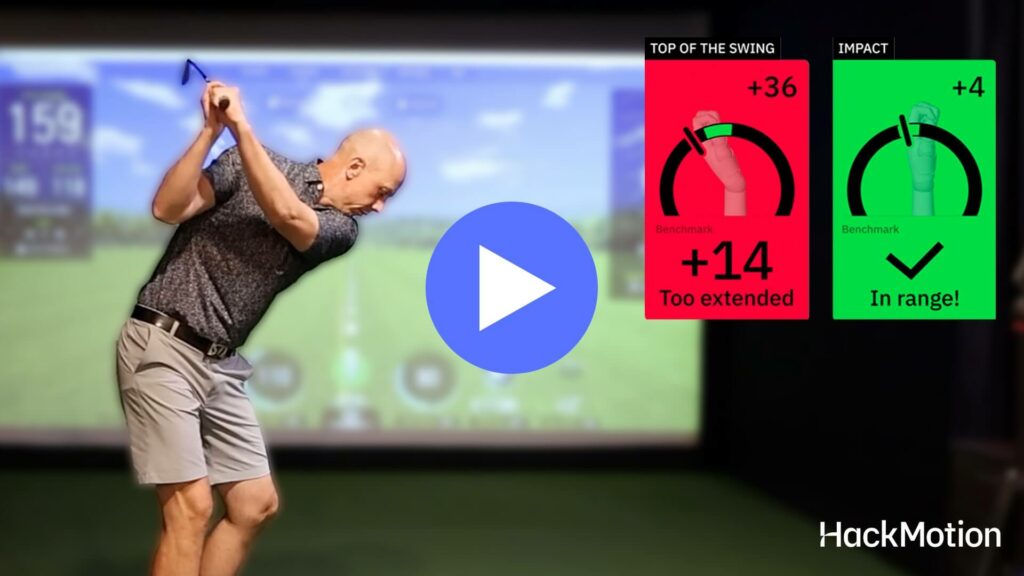
HackMotion shows you the exact change in wrist angle between setup and impact.
The most accurate way to confirm whether you’re actually improving your ball-striking pattern or simply guessing.
Angle of Attack Differences Between Long Irons and Short Irons
The swing doesn’t change between long irons and short irons, but the angle of attack does. This shift happens naturally when you change stance width and intention, not because you try to manually change the motion.
Long Irons – Shallow Descending Blow
Long irons work best with a shallower angle of attack. You still want ball-first contact, but you don’t want to drive the club steeply into the turf.
- A wider stance stabilizes you.
- The chest stays slightly more behind the ball.
- The club has more room to bottom out just ahead of the ball.
This is what helps long irons launch lower but stay in the air with a shallower strike plus adequate speed.
Short Irons – Steeper Descending Blow
Short irons thrive on crisp, steeper contact.
- A narrower stance shifts pressure forward.
- The chest gets more over the ball.
- The low point moves farther ahead.
This steeper angle of attack gives you the solid, high-spin contact needed for precise yardages.
Whether the strike is shallow or steep, the ideal wrist conditions do not change:
- The lead wrist moves toward flat or slightly flexed.
- The trail wrist extends to support shaft lean.
HackMotion helps you verify that even when the angle of attack changes, your wrists are still delivering consistent, ball-first mechanics.
Why Long Irons Feel More Difficult
The long iron gets a bad reputation because of physics. The club has less loft and a longer shaft. It’s harder to make content with the center of the face.
Minor mistakes, even ones you’d get away with using a wedge, produce big misses with a 4-iron. That’s why long irons highlight flaws in:
- angle of attack
- low-point control
- face angle
- release timing
- and especially wrist mechanics
Many mid-handicappers subconsciously try to “help” the ball up with long irons, adding lead-wrist extension (cup) and losing all forward shaft lean. The result is typically thin shots that don’t land on the green.
Drill: One Compression Exercise for Every Iron
Drills to work on your short irons and your long irons will be the same. The idea is finding that consistent low point and making great contact.
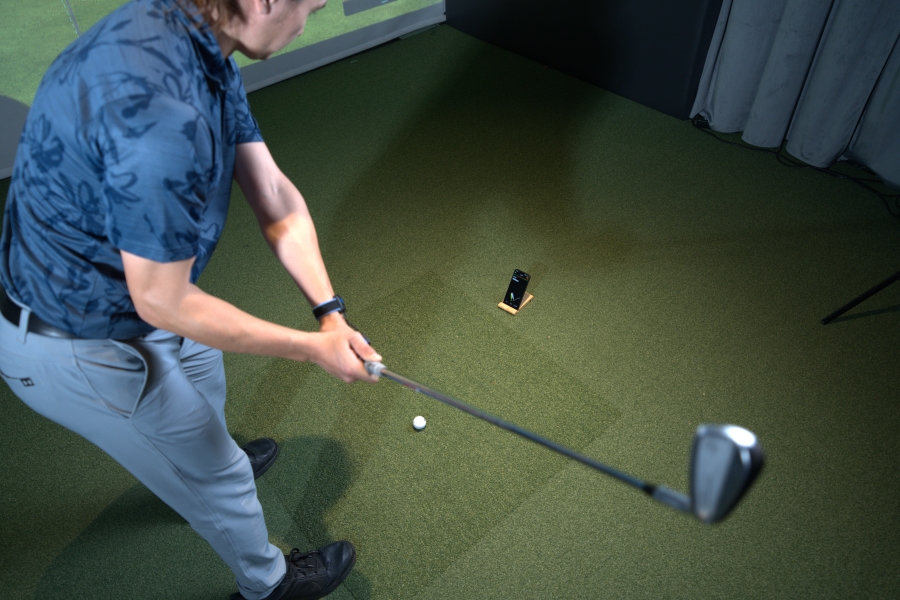
This Towel Compression Drill is one of the best iron ball striking drills out there, and if you add HackMotion, you’ll get measurable feedback.
Use the drill to hit longer and straighter iron shots.
The Towel Compression Drill
This drill trains clean, ball-first contact and teaches your wrists to move into a compressed position instead of flipping.
Towel Compression Drill – Step by Step:
- Place a small towel a grip length behind the ball.
- Take your normal setup. Long iron = wide stance. Short iron = narrow stance.
- Make small swings, ensuring you miss the towel.
- Focus on: Lead wrist flattening or flexing at impact. Trail wrist extending. Hands staying ahead of the clubhead.
- Wear HackMotion to measure: Set up the lead-wrist extension. Impact wrist position (should show less extension).
Missing the towel is the simplest, fastest way to train a forward-leaning shaft and a proper low point, the foundations for both long- and short-iron success.
Final Thoughts
Long irons and short irons aren’t two different swings; they’re two different applications of the same core mechanics.
Once your setup, release pattern, and wrist angles match the job each club is supposed to do, the entire iron set becomes easier to hit.
Start with one goal: Build a single, consistent impact pattern, then adjust your stance and release to fit the club in your hand.
Use HackMotion to confirm your wrist angles across the bag, and you’ll stop guessing, start compressing, and finally deliver every iron with intention.
If contact or ball flight still changes too much between irons, check out the best golf instructors near me who use HackMotion to help players control both long-iron speed and short-iron precision.